Thanksgiving and Hope for America

Photo by Pixabay on Pexels.com

Many people today are aware of the challenges facing America: inflation, viruses, cultural division, border issues, and rising crime, among others. However, reflecting on our rich 400-year history that began with Jamestown in 1607, we can find inspiration in the countless times we’ve faced and overcome even greater obstacles. Here are just a few significant challenges America has successfully navigated as a country:

  • The animosity of the states with each other before and after the American Revolution
  • The invasion of England and burning of the White House in the War of 1812
  • The Civil War which killed over 600,000
  • The immigration crisis of 1880 to 1910
  • The 1918 influenza pandemic killing 675,000 in America
  • The Great Depression of the 1920’s and 30’s which have been preceded and followed by nearly 50 economic recessions
  • Two World Wars, Korea, Vietnam among others
  • The prolonged Cold War with imminent fears of a nuclear winter (Cuban Missile Crisis of 1962)
  • The Iranian hostage crisis (1979-1980)
  • 9/11

Through these times, in her 400 year history, America has a tradition of turning to God in prayer, repentance and thanksgiving to seek his guidance. This is what Thanksgiving as a holiday has originally been about. In this article we want to look at the origins of Thanksgiving and how it can guide us toward hope-filled vision toward the future.

The First National Thanksgiving

The first national Thanksgiving occurred in 1789 after the approval of the Bill of Rights. According to the Congressional Record for September 25 of that year, Elias Boudinot (a delegate to the Continental Congress from New Jersey) said he could not think of letting the congressional session pass without offering “an opportunity to all the citizens of the United States of joining with one voice in returning to Almighty God their sincere thanks for the many blessings He had poured down upon them.” He moved the congress to the following resolution: “Resolved, That a joint committee of both Houses be directed to wait upon the President of the United States to request that he would recommend to the people of the United States a day of public thanksgiving and prayer.” The resolution was delivered to President George Washington. A little over a week later, on October 3, Washington responded by issuing a historic Thanksgiving Proclamation, who gave his strong approval with the congressional request, declaring:

Whereas it is the duty of all nations to acknowledge the providence of Almighty God, to obey His will, to be grateful for His benefits, and humbly to implore His protection and favor. . . . Now, therefore, I do appoint Thursday, the 26th day of November 1789 . . . that we may all unite to render unto Him our sincere and humble thanks for His kind care and protection.

For Washington, this was not insincere posturing. He truly believed and acknowledged the hand of God in the establishing of the new nation against overwhelming odds. In the early years of the war, the Continental Army experienced, according to David McCullough’s book, 1776, unforgettable hardships: “…all-too-few victories, of sustained suffering, disease, hunger, desertion, cowardice, disillusionment, defeat, terrible discouragement, and fear…” Washington’s army would also experience their General’s “phenomenal courage and bedrock devotion to country.” In the face of numerous catastrophes and failures, he maintained a determined but unusual level-headedness and emotional composure. McCullough suggests that it was this unusual character in Washington which led the nation to ultimately prevail. Had he buckled under the dark circumstances, so would his army and so the nation. Where, then, did Washington gain this remarkable composure of mind? Undoubtedly much of it came through his unwavering belief in God’s providence to guide the development of the nation. In a letter written in January of 1776 to Joseph Reed, Washington foretold what he believed the basis for his perseverance in the war would be: “If I shall be able to rise superior to these, and many other difficulties which might be enumerated, I shall most religiously believe that the finger of Providence is in it.” He wrote again in May of 1776, in a letter to Reverend William Gordon: “No man has a more perfect reliance on the all-wise and powerful dispensations of the Supreme Being than I have, nor thinks His aid more necessary.”

For Washington, the observance of Thanksgiving came from his deep and unwavering reliance on the guidance of God in establishing America and the expression of his gratitude for this. Our first president, however, was not unique in this. There had been many Thanksgiving style observances in the American colonies for over 250 years before the Declaration of Independence (1776). These observances involved thanking God for his gracious favors and calling upon him to lead through often perilous times of difficulty:

  • The colonists of the Plymouth Plantation held a three day celebration of food and feasting in the fall of 1621.
  • The first recorded official Thanksgiving observance was held on June 29th, 1671 at Charlestown, Massachusetts.
  • During the 1700s, it was common practice for individual colonies to observe days of thanksgiving throughout each year.
  • A Thanksgiving Day celebration was held in December of 1777 by the individual colonies, commemorating the surrender of British General Burgoyne at Saratoga.

Where Thanksgiving Got Started

The earliest origins of the tradition and practice of Thanksgiving began with the Pilgrims who set sail for America on September 6, 1620, and for over two months braved the harsh weather of a storm-tossed sea. After coming to shore at Plymouth, they had a prayer service and began hastily building shelters, being unprepared for a harsh New England winter. Nearly half died before spring.  Persevering in prayer and assisted by helpful Indians, they reaped a large harvest the following summer.  The grateful Pilgrims then declared a three-day feast in December 1621 to thank God and to celebrate with their Indian friends America’s first Thanksgiving Festival. This would happen again in 1623 when they experienced an extended and prolonged drought. Knowing that without a change in the weather there would be no harvest and the winter would be filled with death and starvation, these same Pilgrims went to a time of prayer and fasting to seek God’s direct intervention. Significantly, shortly after that time of prayer – and to the great amazement of the Indians who witnessed the scene – clouds appeared in the sky and a gentle and steady rain began to fall. This began an annual tradition in the New England Colonies that slowly spread into other Colonies. 

The Spread of Thanksgiving

For the next 250 years the colonies would need to draw on their faith in God many times to persevere through impossible hardships on their way to becoming their own nation. As the colonies began to develop a stronger sense of their own identity independent from England, many from them had been calling for independence before the American Revolution because of the tyrannies of England. Not least among those who voiced this cry were pastors in their pulpits.  In 1682 Charles II’s advisers warned him that the pastors of Massachusetts “were preaching freedom.” In response the King demanded that the colony swear allegiance to the British Crown, or else “[m]ake a full submission and an entire resignation of their charter to his pleasure.” (They were to give up the control of their rights as a British colony.) Their response was not to comply. Increase Mather, a prominent church leader in Massachusetts, gave this reply: 

To submit and resign their charter would be inconsistent with the main end of their fathers’ coming to New England….[Although resistance would provoke] great sufferings, [it was] better to suffer than to sin. (Hebrews 11:26-27) Let them put their trust in the God of their fathers, which is better to put confidence in princes. And if they suffer, because they dare not comply with the will of God, they suffer in good cause and will be accounted martyrs in the next generation, and at that great day.

Charles II was enraged upon hearing this.  He determined to send Col. Percy Kirk (“Bloody Kirk”) and five thousand troops to bring Massachusetts to its knees once and for all.  When news of this plan reached Mather in February of 1685, he was filled with a deep fear and dread. He shut himself in his study and spent the day in prayer and fasting. The longer he spent with God in prayer and fasting, the fear and dread lifted from his heart and was replaced with joy. Without any evidence, he had the conviction by the Holy Spirit in his heart that God would deliver Massachusetts.  Two months later word arrived that Charles II had died of apoplexy and that Col. Kirk would not be coming after all.  

After 1789 the Thanksgiving tradition of prayer, gratitude and turning to the providence of God would become even more important as numerous dangers and hatreds threaten to tear the newly formed nation apart. In fact, by 1815, the various state governments had issued at least 1,400 official prayer proclamations, almost half for times of thanksgiving and prayer and the other half for times of fasting and prayer.

Lincoln and the Thanksgiving Proclamation

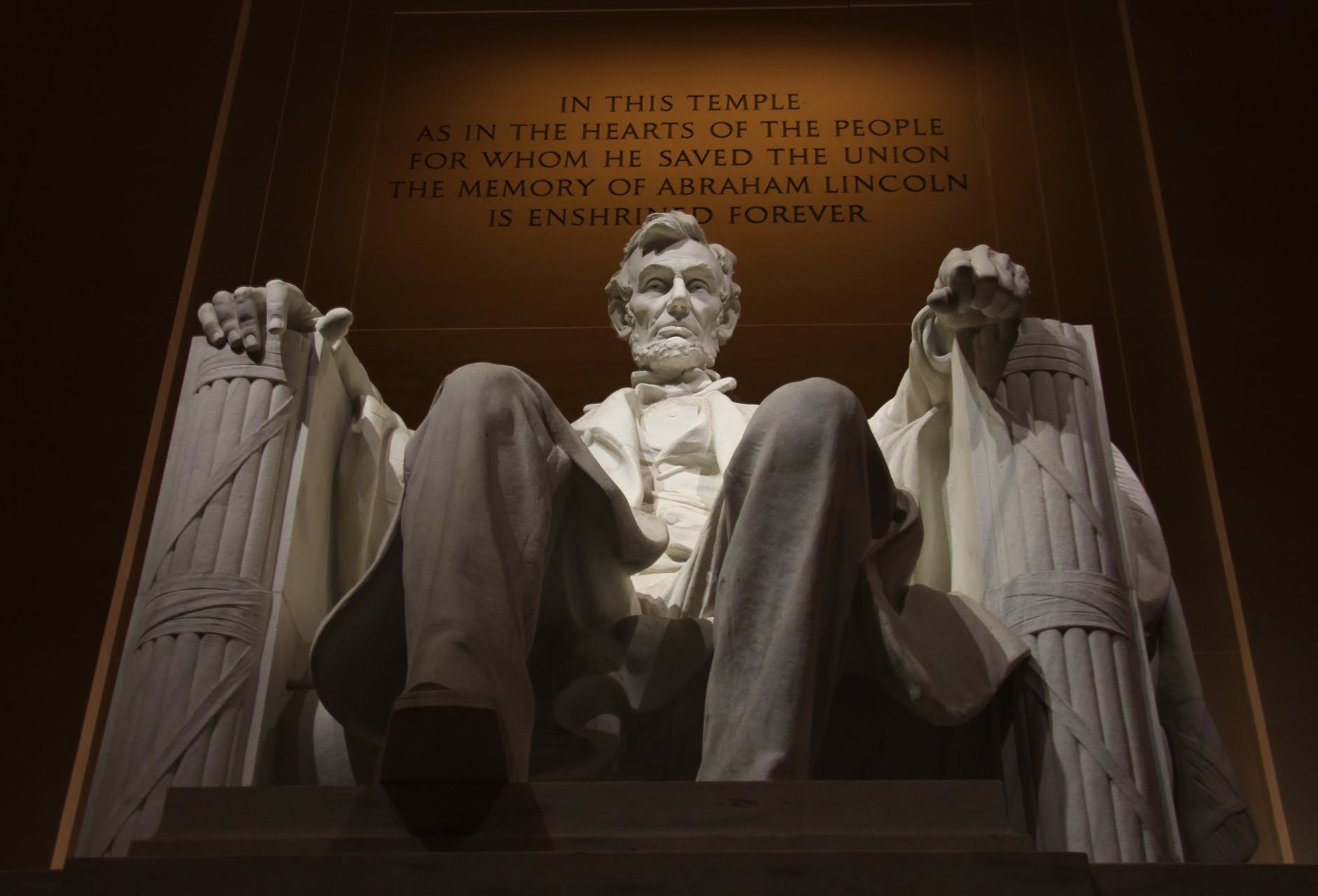
During his presidency, Abraham Lincoln ordered government departments closed for local days of thanksgiving. But since the founding of the nation it was not an official national holiday. The importance of Thanksgiving was about to increase when Sarah Hale, a 74-year-old magazine editor, wrote a letter to Lincoln on September 28, 1863, urging him to have the “day of our annual Thanksgiving made a National and fixed Union Festival.” She explained, “You may have observed that, for some years past, there has been an increasing interest felt in our land to have the Thanksgiving held on the same day, in all the States; it now needs National recognition…to become permanently, an American custom and institution.”

Lincoln responded to Mrs. Hale’s request quickly. On October 3, 1863 he penned a Thanksgiving Day Proclamation during the Civil War. What’s remarkable about this 520-word declaration is Lincoln’s focus on gratitude despite the nation being torn apart from within. He thanks God for “fruitful fields” and “healthful skies” as well as for peace with other nations and harmony among those not involved with the war.

No human counsel hath devised, nor hath any mortal hand worked out these great things. They are the gracious gifts of the Most High God, who while dealing with us in anger for our sins, hath nevertheless remembered mercy… 

Three months earlier, the Battle of Gettysburg had occurred, resulting in the loss of approximately 60,000 American lives. And while President Lincoln walked among the thousands of graves there at Gettysburg, Lincoln committed his life to Jesus Christ. He said,

When I left Springfield [to assume the presidency], I asked the people to pray for me. I was not a Christian. When I buried my son, the severest trial of my life, I was not a Christian. But when I went to Gettysburg and saw the graves of thousands of our soldiers, I then and there consecrated myself to Christ.

Lincoln then asked the nation to pray that as soon as God desired, he might bring back peace to the nation.

Fervently implore the interposition of the Almighty hand to heal the wounds of the nation, and to restore it, as soon as may be consistent with the Divine purposes, to the full enjoyment of peace, harmony, tranquility and union.

What does Thanksgiving mean today?

1) Thanksgiving should lead us to be hopeful

As followers of Christ in America, we should remember how God has established and preserved America. Through many dark days when the future of our nation looked bleak or headed toward ruin (like the Civil War), our leaders and the church called out to God with prayer, repentance and thanksgiving. Our nation has experienced worse storms than the ones we are facing now. How grateful we should be that we were led by people of faith who trusted God and persevered in hopeful prayer rather than surrender themselves to the dark forces of the moment.

2) Thanksgiving should lead us to be humble

As followers of Christ in America, we should learn and remember the stories of God’s grace which led to our becoming a nation and preserved our greatness. We should see the providence of God as a source of renewed commitment to walk as witnesses to the gospel of grace. Is our national pride humbled? YES. But that is a good thing because we can look again to the one who is the cause of all national greatness and not to ourselves. Instead of using our heritage to foster pride against “liberals” and “secularists” and “socialists,” etc.  We should use our heritage of faith and thanksgiving as a call to walk in renewed grace and power of the Holy Spirit. We are to love God above all and our neighbor as ourselves.  There is hope and our tradition of Thanksgiving reminds us of this once again.  

for dominion belongs to the Lord
    and he rules over the nations.”

Psalm 22:28

The Trinity: Does It Make Sense?

Photo by Pixabay on Pexels.com

How much does the Trinity really matter? If you found out tomorrow that God is actually only one person instead of three, would it make any practical difference in your relationship with God? Would it require a drastic overhaul in the way you think or witness or pray? Would it effect the way you worship on Sunday?  My guess is that for many it would make a difference, but they would not know why. To some among this group, the idea of Trinity is at best a problem to be explained. To the question, “How can God be one God and yet three?” They try to come up with answers that the Trinity is like the shell, the yolk, and the white, and yet it is all one egg. Or, the Trinity is like the shamrock leaf: one leaf with three parts sticking out. As the Trinity is often compared to plants, three states of H2O, or food, it begins to sound rather strange or trivial.

To others the Trinity sounds like a logical contradiction that cannot be explained.  How can God be three and yet one? One scoffer accused Christians of being people who cannot count: 1+1+1=1. Really? The math doesn’t work. Some scratch their heads in puzzlement asking: “The Father is not the Son? And the Son is not the Father? The Holy Spirit is neither? All are one God, not three? They are each other, but they are not?” Confusion reigns.

Nothing could be more idiotic and absurd than the doctrine of the Trinity.   

Robert Ingersoll 

Despite all of the questions and confusion around the Trinity, it is the most important picture and understanding that Christians have of God. It distinguishes our understanding of God from every other faith and religion. There is no more important idea of God Christians have than the Trinity.  

What is the Trinity?     

A simple definition of the Trinity is:

God is one God who exists as three persons: God the Father, God the Son and God the Holy Spirit.  

He is one God who exists as a multiple or plurality of persons. The first statement about God in the Bible contains this very understanding—one God who exists in multiple persons.  The first statement about God is in Genesis:  

Then God said, ‘Let us make mankind in our image, in our likeness…’”  

Genesis 1:26

Genesis 1:1-25 refers to what God does as Creator in making the universe and all that is in it.  Then in Genesis 1:26, it refers to who God is as a person.  “God” is one, not plural–“gods.”  This one God also speaks in the plural form: Let “us” make man in “our” image.  It does not say let “me” make man in “my” image.  The very first reference as to who God is states that he is one God existing as a plurality of persons. 

John, referring to Jesus as the Word, declares:

1“In the beginning was the Word, and the Word was with God, and the Word was God. He was with God in the beginning. Through him all things were made; without him nothing was made that has been made. In him was life, and that life was the light of all mankind. The light shines in the darkness, and the darkness has not overcome it.

John 1:1-5
  • v.1 Jesus (the Word) was God.
  • v.2 Jesus (the Word) was with God in the beginning.
  • v.3 Through Jesus (the Word) all things were made.

Jesus was God and with God at the same time. There is one God existing in multiple persons. In fact, in the very opening verses of the Bible, there appears to contain the seeds for John’s declaration about Christ as the Word existing as Trinity:

1In the beginning God created the heavens and the earth. 2Now the earth was formless and empty, darkness was over the surface of the deep, and the Spirit of God was hovering over the waters. 3And God said, “Let there be light,” and there was light.

Genesis 1:1-3

In these verses we see that:

  • v.1 God the Father created.  “God created the heavens and the earth”
  • v.2 God the Holy Spirit hovered.  “the Spirit of God was hovering “
  • v.3 God the Son spoke light into being.  God said, “Let there be light” (See John 1:4-5 above.)

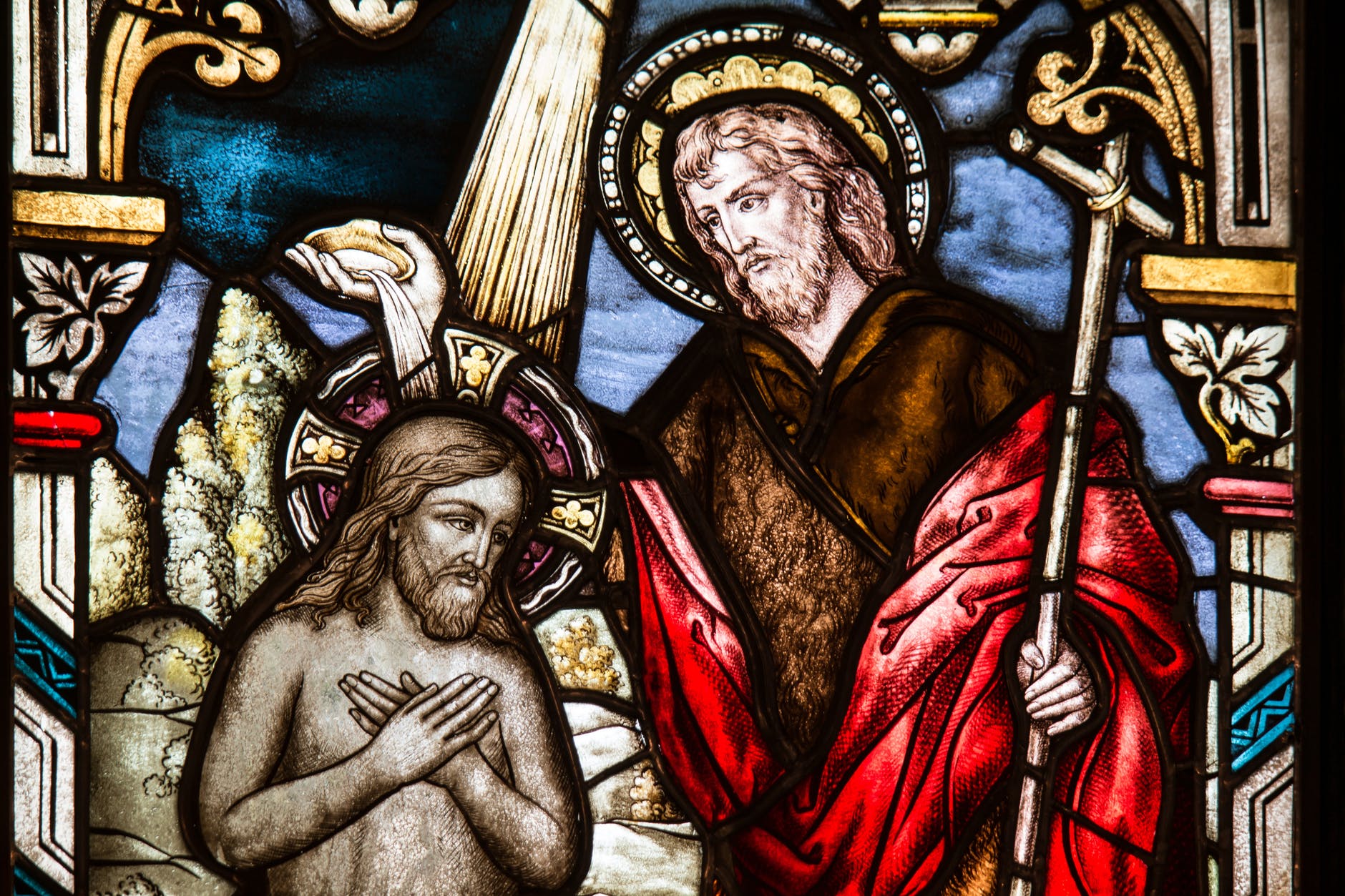
This understanding of God is woven throughout the Old Testament and comes into a clearer picture in the New Testament. There is Jesus at his baptism where we see the interplay of the Father, Son and Holy Spirit:

16 “As soon as Jesus was baptized, he went up out of the water. At that moment heaven was opened, and he saw the Spirit of God descending like a dove and alighting on him. 17 And a voice from heaven said, “This is my Son, whom I love; with him I am well pleased.”

Matthew 3:16-17

Jesus on the night before his crucifixion taught:

“And I will ask the Father, and he will give you another Helper, to be with you forever, even the Spirit of truth, whom the world cannot receive, because it neither sees him nor knows him. You know him, for he dwells with you and will be in you.”

John 14:15-17

Here we see the interaction of Jesus, the Father and the Holy Spirit together. After his resurrection, Jesus commanded us to baptize in the name (singular: one God) of all persons of the Trinity:

Therefore go and make disciples of all nations, baptizing them in the name of the Father and of the Son and of the Holy Spirit,

Matthew 28:19

These are just a few examples among many that can be provided.

Is the Trinity an absurd contradiction?

But immediately questions arise.  How can God be “three” and “one” at the same time?  Isn’t that as odd as saying someone is a steak eating vegetarian or a married bachelor? It just sounds contradictory. It is not a contradiction and here is why. God is not three in the same way he is one.  It would be a contradiction to say that my house is black and white if what I meant is that it is black and white in the same way. That cannot be.  Yet, if I mean that my house is painted white with black shutters and black trim then it is not a contradiction. My one house is black and white in different areas.   The Trinity is one and three in different ways.

How is the Trinity one?

Let’s look to Ephesians 4:3-6 to see that the way God is one is not the same way God is three

Make every effort to keep the unity of the Spirit through the bond of peace.  There is one body and one Spirit—just as you were called to one hope when you were called— one Lord, one faith, one baptism; one God and Father of all, who is over all and through all and in all.  But to each one of us grace has been given as Christ apportioned it.

Ephesians 4:3-6

Notice that all the persons of the Trinity are referenced: “Father,” “Christ,” and “Spirit.”  You will also see the word “one” mentioned several times. (Three have been underlined that relate to God). So how is the Trinity one?

The math of the Trinity is not 1 + 1 + 1 =1. Yes, that would be absurd. Rather, the math of the Trinity is 1 x 1 x 1=1. While still existing as three persons, they are one God.

They are one in divine nature. They are equally divine, equally eternal and equally God. 

They are one in unity.  They each live out the tightest bond and connection with the very same purpose, intentions, love without any friction or confusion.  In this way they are one God, in complete divinity and unity.

How is the Trinity three? 

They are three in their differing roles.  As it states in our passage above, when it comes to the plan of salvation the Father is “over all,” the Son is the “Lord” who paid the price for our sin, and the Spirit is the one who builds unity in church as “one body.”  Comparing it to a construction project, God the Father is the architect who created the design, God the Son is the lending company who paid the costs for the work, and the Holy Spirit is the one who does the actual construction. 

  • The Father set and designed the plan.
  • Christ made the payment.
  • The Holy Spirit comes into the church and does the building. 

In a different analogy, Joshua Butler explains the roles of the Trinity as follows:

Say a family is trapped in a forest fire, so a helicopter team undertakes a rescue. One fireman flies the helicopter over the smoky blaze to coordinate the operation and see the big picture. A second fireman descends on a rope into the billowing smoke below to track down the family and stand with them. Once he locates the family, he wraps the rope around them, attaching them to himself, and they are lifted up together from the blaze into safety. In this rescue operation the first fireman looks like the Father, who can see the whole field unclouded from above to sovereignly orchestrate the plan. The second fireman looks like the Son, who descends into our world ablaze to find us, the human family, and identify with us most deeply in the darkness of the grave. The Spirit is like the rope, who mediates the presence of the Father to Jesus, even in his distance, and raises Jesus—and the human family with him—from sin, death, and the grave, into the presence of the Father. 

No analogy to the Trinity will ever be perfect. This one falls short in that the Holy Spirit is a person and not a rope. Yet, it shows one rescue team in three different roles.

Why is the Trinity important?

The most important picture of God in the Bible is the Trinity.  This distinguishes the Christian understanding of God from all other religions or faiths.  God is a family of loving relationships which has existed from eternity.  God is fore mostly a loving relationship of persons, and there was never a time when God was not this. 

God is fore mostly a relationship of love.  When the Bible says that God is love, it means that God has always been a relationship of love.

And so we know and rely on the love God has for us. God is love. Whoever lives in love lives in God, and God in him.”

1 John 4:16

Love requires a relationship. Love can only be expressed in the presence of another person. If God were only one person, without the other two, then God could not be love because there would be no one else to love. Apart from his creation he would be isolated and non-relational. God would have created everything out of some other motivation than love because love would not have existed without God being Trinity. From eternity the Father has loved the Son and the Son has loved the Father; they have done so through the Holy Spirit. Out of the fullness of this love, they created all things.

You may say, “I don’t completely understand all of this.” Here’s the beautiful thing: you don’t need to fully understand the Trinity to worship the Trinity, pray to the Trinity, and enter into the life of the Trinity. For example, we are told that deep within the core of the sun, the temperature is 27 million degrees. The pressure is 340 billion times what it is here on Earth. And in the sun’s core, that insanely hot temperature and unthinkable pressure combine to create nuclear reactions. In each reaction, 4 protons fuse together to create 1 alpha particle, which is .7 percent less massive than the 4 protons. The difference in mass is expelled as energy through a process called convection, this energy from the core of the sun finally reaches the surface, where it’s expelled as heat and light. To be honest, I really don’t understand all of that. The good news is that I don’t need to in order to bask in the warmth of the sun or to even get a tan.

For further equipping:

Memorize: 2 Corinthians 13:14

Additional reading:

Understanding the Trinity: How Can God Be Three Persons in One?

How Could Jesus Be God and Be a Son? (Colossians 1:15-17)

Kingdom Hope: Dobbs v. Jackson WHO by Brendan Pittiglio (guest writer)

Photo by Jonathan Petersson on Pexels.com

“My goodness, this world is beyond saving.”

“I could never have imagined things would get this bad. Jesus needs to come back already!”

“Things have never been this horrible.”

All the above statements are common sentiments shared among many Western-world Christians. Perhaps you have heard fellow brothers and sisters in Christ voice these concerns. Perhaps you have voiced them. Furthermore, you might think it’s ridiculous to entertain any viewpoint other than the one that maintains America is a little red wagon speeding out of control down a steep, steep hill.

After all, you may say, consider the reality of the situation! We live in a country that permits its citizens to terminate new life as God fearfully and wonderfully knits it together in the womb. We live in a country that, at least on a legal and widely cultural scale, has rejected God’s perfect plan for the marriage and family structure of one man and one woman together for life. We live in a country that seems to be on the slow but destructive path of centralizing government power to a select few elites who appear to be more interested in globalism than the people they are tasked with serving.

To top things off, the Pew Research Center conducted a study on the shifting Christian landscape in the United States as recently as 2019. The results? Not exactly encouraging. Sixty-five percent of US adults identified themselves as some form of Christian, a figure down twelve points from ten years ago.

However, despite the various problems currently running rampant through American society, I would strongly suggest that hope and optimism are the more appropriate (as well as necessary) outlooks for the American Christian than cynicism and pessimism. Let’s delve into why.

I will divide this exploration into two brief sections on why the American Christian should live with hope and optimism for the future: the legal perspective and the community perspective.

Christians despair daily about the state of our politics; you need look no further than your Facebook timeline to know this is true. Now, make no mistake: government officials propose and legislate many unbiblical and sinful laws. There is no getting around that because it is the truth.

With that said, when you’re watching the national news (which is totally not designed to rile you up so you keep engaging with their content, by the way) and the totally unbiased reporter is telling you about the latest plan so-and-so has put forth in their state, or when they’re discussing the moral philosophy of the latest anti-Christian-values politician, understand that hope is far from lost.

A human with a bad political agenda is not going to defeat God’s will or take away His sovereignty. Does that mean God won’t give a nation over to its poor decisions? No, of course not—the Israelites would not have entered into Babylonian captivity if that were the case. But one must also remember that America is not one hundred percent morally bankrupt.

America is not a monolith. Every state in the United States of America enjoys a degree of sovereignty. Are they enjoying less and less sovereignty as time passes by? Yes, and that needs to be addressed. Still, in much of their policies and their government, they are independent, and they have not—as one cohesive unit—rejected Christian values. There is much reason for hope and optimism for what states may do with this freedom.

Take, for instance, the writing of Robert P George, an esteemed professor of law at Princeton University. In his article “Roe Will Go,” he discusses the latest case pending before the Supreme Court, Dobbs v. Jackson Women’s Health Organization.

This is the first case in forty-nine years exploring the constitutional right to “elective abortions.” George knows the majority of the Supreme Court Justices and has good reason to believe six of the nine will vote in favor of reversing the federal enforcement of legal abortion, citing Roe v. Wade as “grossly unfaithful to the Constitution and unjust.”

This case is set to begin on December 1, 2021. Not horribly far away, is it?

All of this, by the way, will have been made possible by decades of Americans fighting for morality and truth. They did not give up. Their labor in our democratic system has culminated in a court that is poised to strike down the evil and baseless constitutional “right” to abortion.

To tie this in with the topic of state sovereignty, this means the legality of terminating one’s pregnancy will once again be up to the states to decide. A large portion of them will certainly use this freedom to strike abortion down, clearly demonstrating that, as previously mentioned, the United States is not a monolith in uniform agreement to spurn God’s commandments. There are still many people inside and outside of government who care deeply about Christian values.

Sitting back and declaring America a hopeless case is not only incorrect, then; it is dangerous. It breeds complacency, a contentment to complain about the state of society without doing anything and “wait for Jesus to come back to judge everyone.” This is not the attitude that brought Roe v. Wade back to the Supreme Court’s attention.

The Community Perspective

It is easy, after comparing how the world is currently to how it was in the past, to conclude that we as a country, down to a minute county by county level, are utterly hostile to the Gospel message (or anything at all God-related, for that matter).

Yes, it is true that there are some individuals who want nothing to do with Christ and refuse to hear anything about Him, and indeed, Christ tells us we are to “shake the dust off [our] feet” when we leave them, pressing ever onward on mission (Matthew 10:14).

Will most people we encounter be like this, though? Will the average person in your community be totally turned off by the Gospel? The answer is a resounding no. Most people whom you take time to build a relationship with, take time to pour into and invest in, are remarkably receptive to the Gospel message. The truth is, most people feel lost, confused, desperate, tired, guilty, lonely, and—deep, deep down—empty. And Jesus Christ satisfies their longing in a profound way that nothing else comes close to.

Look at what God has done through our own Crossroads Community Church, for example. Through the guidance of the Holy Spirit, we’ve developed outposts in Algonac, Marine City, St. Clair, Richmond, and Fort Gratiot. What are outposts? They are serving partnerships with our community that develop churches where everyday life happens. Richmond has become its own independent church organization with its own bi-weekly services, and Marine City is heading in that direction as well.

These outposts were only made possible by faithful disciples of Jesus Christ who, instead of giving up because of their bleak perception of America’s spiritual health, obediently answered Jesus’ call by proclaiming His good news to new people—new people who were receptive to what the scriptures have to say.

I can personally attest to this. The Lord led me to join the Marine City outpost about a year ago. I have witnessed the change that the Gospel of Jesus Christ has brought into the lives of those in the community. He has given them hope, peace, perseverance, purpose, and unbridled joy. At the last weekly discipleship meeting we held, a young man showed the other outpost members the prayer map he had drawn consisting of people he hoped to disciple. A woman, upon having the discipleship tool known as the bridge illustration demonstrated to her, is eager to put it into practice and is going to demonstrate it to us at a future gathering to prepare. Later this month, they and others will attend the sixth monthly Marine City Church service.

These are just two stories from one outpost.

Now What?

I write all this to say that our awesome, life-giving, purpose-instilling Father in heaven is still very much at work in America and beyond. So take heart, and do not lose hope because there is evil in the world. There is a God who saves. There is a God who redeems. Do not become complacent. Rather, strive to pass on an obedient relationship with Christ to your community. You will marvel at the change that will take place and at the impact He will have on others’ lives.

“Let us not become weary in doing good, for at the proper time we will reap a harvest if we do not give up.”

Galatians 6:9

“We have come to share in Christ, if indeed we hold our original conviction firmly to the very end.”

Hebrews 3:14