Resurrection > Regret (John 20:1-18)

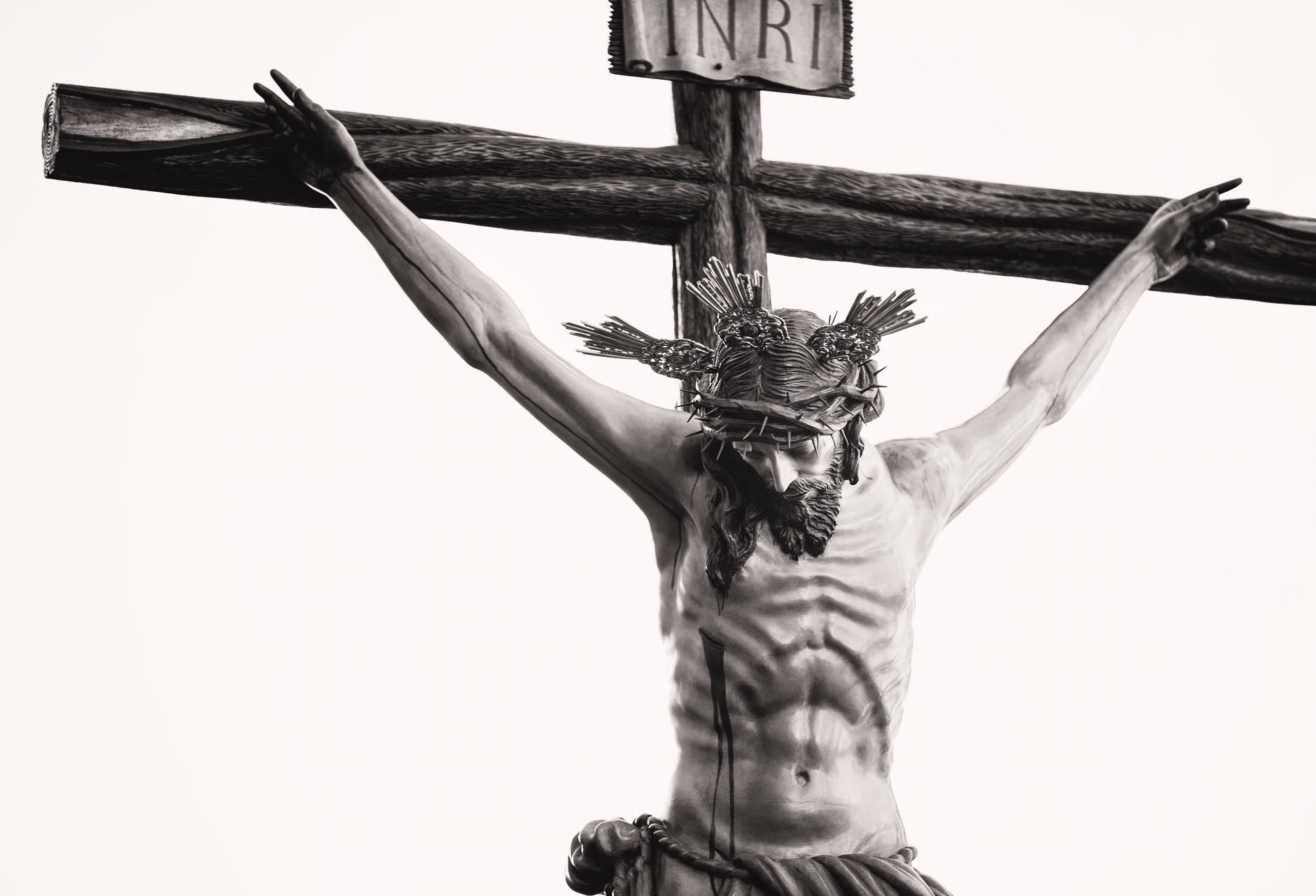
Photo by Alex Green on Pexels.com

Why is the resurrection of Jesus important? At the most basic level it gives us an unshakable hope that all of the spiritual darkness and moral evil in the world is being reversed. More practically, it gives us the unshakable certainty that his resurrection flips the script on our deepest heartaches and reverses our biggest regrets. When we look at the three days from Good Friday to Easter (Resurrection Sunday), we have a framework to make the most sense of the suffering and pain of our lives. 

  • Friday, as Jesus hung on the cross, was the day of suffering, pain and agony.
  • Saturday, as the Son of God laid buried in the tomb, was a day of doubt and confusion.
  • Sunday, as Christ physically arose, was the day of hope and joy.

These three days are the turning point of all history and of our lives. These three days are the hinge that God flips the script of evil and reverses the curse of sin. We will face these three days over and over and over in our lives. We ask:

  • What do I do in my days of pain?
  • How do I get through my days of doubt and confusion?
  • How do I get to the days of hope and victory?

What we know is that despite the continued fallout from sin and its spread, God has an overwhelming love for his creation and is determined to restore what is broken, reverse what has gone wrong, and undo everything that is untrue. God is determined to do that with us personally and all of life universally.

Days of Confusion

It is Easter morning. John tells us that Jesus was buried in a tomb that was in a garden. The detail of this location is not incidental or insignificant. It sets the stage for what will be a decisive truth of understanding God’s restoration plan.

At the place where Jesus was crucified, there was a garden, and in the garden a new tomb, in which no one had ever been laid. 

John 19:41

John continues:

Early on the first day of the week, while it was still dark, Mary Magdalene went to the tomb and saw that the stone had been removed from the entrance. 

John 20:1

Who is Mary Magdalene?  She was the last to stay at the cross on Friday and was the first to the tomb on Sunday. She is arguably the most devoted follower of Jesus. While most of the men were in hiding when Jesus was facing his worst, she was there until the end.  As we will see, she is the first to witness and tell others about the resurrection of Christ.  Why this level of dedication? Luke tells us that before she met Jesus she had seven demons.  Seven is the number of completion in the Bible, and Mary was a complete mess. We do not know what her life looked like: was she abused, abandoned, maybe a prostitute? We simply don’t know.  She was probably like the person today who knew the inside of a prison cell, or often stared at the bottom of a shot glass, or sought to fulfill the need for love in the bed of a stranger. Then she had an encounter with Jesus who stepped into her world; when he spoke, the demons fled and her broken life was put together.  

As she goes to the tomb, Jesus’ earlier predictions of his resurrection are the furthest thing from her mind.  She came just to say goodbye hoping to cope with her enormous lose and grief. When she arrived at the tomb, the nightmare of the last three days seemingly grew darker. It is empty.    

 So she came running to Simon Peter and the other disciple, the one Jesus loved, and said, “They have taken the Lord out of the tomb, and we don’t know where they have put him!”

John 20:2

Maybe Mary was trying in her mind to do what all of us try to do at key places of pain: travel to the past wishing we could change the story. She could be haunted by the “if only” of regrets.

  • If only he hadn’t come in to Jerusalem during this time of trouble.
  • If only his disciples had hidden him somewhere else.
  • If only Peter had been able with his sword to fight. If only.

Our story continues telling us that Peter and “the other disciple” (presumably John) ran to the tomb and found it empty. In the shock of disbelief they return home. You would now expect the camera lens of the narrative to follow them. After all, they were apostles, the future authors of the Bible and the earlier pioneers of the church. It doesn’t. Instead the story lingers with Mary. The apostles go home.  Mary stays.  Why?  Because God is about to flip a script and reverse the curse of when the world originally took the wrong turn.

Reverse the Curse

Our account with Mary continues:

Now Mary stood outside the tomb crying. As she wept, she bent over to look into the tomb and saw two angels in white, seated where Jesus’ body had been, one at the head and the other at the foot. They asked her, “Woman, why are you crying?” “They have taken my Lord away,” she said, “and I don’t know where they have put him.” At this, she turned around and saw Jesus standing there

John 20:11-14

This is where the reversal of our regrets begins: it is when we turn away from the tomb of regrets to the risen Savior of unlimited possibilities.   

but she did not realize that it was Jesus. He asked her, “Woman, why are you crying? Who is it you are looking for?” Thinking he was the gardener, she said, “Sir, if you have carried him away, tell me where you have put him, and I will get him.” Jesus said to her, “Mary.” She turned toward him and cried out in Aramaic, “Rabboni!” (which means “Teacher”).  Jesus said, “Do not hold on to me, for I have not yet ascended to the Father. Go instead to my brothers and tell them, ‘I am ascending to my Father and your Father, to my God and your God.’” Mary Magdalene went to the disciples with the news: “I have seen the Lord!” And she told them that he had said these things to her.

John 20:14-18

Here is what is amazing. Jesus has, so to speak, just ripped the gates off of the hinges of hell. He just yanked the fangs out of Satan’s mouth. He’d just turned BC into AD. He is now the undisputed king of the universe. Tens of thousands of angels stood in rapt attention ready to serve. And what was his first act? To whom did he go? He goes to Mary, the weeping, heartbroken woman who once had seven demons.

  • Why a garden? 
  • Why angels? 
  • Why is Mary the first to witness?
  • Why the morning?

Jesus, in his resurrection, is about to show that he is going to forever reverse the direction of the world’s tragic turn which started in Genesis 3 with Adam and Eve. He begins to undo what was done by reversing the events of the Fall in Genesis 3.

Flipping the Script

Here are a series of parallels with Christ and through this unusual folding of events.

Parallel # 1: (The Garden) When humanity was plunged into sin and death under our original parents, where did it occur?  In a garden. When Jesus emerges from the tomb and reverses the power of death, where did it occur?  In a garden. 

Parallel # 2: (Morning and Evening) When Adam and Eve were in the shame of their nakedness from sin, God was hanging out in the cool of the evening. The night fall signified that the world was being plunged into a spiritual darkness.  Jesus is hanging out toward the start of the morning signifying that the world is emerging into the dawn of a new hope.

Parallel # 3: (Angels) At the Fall an angel was posted to keep people away from the presence of God. Angels are now calling people to the presence of God.

Parallel # 4: (The Women) Eve (who was in innocence) brought deception to Adam.  Mary Magdalene (who was from the worst corruption) is now bringing the message of truth and salvation to the men. 

All of this shows that his resurrection changes the course of the world’s headlong and seemingly unstoppable descent into moral chaos and darkness. His resurrection shows that God now flips the script on our deepest heartaches and reverse our biggest regrets, as he did for Mary.   

Unshakable Hope

Death has lost its power.

Speaking of Christ’s resurrection, Paul triumphantly announces:

“Where, O death, is your victory?
    Where, O death, is your sting?”

 The sting of death is sin, and the power of sin is the law.  But thanks be to God! He gives us the victory through our Lord Jesus Christ.

1 Corinthians 15:56-57

When we think of death, we tend to think of it only in a clinical sense: the heart stops beating or the brain waves cease. When the scriptures speak about death, it refers to much more. Death speaks of the fall and corruption of the entire created order. For Adam and Eve, death meant, first of all, the beginning of their alienation from God. In addition, a curse was placed upon all of creation. God’s strategy for reversing the cataclysmic disaster was for Jesus to defeat death at its own game on the cross and reversing its effects in the resurrection. Jesus’ rising from the dead was the first event of its kind in the whole history of the universe. As the ‘first fruits’ of those raised from the dead (1 Cor. 15:20), the Savior forced open a door that has been locked. Everything is different because of this. Easter Sunday marks the very beginning of the New Creation which opened a new chapter in cosmic history. It was the start of death’s final defeat. Because of this we have much more than optimism. We have an assured hope that the power of the resurrection (Philippians 3:10) is working to overthrow the fallen order and restore creation back to its original design. Our great thrill and privilege is that the church on mission gets in on this.

Regret has lost its power.   

A game I sometimes play is golf.  I am not good, but I am willing to go out and hack at the ball.  Several years ago my sister-in-law gave me golf balls for Christmas.  I’ve never used them.  The reason is that they have my name on them. It is not because of sentiment. It’s because of vanity. I don’t want to leave evidence behind of my failure as a golfer.  I can see someone who found four balls in the weeds and asking, “Who is this Anthony Ferriell?”  But when I get the chance, I still play golf.  There has never been a perfect game of golf. There never has been and never will be. In our journey with Christ, we no longer have to regret a less than perfect life. Perfection is not the goal.  Some days you are close to par, on a rare occasion you get a hole in one; some days you can’t get out of the sand trap and you throw you bag in the water only to remember you put your keys there. When we stop focusing on the tomb of our failures and disappointment and turn around and focus on the grace of the risen Christ who forgives our failures, he flips the script. When we stop focusing on our regrets we begin to regret less.  Like Mary, we can turn away from the tomb of regret to the Savior, who has unlimited grace and possibilities.

Propitiation: Is God Still Angry With Me?

Photo by Pixabay on Pexels.com

There will never be a love that burns with a greater intensity, with a greater ferocity, than the one God has for his creation. Furthermore, out of everything in his beloved creation, humanity is far and away his most beloved. It is a wonderful and profound mystery that the creator of the endlessly expanding universe would even be mindful of us, let alone treasure us so dearly.

This excellent news has, as it should, captured the heart of the Church. It has become a huge point of emphasis in her teaching—again, as it should. However, there are other aspects of God the contemporary Church has, generally speaking, underemphasized or flat-out ignored as a result of this extreme focus on God’s love and benevolence. Scripture tells us God is utterly righteous and just (Psalm 11:17), completely holy in every way. It tells us he detests evil in all its forms (Psalm 11:5), and to violate his perfect law is to engage in an act of deep injustice and disobedience.

Simply put, God loves what is good and hates what is sinful. He is wrathful against sinful acts, and as the all-righteous, almighty judge of creation, he must punish all wickedness. He must punish all instances in which his perfect law has been disobeyed.

At first, this may sound like very, very bad news for us. We’ve all sinned. We’ve all transgressed his good law. We don’t glorify him as we ought, we lie to each other, we hate our neighbor, we lust, and we still have the audacity to feel boastful, self-glorifying pride after doing these things. To pull no punches, we are more sinful than we can hope to understand, and as previously stated, sin incurs the holy wrath of God.

As it is written: ‘None is righteous, no, not one; no one understands; no one seeks for God. All have turned aside; together they have become worthless; no one does good, not even one.‘”

Romans 3:10

If this is true (and it is), then thank God for the propitiation of Jesus Christ!

What Is Propitiation?

Propitiation sounds like a fancy word, but it’s rather simple to understand.

From a secular perspective, Webster’s Dictionary defines propitiation as “the act of gaining or regaining the favor or goodwill of someone or something” as well as “something that appeases.” To put the word in biblical context, then, propitiation is the satisfaction of God’s sin-incurred wrath through the suffering, sacrificial death of Jesus Christ, in which our sin was placed upon him, and he was punished for it in our place.

The sacrifice of Jesus Christ appeases the wrath of God and satisfies his need for justice.

He is the propitiation for our sins, and not for ours only but also for the sins of the whole world.

1 John 2:2

In this is love, not that we have loved God but that he loved us and sent his Son to be the propitiation for our sins.

1 John 4:10

[Jesus] [w]hom God put forward as a propitiation by his blood, to be received by faith. This was to show God’s righteousness, because in his divine forbearance he had passed over former sins.

Romans 3:25

How Does This Work?

The doctrine of propitiation may initially seem odd. You might wonder how the sacrifice of a not guilty party (Jesus) satisfies God’s wrath directed at the wrongdoings of another party (us). This is where the dual nature of Christ comes in. Jesus came to this earth completely God and completely human—100% of both! This means he was able to fully experience what it is to be human (pain, temptation, sorrow, grief, joy, etc.) while still remaining divine and sinless. This voluntary identification with the human condition allowed him to successfully mediate for and represent mankind on our behalf, as we could never hope to mediate between humanity and God in our sinful, broken state. However, his divine nature allowed him to be a perfect, unblemished sacrifice unlike any other—one that covered the sins of humanity once and for all.

The writer of Hebrews explains it like this:

Therefore he had to be made like his brothers in every respect, so that he might become a merciful and faithful high priest in the service of God, to make propitiation for the sins of the people.

Hebrews 2:17

We could never hope to appease God’s wrath on our own. Left to our own devices, we all deserve eternal separation from him in hell. God knew this, and so much did he love us, he devised a glorious plan of propitiation that allows us to be in community with him, all without compromising his justice.

Implications of Propitiation

Critics of the Bible and Christianity may say that the doctrine of propitiation demonstrates the cold, detached, hateful nature of God. They may claim that no loving, kind-hearted deity would ever harbor such anger towards its creation, and this means God is nothing short of a vengeful monster.

In reality, the doctrine of propitiation demonstrates the exact opposite. It tells us that God, the all-righteous creator and judge from whom morality stems—God who cannot let sin go unpunished (that would make him an unjust, immoral judge!), loved us so much that he was willing to come down to us in the flesh and take the full brunt of justice in our place.

This is powerful, unimaginable love.

For God so loved the world, that he gave his only Son, that whoever believes in him should not perish but have eternal life.

John 3:16

Looking Ahead

How can we apply this amazing knowledge to our lives?

Recognize Your Fallenness: On your own, you are not enough to sustain yourself through life and ministry. You can know this principal is true because it is deeply rooted in your salvation: on your own, you could do nothing to appease the holy and righteous wrath of God, so you needed him to reach down and help you, and he did that through the redemptive work of Jesus Christ on the cross. Take this to heart in other areas as well. Nowhere in scripture does it say you are to carry the burden of existence alone. If you have accepted Christ, then you have open access to a God who loves you. You have access to a God who is stronger than you could ever fathom. He has equipped you with his Holy Spirit to do every good work. So when your discipling relationship with that person on your heart isn’t panning out the way you would like, and you are starting to feel inadequate for your calling, recognize that you are not enough on your own and, through prayer and reflection, utilize the guidance and wisdom of the Holy Spirit. In this same way, when you’re undergoing a time of deep loss and sorrow, perhaps because of the death or sickness of a loved one, once again recognize you are not enough to get through life by yourself, and cry out to the God who saves.

Spread the Good News: Did you know there are thousands of people in your community who, at this moment, are still subject to the full wrath of God? There are people who live next to you, or who pass by you in the grocery store, or who even sit next to you in church, who have not accepted the propitiating sacrifice of Jesus Christ? Think about how lost and hopeless you were before you entered into relationship with God, and let this fuel you to go out and make disciples. Pray and see if there is anyone in your life God is calling you to. What relationships do you have that are spiritually ripe for the plucking? It is not God’s will for any to receive the eternal punishment that is their due, and it shouldn’t be your will either. Get out there and serve so that others may discover the miraculous news of the propitiation Christ offers them!

That is, in Christ God was reconciling the world to himself, not counting their trespasses against them, and entrusting to us the message of reconciliation.

2 Corinthians 5:19

Was the Cross Cosmic Child Abuse?

Photo by Alem Su00e1nchez on Pexels.com

British Evangelist Steve Chalke in his book, The Lost Message of Jesus, used the provocative description when referencing the atonement of Christ as “cosmic child abuse.” The atonement of Christ declares that Jesus bore the punishment for humanity’s sin so that we could be declared forgiven and righteous before God. Chalke characterizes this doctrine as:

….a vengeful Father, punishing his Son for an offence he has not even committed. Understandably, both people inside and outside of the Church have found this twisted version of events morally dubious and a huge barrier to faith. Deeper than that, however, is that such a concept stands in total contradiction to the statement: “God is love”.

He states further, “‘Why can’t God do what he asks us to be able to do; to freely forgive without demanding punishment first?” This is a fair question. In our day, the doctrine of the atonement has come under disfavor by increasing numbers of people inside and outside the church. Let’s clarify what the atonement means and then look at the answers to three of its big objections.

What Is the Atonement?

As stated above the atonement is the work Jesus Christ did in bearing our punishment for sin so we could be declared forgiven and righteous. The word itself breaks down into three parts: at-one-ment. Put simply, atonement is how we are brought into “oneness” with God through Jesus. In the atonement God brought a fundamental exchange of humanity’s unrighteousness for Christ’s righteousness. This is beautifully and simply expressed by Paul below:

God made him who had no sin to be sin for us, so that in him we might become the righteousness of God.

2 Corinthians 5:21

Objections and Answers to Atonement

Objection # 1: How can Christ, an innocent person, be justly punished for our sins? It would seem unjust of God to punish an innocent party for the wrong-doing of others.

Answer: Here it is crucial that we distinguish between what has been called imputation and infusion. Imputation is a legal transaction in which we declare something legally to be so. Specifically when the Bible says that Jesus “became sin” for us, it means the guilt of sin was imputed to Jesus. He was declared to be the bearer of our guilt though having done nothing wrong. Infusion is different. It is to actually impart the guilt and wrong of our sin upon Jesus. William Lane Craig writes, “…our sin should not be understood to be infused into Christ so that he is made into a selfish, unloving, cruel, etc., person. Rather the blame for my crimes is legally imputed to Christ, and so he is punished in my place.” The guilt was transferred legally from us to Jesus.

Objection # 2: How can God be loving if his wrath and anger have to be appeased? The picture of the atonement expresses a wrathful father taking out his anger on his merciful and loving son. It is difficult to see how this is loving. It appears on par with child abuse.

Answer: Jesus was not a child, but a mature adult, able to make his own free choices and willing to take responsibility for them. From this point of view, the cross no more amounts to child abuse than the actions of the U.S. military sending Navy Seals behind enemy lines, with significant risk and danger, to conduct a special operation. Like them, Jesus was a volunteer who had freely chosen and resolved to lay down his “life for his friends,” (John 15:13) in this eternal rescue operation. As Jesus carried out this decision, he made no attempt to escape when the arresting party approached. He declared clearly stated, “No one takes it from me, but I lay it down of my own accord.” (John 10:18)  

Objection # 3: If our Creator was truly generous, couldn’t he just forgive and move on without repayment? Why can’t God just forgive the debt of sin out of his own good will and loving kindness?

Answer: The reason why God cannot just let things go, live and let live, is because of his wrath and anger against sin. To just let things go would reduce God to a remote and doting grandfather in the sky who is out of touch with the very pain and evil of our sin. The wrath of God has to be dealt with. If we are resistant to the idea of the wrath of God, we might pause to reflect the next time we are outraged about something—about our job security being threatened, or our children’s athletics opportunities being limited, or our tax rates increasing. Anger and outrage is very much a part of the human condition.

Fleming Rutledge explains:

A slogan of our times is “Where’s the outrage?” It has been applied to everything from Big Pharma’s market manipulation to CEOs’ astronomical wealth to police officers’ stonewalling. “Where’s the outrage?” Why has the gap between rich and poor become so huge? Why are so many mentally ill people slipping through the cracks? Why does gun violence continue to be a hallmark of American culture? Why are there so many innocent people on death row? Why are our prisons filled with such a preponderance of black and Hispanic men? Where’s the outrage? The public is outraged all over cyberspace about all kinds of things that annoy us personally—the NIMBY (not in my back yard) syndrome—but outrages in the heart of God go unnoticed and unaddressed.

The wrath or outrage of God is not an emotion that flares up from time to time, as though God had temper tantrums. It is God’s righteous and just anger against all wrong and his determination to set them right. In setting these wrongs right, God is the one who determined to bear his wrath and condemnation upon himself because of his love for those who are the offenders. Jesus Christ, as the eternal Son of God, bears this in unity with the Father through the power of the Holy Spirit, who raised Jesus from the dead. (Romans 8:11)

Why Is Atonement Important?

God paid the complete cost of our forgiveness.

Someone always eats the cost or bears the consequences of sin. For example, let’s say your neighbor’s decaying tree falls on your roof after a strong wind storm. When you discover the damage, you forgive him: “Don’t worry about the roof! All is forgiven.” But forgiving your neighbor doesn’t do away with the bill or dissolve the damage. It means you eat the cost or bear the consequences. When the U.S. housing market crashed in 2008 because banks engaged in shoddy financial practices, the result was a financial collapse. The government could not just let it go. Someone had to pay the costs. The banks were deemed “too big to fail,” and the government forgave the debt, covering the most expensive bailout of human history. Though the banking industry had caused massive damage, the debt was forgiven. But the debt didn’t go away. It had to be covered—in this case it was the American people. At the cross, God ate the cost of our sin. Someone had to. Jesus determined it would be him.

God paid the cost for sin’s removal once and for all.

Another question that could be asked is why did Jesus Christ not remain alive and eliminate, generation by generation, all the evils which harass humanity? Pastor Richard Halverson responded to this question as follows:

Simply because He was the Great Physician, and in the finest tradition of medical science, He was unwilling to remain preoccupied with the symptoms when He could destroy the disease. Jesus Christ was unwilling to settle for anything less than elimination of the cause of all evil in history.

The writer of Hebrews declares:

Christ was sacrificed once to take away the sins of many; and he will appear a second time, not to bear sin, but to bring salvation to those who are waiting for him.

Hebrews 9:28

At the cross, God displayed his overwhelming love for his lost and broken creation and set in unstoppable motion its recovery and restoration. This means for us, the ultimate problem of sin has been completely and thoroughly dealt with through the atonement.

For Further Equipping:

Memorize: 2 Corinthians 5:21

Read:

The Power of Justification to Overcome Shame and Guilt