
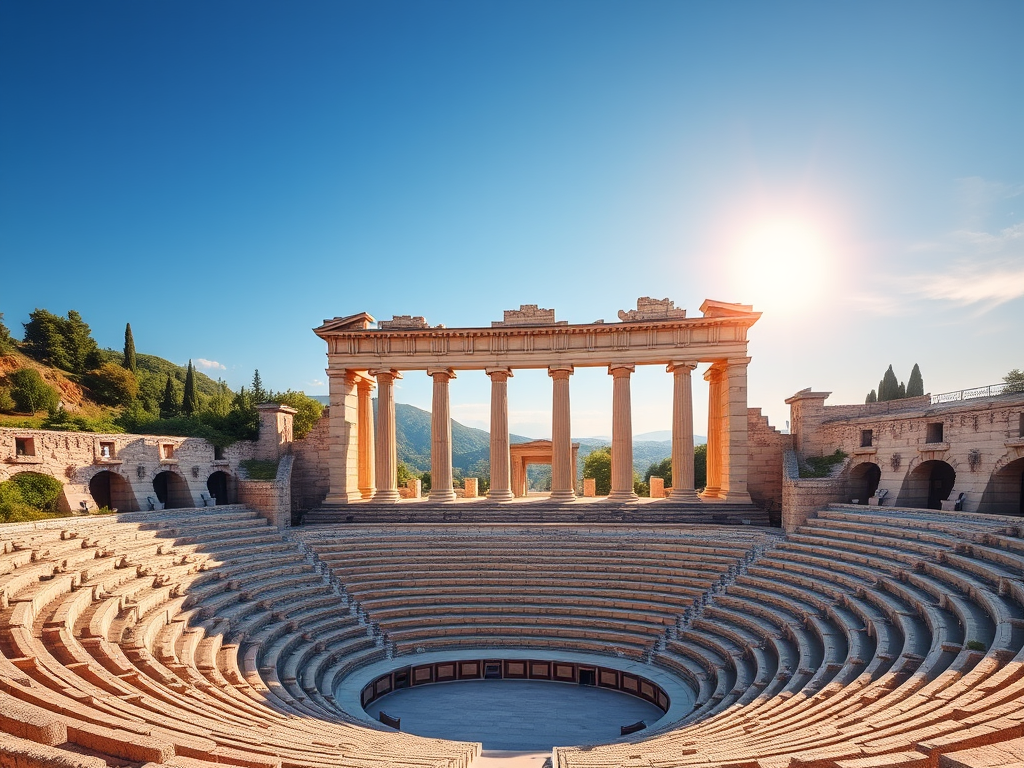
In the emerging democracy of Greece of the fifth century B.C., a newly created art form of theater helped to cultivate attitudes and foster education which advanced a democratic spirit: “a government of the people, by the people and for the people.” Democracy requires a lot of hard work. The simple idea of “one person, one vote,” is hardly sufficient. If citizens who have that vote are not correctly taught or informed how to think about the larger issues related to matters they are voting on, then it will be misdirected. Furthermore, when dissent or differing viewpoints of fellow citizens are not respected, then democracy will descend into a division of the many (majority opinion) against the few (minority opinion), sometimes leading to mob action–or more extreme–civil war. For the newly birthed democratic revolution in Greece–which had no other country to serve as an example–it was vital that there would be a venue in popular culture to both educate in matters related to the state and encourage toleration of differing views. The avenue which developed was the theater where plays known as tragedies were performed. It was in this setting that as many as twenty thousand people would gather in an amphitheater, and the stories of playwrights would be acted out.
In this article we will examine how the theater with its tragedies helped to sustain the spirit and practice of democracy in ancient Greece. This art form deepened the Story of Grace in which God matured humanity to become more like the Trinity where personal dialog and mutual understanding were increased in order to maintain a life-giving unity.
The Birth of Tragedy
Theater and the Promotion of Democracy
Here are four ways that Greek tragedies helped to promote and nurture democracy:
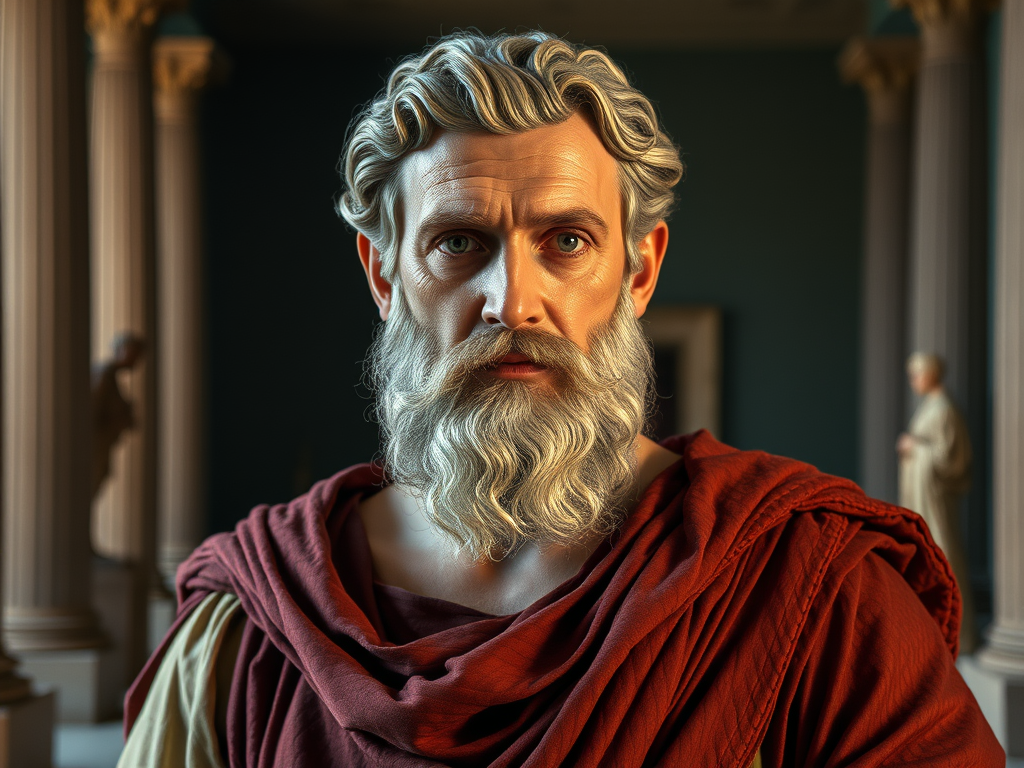
The first theaters with plays were produced and performed in Athens. These plays were known as tragedies because they emphasized the inevitability of a heroic downfall because of the fragility of human limits and moral error (pride, anger, lust, etc.). Emerging in the wake of Athens’ democratic revolution, people could identify with these plays because Greece had arisen from tremendous amounts of conflict and loss. Further, (like today) they could take comfort that their heroes were all too human like they were. These plays demonstrated anew the fragile balance between order and chaos which grew from the aftermath of the democratic revolution. So popular were these tragedies that over a thousand were produced in the fifth century B.C. Today we only possess some thirty of them which were composed by three authors: Sopholocles, Euripides and (who) The Greek experience was critical because they founded democracy at a time when it had never existed.
Four Ways Greek Theater Cultivated Democracy
- Plays nurtured a common civic culture. The outdoor amphitheaters in ancient Greek city-states were places citizens would gather together from different classes and backgrounds as equals. They sat next to each other and participated in the same grand experience. In this setting social walls were broken down, and they came together as one people. For democracy to work the citizens must acknowledge that other citizens are our equals and are entitled to an equal say. This view point is not natural and has to be nurtured in order to be maintained.
- Plays encouraged citizens to engage in deeper conversations. After watching plays, citizens would often have more in-depth conversations about moral and political issues which impacted all people. If democracy was to function well, citizens must do a lot of thinking and talking about moral issues related to their political life. As storytellers and as political philosophers, the tragedians educated theater audiences in vital issues. They structured their plots around conflicts of law and justice, mortal men and divine gods, male and female, family and the state, the insiders and outcasts. This exposed the audience to the issues which impact the real nature of debate, dialog and disagreement which occur within democracy.
- Plays modeled dialogue. With their often-used rapid form of question-and-answer dialogue to explore issues, plays showed how conversations needed to take place. To learn this skill was essential to the deliberation which was required in democracy. It modeled for them, in certain instances (like Aeschylus’ Oresteia), how to embrace civility in difference and dissent, creating a more open society.
- Plays challenged ideas which threatened democracy. For example, in Sophocles’ famous tragedy Antigone, revolves around the question of political supremacy. Pericles, the great Athenian democratic ruler, initiated new policies which elevated political allegiance to the state above all else, including above the allegiances owed to individuals and to one’s family. The all important theme of the power of the state in relation to the individual and family is undertaken. In the Suppliants by Aeschylus, tells the story of fifty fictional women, having fled their homeland of Egypt, pleaded for asylum in a Greek city-state. These suppliants were outsiders in every sense of the word. Yet as women, and as foreigners, they were determined to be treated with state protection and dignity in a land where such a fundamental right was denied to foreigners. (This is an ever relevant discussion in many parts of the world today.) Prometheus Bound concerns the role of the limits of human advancement; Oedipus Rex relates to the power of authority and the fall pride brings, just to name a few. All of these topics, among others, were (and still are) urgently important to think about when it comes participation in the life of the state as a responsible citizen.
The Enduring Legacy
Tragedy is still alive for the very reason that it relates to the challenges of our human condition. We are a mix of heroic action and mortal deceit. We attain great heights of achievement only to be toppled by inevitable flaws. This is why today film with tragic themes like The God Father, Titanic, Breaking Bad or Batman are so popular. There are two ways that God advanced his Story of Grace through theater.
In Greek tragedy, humanity more clearly sees its need for grace. The work of God’s grace to mature humanity through the millenniums has been remarkable given humanity’s tragic fallenness. Only God’s grace could overcome the level of brokenness which sin has brought. But this maturing has been a work of grace, in which God’s power guided by love, is progressively overcoming humanity’s sin and depth of brokenness. God, in his grace, has led humanity to such discoveries as language (Babel), navigation (Phoenicians), science (Medes), and now democracy (Greeks). As Paul wonderfully declares:
“But where sin increased, God’s grace increased even more.”
Romans 5:20
Greek tragedy showed the inevitability of sin. For the Greeks, this was their power of the law to show humanity of his need to be delivered from the tragic implications of human selfishness. Yet, the tragic nature of tragedy is just that, it provides no answers to the broken human condition. This deliverance will be ultimately discovered in the life and death and resurrection of Christ.
In Greek tragedy, humanity sees more of the value and viewpoints of others. This creates more of a spirit of toleration. As the audience watched the plays, they experienced a deep sense of pathos (Greek word for suffering) which stirred emotions for the plays character such as sorrow, joy, elation, fear. These made the stories engaging and relatable. These emotions which were wedded to moral lessons helped the Greeks to think and to feel in greater moral categories. Aristotle wrote that this was very healthy for a community. In this new art form, the dynamic and interchangeable love within the Trinity is more fully realized at a larger scale. This identification with one another is more fully reflected in the life of the Trinity which is mirrored in the church. Paul expressed it as follows:
“If one part suffers, every part suffers with it; if one part is honored,
1 Corinthians 12:26
every part rejoices with it.“
 Story of Grace