What the Story of Grace Is All About: An Excursus on Colossians 1:15–20

The Story of Grace, as a theological project, highlights how God reveals Himself through creation and redemption. The Triune God—Father, Son, and Holy Spirit—unfolds a tale of love, inviting all things into communion with Him. This story is more than just history; it shows a purpose, supporting Jonathan Edwards’s idea that “the great end of all God’s works is the glory of God,” seen in the ongoing redemption of creation. Within this narrative, divine grace and human actions connect, emphasizing the need for faith and obedience in accepting God’s call. The various stories that emerge showcase different aspects of grace, linking to our own challenges and victories. By understanding grace, we see not only the larger story of redemption but also our roles in this divine journey, deepening our understanding of our relationships with God and one another.

Started in June 2023, this project explores early religion and the idea of divine economy (oikonomia) as explained by Irenaeus of Lyons, who viewed Christ’s redemptive work as a “recapitulation” (anakephalaiosis) of all creation, reversing Adam’s fall and restoring harmony in the Trinitarian life. Central to this is the early Christian hymn from Colossians 1:15–20, which Paul uses to declare Christ’s cosmic authority, interweaving protology (origins), soteriology (salvation), and eschatology (ultimate ends) into a unified tapestry of grace that shows the unity and diversity of God.

This hymn, resonant with the Wisdom traditions of Proverbs 8 and the Logos theology of John 1, declares:

15 The Son is the image of the invisible God, the firstborn over all creation. 16 For in him all things were created: things in heaven and on earth, visible and invisible, whether thrones or powers or rulers or authorities; all things have been created through him and for him. 17 He is before all things, and in him all things hold together. 18 And he is the head of the body, the church; he is the beginning and the firstborn from among the dead, so that in everything he might have the supremacy. 19 For God was pleased to have all his fullness dwell in him, 20 and through him to reconcile to himself all things, whether things on earth or things in heaven, by making peace through his blood, shed on the cross. (Colossians 1:15-20)

In this passage, the apostle presents a Trinitarian story where the Son, as the image of the Father, conveys the Father’s creative command and the Spirit’s life-giving presence, promoting shalom—a complete flourishing that looks forward to the new creation mentioned in Isaiah 65:17–25 and Revelation 21:1–5. This story highlights the deep connection between the three divine persons: they are united without losing their individuality, as Tertullian explained in Against Praxeas, describing the Trinity as “three persons, one substance,” distinct in their roles but unified in essence.

The implications for eschatology are significant: the Story of Grace ends with the idea that “God may be all in all” (1 Corinthians 15:28), a universal healing that mends the brokenness of sin and turns conflict into a harmonious unity that reflects the nature of the Trinity.

Three Truths of Story of Grace

Truth # 1: In God’s Story Jesus is Creator and Redeemer of all creation.

The Son is the image of the invisible God, the firstborn over all creation…And he is the head of the body, the church; he is the beginning and the firstborn from among the dead, so that in everything he might have the supremacy. (Colossians 1:15, 18)

Transcendence (God Above All) and Immanence (God Within All)

The term prōtotokos (firstborn) when referring to Christ highlights His unique position, not just in time but in essence. According to Karl Barth in Church Dogmatics (IV/1), Jesus is both the Creator and Redeemer, connecting the eternal with the present world.

Being the firstborn signifies not only Christ’s authority over all creation, similar to the “thrones or dominions” noted in Colossians 1:16, but also emphasizes His intimate relationship with all creation, filling it with divine life. This idea connects to Boethius’s view of eternity as “the simultaneous and complete possession of infinite life” in The Consolation of Philosophy, where eternity meets time through Christ’s life, making the invisible God (theos aoratos) truly present in our world. This dual nature of Christ also points to future renewal, as Athanasius mentions in On the Incarnation, “He became what we are that He might make us what He is,” meaning that humanity and creation are invited to share in God’s glory.

Romans 8:19–21 describes creation’s struggle as it waits for freedom from decay, leading to the “freedom of the glory of the children of God,” with Christ referred to as the “firstborn among many brothers and sisters” (Romans 8:29). Therefore, the resurrection starts a new age, where, as Jürgen Moltmann writes in The Coming of God, Christ brings about a “new creation” that redeems both people’s souls and the material world, suggesting a renewed environment filled with grace where decay gives way to lasting life.

Truth # 2: In God’s Story everything is being renewed into the likeness of the Trinity.

For in him all things were created: things in heaven and on earth, visible and invisible, whether thrones or powers or rulers or authorities; all things have been created through him and for him. (Colossians 1:16)

Reciprocating Love From the Trinity

The prepositions “through” (dia) and “for” (eis) Christ describe a relationship based on the mutual love within the Trinity, where creation comes from the Father’s generous love for the Son, and is brought to life by the Spirit. As Charles Spurgeon said, “just as they are united in creation, they are united in salvation, working together as one God for our salvation.”

This reflects the harmonious unity and diversity of the Godhead, which Herman Bavinck refers to as the “archetype of man” and all creation, where “unity and diversity coexist without harming each other.

Philosophically, this relates to Hegel’s concept of thesis-antithesis-synthesis, but reinterpreted in Christian terms as a peaceful harmony, where diversity enhances unity without conflict. Biblically, Ephesians 1:9–10 supports this idea: God “made known to us the mystery of his will… to unite all things in him, things in heaven and things on earth,” showing a Trinitarian coming together that opposes chaos with abundant life, as seen in Genesis 1’s repeated mentions of “all” and “every,” symbolizing God’s overflowing creativity (with 87 million species estimated today). In the future, this suggests a fulfilled order in Revelation 22:1–5, where the river of life flows from God’s throne and the Lamb, nurturing a restored creation in lasting communion, free from the curse (Genesis 3:17–19).

Truth # 3: In God’s Story redemption and renewal is universal in scope.

For God was pleased to have all his fullness dwell in him, and through him to reconcile to himself all things, whether things on earth or things in heaven, by making peace through his blood, shed on the cross. (Colossians 1:19-20)

The plērōma (fullness) that lives in Christ represents the complete nature of God (Colossians 2:9). It brings about a cosmic apokatallassō (reconciliation), as Irenaeus’s theory suggests: Christ “summed up all things in Himself,” restoring the broken universe.

This wide-reaching scope—covering “all things” (ta panta)—challenges ideas that focus only on humans for salvation, extending even to the suffering creation (Romans 8:22). John Piper emphasizes that “Jesus isn’t just the means. He is the great end,” the purpose of history.

Theologically, this connects with Augustine’s City of God, where grace changes selfishness into love for others, reflecting the Trinity’s unity (John 17:21–23). Looking to the future, Hebrews 1:2–3 describes Christ as heir and supporter, whose cleansing work points to the “world to come” (Hebrews 2:5), a renewed universe where “the wolf shall dwell with the lamb” (Isaiah 11:6), suggesting the end of harmful structures and the establishment of peace.

Implications of the Scope of God’s Story of Grace

First, God’s Story unfolds through salvation history. This means that God reveals Himself slowly over time, as Edwards suggests, allowing people to understand gradually without being overwhelmed. This helps them grow spiritually towards the ultimate vision. The story of Israel—from slavery in Egypt to freedom (Exodus 19–20), judges to kings (1 Samuel 8–2 Samuel 7), and exile to recovery (Ezra 1–6)—shows God’s qualities: grace, greatness, and loyalty. It all leads to Christ, who says, “Whoever has seen me has seen the Father” (John 14:9). This history points to the end times, where people can see God’s ultimate glory (1 John 3:2).

Secondly, God’s Story unfolds through the nations. Acts 17:26–27 tells us that God sets times and places “that they should seek God,” guiding cultural strengths towards a reflection of God’s nature. For example, Athenian democracy, developed from its unique conditions, sports, and theater, encourages unity in diversity, which is further enhanced by the inclusive values of Christianity (Galatians 3:28). This idea comes together in Revelation 7:9–10, portraying a diverse group worshiping Jesus, fulfilling God’s promise to Abraham (Genesis 12:3) in a beautiful diversity.

Third, God’s Story touches all cultural expressions. Language, stories, ideas, social connections, and artifacts can all be used for divine purposes. For instance, the Phoenician alphabet and papyrus allowed the creation of the Hebrew Scriptures, with “Bible” coming from Byblos, showing God’s guiding hand in history. In the end, this hints at a renewed way of understanding in the new Jerusalem, where “the leaves of the tree are for the healing of the nations” (Revelation 22:2), turning cultural creations into tools for eternal connection.

Conclusion

This project, developed over thirty years and starting in 2023, aims to understand God’s redemptive influence, bringing joy to life within the Trinitarian story. Just as Edwards’s unfinished work inspires modern extensions like Gerald McDermott’s A New History of Redemption, the Spirit—seen in Colossians 1:8–9—enables participation in divine glory (John 17:5). In this Story of Grace, the unity and diversity of creation reflect the Trinity, moving toward a future where all is made new, continuously echoing the Father’s love through the Son in the Spirit.
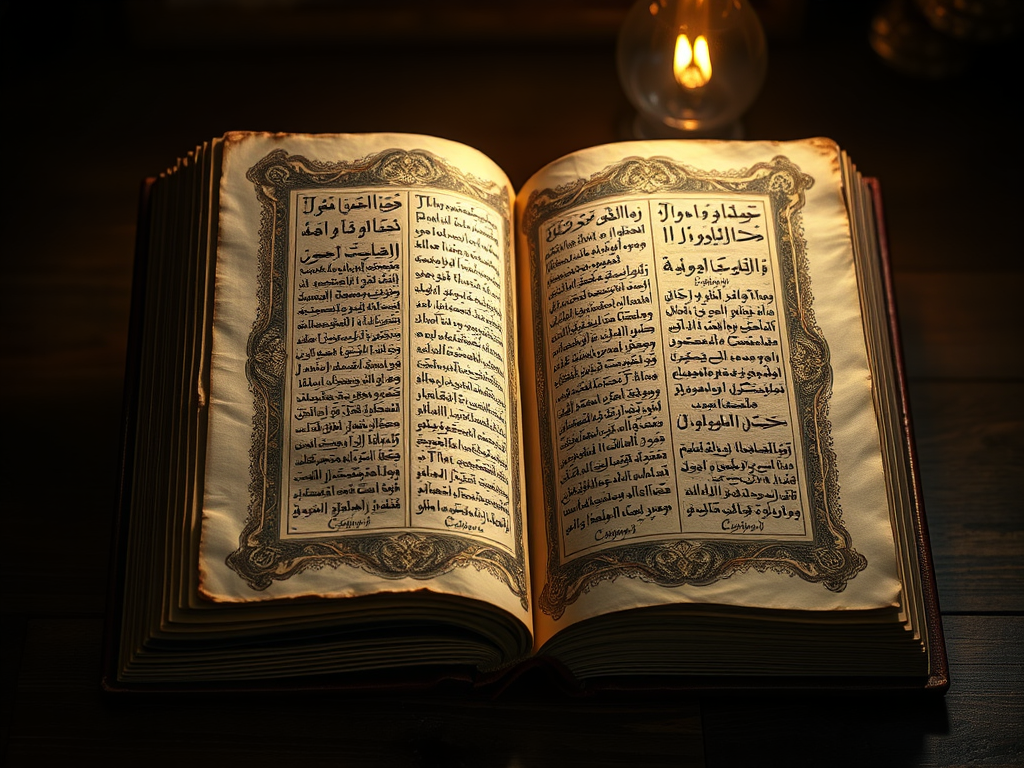
The Bible Behind Your Bible (The Codex Sinaiticus)

Image of a Codex

The most important development to emerge as a result of the Alexandrian Library is the creation of the codex of the New Testament. A codex is the earliest form of a book. The earliest codices (plural for codex) we have come from Alexandria due to the importance the city placed upon books (collections of manuscripts). In fact, the oldest copy of the entire New Testament is the Codex Sinaiticus, which came from the Sinai of Egypt and likely originated from Alexandria. The Codex Sinaiticus, also called the Sinai Bible, is an early fourth-century collection of bound manuscripts, containing the majority of the Greek Old Testament (Septuagint) and all of the New Testament (also the letters of Barnabas and the Shepherd of Hermas). This codex laid hidden from the world in a remote monastery in Egypt, near Mount Sinai, from the fourth century until the mid-nineteenth century (nearly 1500 years), when it was discovered by a German New Testament scholar, Constantine von Tischendorf. This codex is a part of a family of approximately 30 New Testament texts originating from this region (Egypt) and time (4th century). These are called the Alexandrian Texts and are considered among the oldest and most reliable for understanding the original New Testament manuscripts.1

They will summon peoples to the mountain
    and there offer the sacrifices of the righteous;
they will feast on the abundance of the seas,
    on the treasures hidden in the sand.

Deuteronomy 33:19

With a number of factors which could not have been planned or predicted, God has preserved His Word and provided overwhelming authentication of its preservation. The Sinai Bible, along with the other Alexandrian Texts, provides another layer of confirmation and evidence of the authenticity and reliability of the Bible. In this article we will examine the influence of the Codex Sinaiticus, its relationship to the Library at Alexandria, and how it reinforces the authenticity of the New Testament.

The Codex Revolution

What is a codex?

As previously stated, the codex is the ancestor or earliest form of the modern book. The word “codex” comes from the Latin word meaning “trunk of a tree,” “block of wood” or “book.” It basically consisted of individual sheets of papyrus (made from a plant) or vellum (made of animal skins) which were folded and bound together. These were grouped into sections, and then the sections were stitched or bound along one edge, often with a cover to protect the assembled pages. 

How did the codex shape Christianity?

Before the codex the common form of writing was the scroll where ink was set down on a roll of papyrus and parchment. When the codex was introduced, it quickly replaced the scroll so that by the 400’s in Egypt, the codex outnumbered the scroll by ten to one. Egypt was front and center for the popularization of the codex because of its rich tradition and expertise in copying from Alexandria. Since there was a significant and influential Christian population in Alexandria, the New Testament and Old Testament became the frontrunners in codex revolution. This new format of collecting writings shaped Christianity in four key ways:

1. It helped to develop the canon. Canon is the term referred to as the books which would be included in the Bible. The codex, with its ability to contain multiple works, encouraged the inclusion of certain writings and the exclusion of others. Over time this process helped to solidify the core writings that would become the twenty-seven books of the New Testament. This provided an authoritative and shared foundation for Christian belief.

2. It strengthened the spread of Christian communities. The codex was more durable and could be more easily transported than scrolls. The papyrus manuscripts would often last for only decades. The codices had a much greater durability, lasting in tact for centuries. They became tools of resilience, ensuring that the scriptures survived, and providing greater accessibility across geographical locations.

3. It made the teaching and practice of scripture more practical. This innovation of the codex meant that Christians could carry their scriptures with them and study them more easily. Gatherings often centered on the reading and interpretation of scripture, with passages recited aloud for the benefit of those who could not read. This accessibility fostered a new way of engagement.

4. It helped shape a new forward looking identity. The codex was not merely a technological advancement. In a world where scrolls were associated with Judaism, Greco-Roman literature, and civic records, the codex marked a departure from tradition. It became a visual and practical representation of Christianity’s newness—a movement that was not bound by the conventions of the past. By embracing this revolutionary format, Christians demonstrated their adaptability.

The Role of Scribes

A Salvaged Page from
the Codex Sinaiticus

The transition from scrolls to codices would have been impossible without the tireless efforts of scribes, also known as copyists. The Jewish scribe did the arduous work of copying new manuscripts of the Old Testament. This was a vital profession for the preservation and transmission of the Old Testament ensuring that sacred texts were transmitted faithfully from one generation to the next. Early Christianity inherited this reverence for scribal work from the Jews and the copyists at the Alexandrian Library, as well. A new sense of urgency was added as the apostles’ writings and the gospels needed to be copied, circulated, and preserved as the church expanded across the Roman Empire. For this reason these scribes and copyists occupied a central role in the production and transmission of early Christian texts. Their work often required extraordinary precision and skill; yet it was seen as a sacred service to God and the community of believers.

Codex Sinaiticus and the Reliability Of the New Testament

The discovery of the Codex Sinaiticus provides another layer of evidence to validate the authenticity of the New Testament–that the New Testament writings we have today faithfully represent the original writings. Yet, there are several questions people naturally ask. Let’s address some:

What about the time gap? If the Codex Sinaiticus is the earliest copy of the entire New Testament that we have, and it was written about 300 years later than the originals, how can we trust that it is reliable? When you consider the time gap by ancient standards, the New Testament is remarkably brief. This is especially the case given that we have a section of the Gospel of John (John Ryland Papyrus) written about 40 years after the original writing. Below is a comparison of the New Testament and other ancient writings:

WorkDate WrittenEarliest CopiesTime Gap
Homer’s Illiad800 BCBC 400 400 Years
Herodotus History 480-425 BCAD 10001350 Years
Plato Tetralogies400 BCAD 8951300 Years
Caesar Gallic Wars100-44 BCAD 800950 Years
Tacitus AnnalsAD 100AD 850750 Years
Greek NT
(John Ryland Papyrus)
AD 40-90AD 13040 Years
Comparison of Time-Gap of New Testament
with Other Ancient Writings

In addition, there was a rapid copying of texts which gives us so many to compare. As disciples and churches rapidly grew, there was an increasing need to make copies of the letters to be read. This is why, as already stated, that the skills of the copyists were in such high demand. Because of this, there are an abundance of New Testament manuscripts from this time. This amount of documents gives us assurance that we can discern the content of the original writings despite the time gap from the original documents.  Here is a break down of the numbers for the Bible:

  • Greek Manuscript total: 5,856
  • Non-Greek Manuscripts (Armenian, Latin, etc.): 18,130
  • Total Manuscripts: 23,986

This is an astounding number when compared to other ancient documents. If you stack existing manuscripts from the average classical writer, it would measure about four feet high. The NT manuscripts would stack to more than one-mile high.

Worktotal number of manuscript copies
Homer’s Illiad 643
Herodotus History 109
Plato Tetralogies 210
Caesar Gallic Wars 251
Tacitus Annals 33
Number of Copies of Classical Writings

What about the variations in the documents? We know that the scribes who copied the manuscripts took extreme efforts to get the transmission accurate. Because of the human element in the transmission, there are differences in the texts. But this is completely understandable given the human complexities and difficulties in copying. What is quite remarkable, given this fact, is that the vast majority of biblical texts remain consistent across all of the biblical manuscripts. Of the 5,856 Greek manuscripts, there is 98% agreement as to what the original writing is. Where there is disagreement, none of these effects doctrine.

Most of these variations are no more significant than spelling differences, small changes of word order or misplaced letters. The chart below shows what the nature of most of these variants are like:

Spelling ConventionsIn English this is similar to using “a” versus “an” or “who” versus “whom.”
Similar Appearances of Words In 1 Timothy 3:16, some manuscripts read “He was revealed in the flesh” while others read “God was revealed in the flesh.” The difference is accounted for how “God” and “he” in abbreviated form in the Greek look very similar: “he” (Greek: Ὃς) and “God” (Greek: Θεὸς). Yet, this has no effect on the meaning.
Similar Sounding WordsSometimes scribes would work in teams, with one scribe reading aloud while the other wrote what was spoken. In some cases, a word would be misheard because it had a similar sound. This would be in English like writing “rode” instead of “road” or “there” instead of “their.”
Transposed WordsChrist Jesus versus Jesus Christ (Word order in the Greek is not nearly as important as it is in English.)
Examples of the Kinds of Variants in NT Copies

Many of these variants are clustered in just a few places over and over again. As they are spotted, it is easy to identify them and make the corrections or clarify the original words. The Codex Sinaiticus contains many scribal corrections to errors they spotted in the copying process. But these are not significant in terms of content and especially doctrine. For example, imagine you come across a copy of a document which reads, “Roses are read, violets are blue. . . .” It’s not hard to see what happened as the original was copied? The correction is fairly simple: “Roses are red, violets are blue…” The scribal corrections are evidence of the importance of and strenuous efforts made toward accuracy. The Codex Sinaiticus (along with the other Alexandrian Texts) is another confirmation that the core message of the Bible has been remarkably preserved.

Conclusion

So, can we trust that the Bible has been accurately translated? YES! The evidence shows a nearly miraculous process which allowed for such a stable transmission. As a result, we can be confident that the translations we have are based on an overwhelmingly strong amount and quality of document sources. The discovery of the Codex Sinaiticus was just another layer of evidence increasing our confidence in the reliable transmission of God’s Word.

“Your word, LORD, is eternal; it stands firm in the heavens.”

Psalm 119:89

The codex advanced God’s Story of Grace by allowing the writings of the apostles and prophets to become more accessible, widespread and diverse communities (many) to become unified (one).

1 Most modern Bible translations are based on the Alexandrian Texts.