Resurrection > Regret (John 20:1-18)

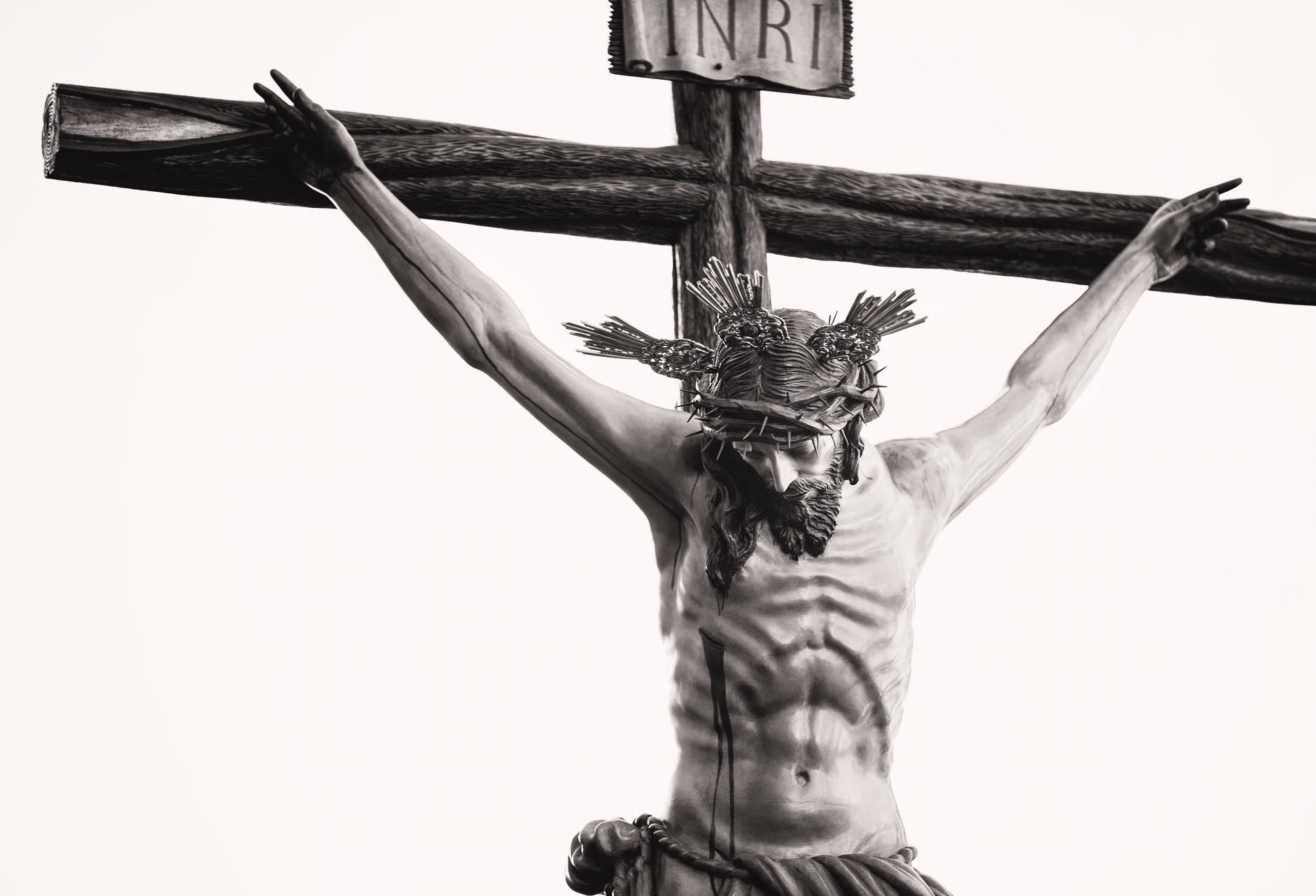
Photo by Alex Green on Pexels.com

Why is the resurrection of Jesus important? At the most basic level it gives us an unshakable hope that all of the spiritual darkness and moral evil in the world is being reversed. More practically, it gives us the unshakable certainty that his resurrection flips the script on our deepest heartaches and reverses our biggest regrets. When we look at the three days from Good Friday to Easter (Resurrection Sunday), we have a framework to make the most sense of the suffering and pain of our lives. 

  • Friday, as Jesus hung on the cross, was the day of suffering, pain and agony.
  • Saturday, as the Son of God laid buried in the tomb, was a day of doubt and confusion.
  • Sunday, as Christ physically arose, was the day of hope and joy.

These three days are the turning point of all history and of our lives. These three days are the hinge that God flips the script of evil and reverses the curse of sin. We will face these three days over and over and over in our lives. We ask:

  • What do I do in my days of pain?
  • How do I get through my days of doubt and confusion?
  • How do I get to the days of hope and victory?

What we know is that despite the continued fallout from sin and its spread, God has an overwhelming love for his creation and is determined to restore what is broken, reverse what has gone wrong, and undo everything that is untrue. God is determined to do that with us personally and all of life universally.

Days of Confusion

It is Easter morning. John tells us that Jesus was buried in a tomb that was in a garden. The detail of this location is not incidental or insignificant. It sets the stage for what will be a decisive truth of understanding God’s restoration plan.

At the place where Jesus was crucified, there was a garden, and in the garden a new tomb, in which no one had ever been laid. 

John 19:41

John continues:

Early on the first day of the week, while it was still dark, Mary Magdalene went to the tomb and saw that the stone had been removed from the entrance. 

John 20:1

Who is Mary Magdalene?  She was the last to stay at the cross on Friday and was the first to the tomb on Sunday. She is arguably the most devoted follower of Jesus. While most of the men were in hiding when Jesus was facing his worst, she was there until the end.  As we will see, she is the first to witness and tell others about the resurrection of Christ.  Why this level of dedication? Luke tells us that before she met Jesus she had seven demons.  Seven is the number of completion in the Bible, and Mary was a complete mess. We do not know what her life looked like: was she abused, abandoned, maybe a prostitute? We simply don’t know.  She was probably like the person today who knew the inside of a prison cell, or often stared at the bottom of a shot glass, or sought to fulfill the need for love in the bed of a stranger. Then she had an encounter with Jesus who stepped into her world; when he spoke, the demons fled and her broken life was put together.  

As she goes to the tomb, Jesus’ earlier predictions of his resurrection are the furthest thing from her mind.  She came just to say goodbye hoping to cope with her enormous lose and grief. When she arrived at the tomb, the nightmare of the last three days seemingly grew darker. It is empty.    

 So she came running to Simon Peter and the other disciple, the one Jesus loved, and said, “They have taken the Lord out of the tomb, and we don’t know where they have put him!”

John 20:2

Maybe Mary was trying in her mind to do what all of us try to do at key places of pain: travel to the past wishing we could change the story. She could be haunted by the “if only” of regrets.

  • If only he hadn’t come in to Jerusalem during this time of trouble.
  • If only his disciples had hidden him somewhere else.
  • If only Peter had been able with his sword to fight. If only.

Our story continues telling us that Peter and “the other disciple” (presumably John) ran to the tomb and found it empty. In the shock of disbelief they return home. You would now expect the camera lens of the narrative to follow them. After all, they were apostles, the future authors of the Bible and the earlier pioneers of the church. It doesn’t. Instead the story lingers with Mary. The apostles go home.  Mary stays.  Why?  Because God is about to flip a script and reverse the curse of when the world originally took the wrong turn.

Reverse the Curse

Our account with Mary continues:

Now Mary stood outside the tomb crying. As she wept, she bent over to look into the tomb and saw two angels in white, seated where Jesus’ body had been, one at the head and the other at the foot. They asked her, “Woman, why are you crying?” “They have taken my Lord away,” she said, “and I don’t know where they have put him.” At this, she turned around and saw Jesus standing there

John 20:11-14

This is where the reversal of our regrets begins: it is when we turn away from the tomb of regrets to the risen Savior of unlimited possibilities.   

but she did not realize that it was Jesus. He asked her, “Woman, why are you crying? Who is it you are looking for?” Thinking he was the gardener, she said, “Sir, if you have carried him away, tell me where you have put him, and I will get him.” Jesus said to her, “Mary.” She turned toward him and cried out in Aramaic, “Rabboni!” (which means “Teacher”).  Jesus said, “Do not hold on to me, for I have not yet ascended to the Father. Go instead to my brothers and tell them, ‘I am ascending to my Father and your Father, to my God and your God.’” Mary Magdalene went to the disciples with the news: “I have seen the Lord!” And she told them that he had said these things to her.

John 20:14-18

Here is what is amazing. Jesus has, so to speak, just ripped the gates off of the hinges of hell. He just yanked the fangs out of Satan’s mouth. He’d just turned BC into AD. He is now the undisputed king of the universe. Tens of thousands of angels stood in rapt attention ready to serve. And what was his first act? To whom did he go? He goes to Mary, the weeping, heartbroken woman who once had seven demons.

  • Why a garden? 
  • Why angels? 
  • Why is Mary the first to witness?
  • Why the morning?

Jesus, in his resurrection, is about to show that he is going to forever reverse the direction of the world’s tragic turn which started in Genesis 3 with Adam and Eve. He begins to undo what was done by reversing the events of the Fall in Genesis 3.

Flipping the Script

Here are a series of parallels with Christ and through this unusual folding of events.

Parallel # 1: (The Garden) When humanity was plunged into sin and death under our original parents, where did it occur?  In a garden. When Jesus emerges from the tomb and reverses the power of death, where did it occur?  In a garden. 

Parallel # 2: (Morning and Evening) When Adam and Eve were in the shame of their nakedness from sin, God was hanging out in the cool of the evening. The night fall signified that the world was being plunged into a spiritual darkness.  Jesus is hanging out toward the start of the morning signifying that the world is emerging into the dawn of a new hope.

Parallel # 3: (Angels) At the Fall an angel was posted to keep people away from the presence of God. Angels are now calling people to the presence of God.

Parallel # 4: (The Women) Eve (who was in innocence) brought deception to Adam.  Mary Magdalene (who was from the worst corruption) is now bringing the message of truth and salvation to the men. 

All of this shows that his resurrection changes the course of the world’s headlong and seemingly unstoppable descent into moral chaos and darkness. His resurrection shows that God now flips the script on our deepest heartaches and reverse our biggest regrets, as he did for Mary.   

Unshakable Hope

Death has lost its power.

Speaking of Christ’s resurrection, Paul triumphantly announces:

“Where, O death, is your victory?
    Where, O death, is your sting?”

 The sting of death is sin, and the power of sin is the law.  But thanks be to God! He gives us the victory through our Lord Jesus Christ.

1 Corinthians 15:56-57

When we think of death, we tend to think of it only in a clinical sense: the heart stops beating or the brain waves cease. When the scriptures speak about death, it refers to much more. Death speaks of the fall and corruption of the entire created order. For Adam and Eve, death meant, first of all, the beginning of their alienation from God. In addition, a curse was placed upon all of creation. God’s strategy for reversing the cataclysmic disaster was for Jesus to defeat death at its own game on the cross and reversing its effects in the resurrection. Jesus’ rising from the dead was the first event of its kind in the whole history of the universe. As the ‘first fruits’ of those raised from the dead (1 Cor. 15:20), the Savior forced open a door that has been locked. Everything is different because of this. Easter Sunday marks the very beginning of the New Creation which opened a new chapter in cosmic history. It was the start of death’s final defeat. Because of this we have much more than optimism. We have an assured hope that the power of the resurrection (Philippians 3:10) is working to overthrow the fallen order and restore creation back to its original design. Our great thrill and privilege is that the church on mission gets in on this.

Regret has lost its power.   

A game I sometimes play is golf.  I am not good, but I am willing to go out and hack at the ball.  Several years ago my sister-in-law gave me golf balls for Christmas.  I’ve never used them.  The reason is that they have my name on them. It is not because of sentiment. It’s because of vanity. I don’t want to leave evidence behind of my failure as a golfer.  I can see someone who found four balls in the weeds and asking, “Who is this Anthony Ferriell?”  But when I get the chance, I still play golf.  There has never been a perfect game of golf. There never has been and never will be. In our journey with Christ, we no longer have to regret a less than perfect life. Perfection is not the goal.  Some days you are close to par, on a rare occasion you get a hole in one; some days you can’t get out of the sand trap and you throw you bag in the water only to remember you put your keys there. When we stop focusing on the tomb of our failures and disappointment and turn around and focus on the grace of the risen Christ who forgives our failures, he flips the script. When we stop focusing on our regrets we begin to regret less.  Like Mary, we can turn away from the tomb of regret to the Savior, who has unlimited grace and possibilities.

Propitiation: Is God Still Angry With Me?

Photo by Pixabay on Pexels.com

There will never be a love that burns with a greater intensity, with a greater ferocity, than the one God has for his creation. Furthermore, out of everything in his beloved creation, humanity is far and away his most beloved. It is a wonderful and profound mystery that the creator of the endlessly expanding universe would even be mindful of us, let alone treasure us so dearly.

This excellent news has, as it should, captured the heart of the Church. It has become a huge point of emphasis in her teaching—again, as it should. However, there are other aspects of God the contemporary Church has, generally speaking, underemphasized or flat-out ignored as a result of this extreme focus on God’s love and benevolence. Scripture tells us God is utterly righteous and just (Psalm 11:17), completely holy in every way. It tells us he detests evil in all its forms (Psalm 11:5), and to violate his perfect law is to engage in an act of deep injustice and disobedience.

Simply put, God loves what is good and hates what is sinful. He is wrathful against sinful acts, and as the all-righteous, almighty judge of creation, he must punish all wickedness. He must punish all instances in which his perfect law has been disobeyed.

At first, this may sound like very, very bad news for us. We’ve all sinned. We’ve all transgressed his good law. We don’t glorify him as we ought, we lie to each other, we hate our neighbor, we lust, and we still have the audacity to feel boastful, self-glorifying pride after doing these things. To pull no punches, we are more sinful than we can hope to understand, and as previously stated, sin incurs the holy wrath of God.

As it is written: ‘None is righteous, no, not one; no one understands; no one seeks for God. All have turned aside; together they have become worthless; no one does good, not even one.‘”

Romans 3:10

If this is true (and it is), then thank God for the propitiation of Jesus Christ!

What Is Propitiation?

Propitiation sounds like a fancy word, but it’s rather simple to understand.

From a secular perspective, Webster’s Dictionary defines propitiation as “the act of gaining or regaining the favor or goodwill of someone or something” as well as “something that appeases.” To put the word in biblical context, then, propitiation is the satisfaction of God’s sin-incurred wrath through the suffering, sacrificial death of Jesus Christ, in which our sin was placed upon him, and he was punished for it in our place.

The sacrifice of Jesus Christ appeases the wrath of God and satisfies his need for justice.

He is the propitiation for our sins, and not for ours only but also for the sins of the whole world.

1 John 2:2

In this is love, not that we have loved God but that he loved us and sent his Son to be the propitiation for our sins.

1 John 4:10

[Jesus] [w]hom God put forward as a propitiation by his blood, to be received by faith. This was to show God’s righteousness, because in his divine forbearance he had passed over former sins.

Romans 3:25

How Does This Work?

The doctrine of propitiation may initially seem odd. You might wonder how the sacrifice of a not guilty party (Jesus) satisfies God’s wrath directed at the wrongdoings of another party (us). This is where the dual nature of Christ comes in. Jesus came to this earth completely God and completely human—100% of both! This means he was able to fully experience what it is to be human (pain, temptation, sorrow, grief, joy, etc.) while still remaining divine and sinless. This voluntary identification with the human condition allowed him to successfully mediate for and represent mankind on our behalf, as we could never hope to mediate between humanity and God in our sinful, broken state. However, his divine nature allowed him to be a perfect, unblemished sacrifice unlike any other—one that covered the sins of humanity once and for all.

The writer of Hebrews explains it like this:

Therefore he had to be made like his brothers in every respect, so that he might become a merciful and faithful high priest in the service of God, to make propitiation for the sins of the people.

Hebrews 2:17

We could never hope to appease God’s wrath on our own. Left to our own devices, we all deserve eternal separation from him in hell. God knew this, and so much did he love us, he devised a glorious plan of propitiation that allows us to be in community with him, all without compromising his justice.

Implications of Propitiation

Critics of the Bible and Christianity may say that the doctrine of propitiation demonstrates the cold, detached, hateful nature of God. They may claim that no loving, kind-hearted deity would ever harbor such anger towards its creation, and this means God is nothing short of a vengeful monster.

In reality, the doctrine of propitiation demonstrates the exact opposite. It tells us that God, the all-righteous creator and judge from whom morality stems—God who cannot let sin go unpunished (that would make him an unjust, immoral judge!), loved us so much that he was willing to come down to us in the flesh and take the full brunt of justice in our place.

This is powerful, unimaginable love.

For God so loved the world, that he gave his only Son, that whoever believes in him should not perish but have eternal life.

John 3:16

Looking Ahead

How can we apply this amazing knowledge to our lives?

Recognize Your Fallenness: On your own, you are not enough to sustain yourself through life and ministry. You can know this principal is true because it is deeply rooted in your salvation: on your own, you could do nothing to appease the holy and righteous wrath of God, so you needed him to reach down and help you, and he did that through the redemptive work of Jesus Christ on the cross. Take this to heart in other areas as well. Nowhere in scripture does it say you are to carry the burden of existence alone. If you have accepted Christ, then you have open access to a God who loves you. You have access to a God who is stronger than you could ever fathom. He has equipped you with his Holy Spirit to do every good work. So when your discipling relationship with that person on your heart isn’t panning out the way you would like, and you are starting to feel inadequate for your calling, recognize that you are not enough on your own and, through prayer and reflection, utilize the guidance and wisdom of the Holy Spirit. In this same way, when you’re undergoing a time of deep loss and sorrow, perhaps because of the death or sickness of a loved one, once again recognize you are not enough to get through life by yourself, and cry out to the God who saves.

Spread the Good News: Did you know there are thousands of people in your community who, at this moment, are still subject to the full wrath of God? There are people who live next to you, or who pass by you in the grocery store, or who even sit next to you in church, who have not accepted the propitiating sacrifice of Jesus Christ? Think about how lost and hopeless you were before you entered into relationship with God, and let this fuel you to go out and make disciples. Pray and see if there is anyone in your life God is calling you to. What relationships do you have that are spiritually ripe for the plucking? It is not God’s will for any to receive the eternal punishment that is their due, and it shouldn’t be your will either. Get out there and serve so that others may discover the miraculous news of the propitiation Christ offers them!

That is, in Christ God was reconciling the world to himself, not counting their trespasses against them, and entrusting to us the message of reconciliation.

2 Corinthians 5:19

Was the Cross Cosmic Child Abuse?

Photo by Alem Su00e1nchez on Pexels.com

British Evangelist Steve Chalke in his book, The Lost Message of Jesus, used the provocative description when referencing the atonement of Christ as “cosmic child abuse.” The atonement of Christ declares that Jesus bore the punishment for humanity’s sin so that we could be declared forgiven and righteous before God. Chalke characterizes this doctrine as:

….a vengeful Father, punishing his Son for an offence he has not even committed. Understandably, both people inside and outside of the Church have found this twisted version of events morally dubious and a huge barrier to faith. Deeper than that, however, is that such a concept stands in total contradiction to the statement: “God is love”.

He states further, “‘Why can’t God do what he asks us to be able to do; to freely forgive without demanding punishment first?” This is a fair question. In our day, the doctrine of the atonement has come under disfavor by increasing numbers of people inside and outside the church. Let’s clarify what the atonement means and then look at the answers to three of its big objections.

What Is the Atonement?

As stated above the atonement is the work Jesus Christ did in bearing our punishment for sin so we could be declared forgiven and righteous. The word itself breaks down into three parts: at-one-ment. Put simply, atonement is how we are brought into “oneness” with God through Jesus. In the atonement God brought a fundamental exchange of humanity’s unrighteousness for Christ’s righteousness. This is beautifully and simply expressed by Paul below:

God made him who had no sin to be sin for us, so that in him we might become the righteousness of God.

2 Corinthians 5:21

Objections and Answers to Atonement

Objection # 1: How can Christ, an innocent person, be justly punished for our sins? It would seem unjust of God to punish an innocent party for the wrong-doing of others.

Answer: Here it is crucial that we distinguish between what has been called imputation and infusion. Imputation is a legal transaction in which we declare something legally to be so. Specifically when the Bible says that Jesus “became sin” for us, it means the guilt of sin was imputed to Jesus. He was declared to be the bearer of our guilt though having done nothing wrong. Infusion is different. It is to actually impart the guilt and wrong of our sin upon Jesus. William Lane Craig writes, “…our sin should not be understood to be infused into Christ so that he is made into a selfish, unloving, cruel, etc., person. Rather the blame for my crimes is legally imputed to Christ, and so he is punished in my place.” The guilt was transferred legally from us to Jesus.

Objection # 2: How can God be loving if his wrath and anger have to be appeased? The picture of the atonement expresses a wrathful father taking out his anger on his merciful and loving son. It is difficult to see how this is loving. It appears on par with child abuse.

Answer: Jesus was not a child, but a mature adult, able to make his own free choices and willing to take responsibility for them. From this point of view, the cross no more amounts to child abuse than the actions of the U.S. military sending Navy Seals behind enemy lines, with significant risk and danger, to conduct a special operation. Like them, Jesus was a volunteer who had freely chosen and resolved to lay down his “life for his friends,” (John 15:13) in this eternal rescue operation. As Jesus carried out this decision, he made no attempt to escape when the arresting party approached. He declared clearly stated, “No one takes it from me, but I lay it down of my own accord.” (John 10:18)  

Objection # 3: If our Creator was truly generous, couldn’t he just forgive and move on without repayment? Why can’t God just forgive the debt of sin out of his own good will and loving kindness?

Answer: The reason why God cannot just let things go, live and let live, is because of his wrath and anger against sin. To just let things go would reduce God to a remote and doting grandfather in the sky who is out of touch with the very pain and evil of our sin. The wrath of God has to be dealt with. If we are resistant to the idea of the wrath of God, we might pause to reflect the next time we are outraged about something—about our job security being threatened, or our children’s athletics opportunities being limited, or our tax rates increasing. Anger and outrage is very much a part of the human condition.

Fleming Rutledge explains:

A slogan of our times is “Where’s the outrage?” It has been applied to everything from Big Pharma’s market manipulation to CEOs’ astronomical wealth to police officers’ stonewalling. “Where’s the outrage?” Why has the gap between rich and poor become so huge? Why are so many mentally ill people slipping through the cracks? Why does gun violence continue to be a hallmark of American culture? Why are there so many innocent people on death row? Why are our prisons filled with such a preponderance of black and Hispanic men? Where’s the outrage? The public is outraged all over cyberspace about all kinds of things that annoy us personally—the NIMBY (not in my back yard) syndrome—but outrages in the heart of God go unnoticed and unaddressed.

The wrath or outrage of God is not an emotion that flares up from time to time, as though God had temper tantrums. It is God’s righteous and just anger against all wrong and his determination to set them right. In setting these wrongs right, God is the one who determined to bear his wrath and condemnation upon himself because of his love for those who are the offenders. Jesus Christ, as the eternal Son of God, bears this in unity with the Father through the power of the Holy Spirit, who raised Jesus from the dead. (Romans 8:11)

Why Is Atonement Important?

God paid the complete cost of our forgiveness.

Someone always eats the cost or bears the consequences of sin. For example, let’s say your neighbor’s decaying tree falls on your roof after a strong wind storm. When you discover the damage, you forgive him: “Don’t worry about the roof! All is forgiven.” But forgiving your neighbor doesn’t do away with the bill or dissolve the damage. It means you eat the cost or bear the consequences. When the U.S. housing market crashed in 2008 because banks engaged in shoddy financial practices, the result was a financial collapse. The government could not just let it go. Someone had to pay the costs. The banks were deemed “too big to fail,” and the government forgave the debt, covering the most expensive bailout of human history. Though the banking industry had caused massive damage, the debt was forgiven. But the debt didn’t go away. It had to be covered—in this case it was the American people. At the cross, God ate the cost of our sin. Someone had to. Jesus determined it would be him.

God paid the cost for sin’s removal once and for all.

Another question that could be asked is why did Jesus Christ not remain alive and eliminate, generation by generation, all the evils which harass humanity? Pastor Richard Halverson responded to this question as follows:

Simply because He was the Great Physician, and in the finest tradition of medical science, He was unwilling to remain preoccupied with the symptoms when He could destroy the disease. Jesus Christ was unwilling to settle for anything less than elimination of the cause of all evil in history.

The writer of Hebrews declares:

Christ was sacrificed once to take away the sins of many; and he will appear a second time, not to bear sin, but to bring salvation to those who are waiting for him.

Hebrews 9:28

At the cross, God displayed his overwhelming love for his lost and broken creation and set in unstoppable motion its recovery and restoration. This means for us, the ultimate problem of sin has been completely and thoroughly dealt with through the atonement.

For Further Equipping:

Memorize: 2 Corinthians 5:21

Read:

The Power of Justification to Overcome Shame and Guilt

The Power of Justification to Overcome Shame and Guilt

Photo by EKATERINA BOLOVTSOVA on Pexels.com

How often do you feel shame and guilt over your past, unable to focus on the present?

How often do you despair over the person you used to be or over a mistake you recently made that you have already repented for?

Carrying the burden of our sin is not something humans were designed to do, and it is one reason among many that without Christ, our own strength is staggeringly insufficient. That is why, if you follow Jesus Christ, it is wholly unnecessary to continue shouldering this weight.

Yet, how often do we find ourselves wrapped up in soul-crushing self-disgust, dwelling obsessively on the sinful nature Jesus has already saved us from? Church, we have been justified through the blood of Christ. We would do well to consider the implications of this and treasure them in our heart. An education on the doctrine of justification is vital.

What is Justification?

Therefore, since we have been justified by faith, we have peace with God through our Lord Jesus Christ.

Romans 5:1

So that being justified by his grace we might become heirs according to the hope of eternal life.

Titus 3:7

Simply put, the justification of the believer is the instantaneous, divine act that occurs when, upon placing our faith in Jesus Christ, God removes from us the “guilty” verdict our sin brings and declares us innocent through the sacrifice of Jesus Christ: no longer sentenced to eternal condemnation. In the moment we become born again, God declares us righteous in his sight—flawless in his eyes. Theological commentator Philip Eveson even describes it as our acquittal! We are “justified!”

It is as if you stood in the divine courtroom where God is the holy judge, and as he reads off all of your charges, you can do nothing but plead guilty to every single one of them. Then, as God finishes reading all our condemning crimes back to you, he informs you that you have two choices: the first option is taking the sentencing you deserve. At this, a pit of despair forms in your stomach. But the all-righteous judge continues! Alternatively, he says, there is someone who underwent a punishment for your crimes in your stead, and all you need to do is accept his offer to cover for you, and your legal record will be wiped spotless.

It is important to note that justification is completely and utterly a gracious act of God made possible through Jesus Christ. It does not come from the inherent righteousness or goodness of the believer; it comes through the supreme love and mercy of God, indescribably poured out to us through the sending of his son to be the ultimate sacrifice for our sin. It is also not a process that must be maintained through the works and participation of the believer in order to develop and continually cover us from our sin. Justification is an instant union of the believer and Christ’s righteousness that removes the stain of our sin “as far as the east is from the west” (Psalm 103:12).

For we hold that one is justified by faith apart from works of the law.

Romans 3:28

Yet we know that a person is not justified by works of the law but through faith in Jesus Christ, so we also have believed in Christ Jesus, in order to be justified by faith in Christ and not by works of the law, because by works of the law no one will be justified.

Galatians 2:16

To conclude this explanation, it is not as if or like our sin is gone. Through the justification of Jesus Christ’s suffering on the Christ, our sin is gone. That is not to say we will no longer sin or wrestle with temptation, but it is to say that sin and death no longer bind and shackle us. Our shame is trampled under God’s feet.

It’s Final!

The justified believer does not need to do anything more in order to have intimate community with God or enter into heaven. It is through the believer’s faith, and the justification before God that comes with faith, that we are made to be “without blemish and free from accusation.” (Colossians 1:22) This means that those who are in Christ never need to worry if God will suddenly decide they aren’t “good enough” to go to heaven or continue enjoying a relationship with him. He will never give them up, seeing them as a lost cause that is to be cast aside and never brought to his attention again. When he looks at us, He sees the righteousness of his son instead of the mess and dysfunction of our sin.

For the wages of sin is death, but the free gift of God is eternal life in Christ Jesus our Lord.

Romans 6:23

So What Now?

Look outward instead of inward: When we forget about our justification, we often spend so much time wrapped up in our shame and retreat from the rest of reality to occupy this small, guilty space in our mind like it’s a full-time job. Church, when we spend so much time focused inwardly, we lose the ability to live and serve outwardly.

We stop focusing on that discipling relationship we’ve been fostering with that person in our community. We lose our ability to pick up on the needs and hurts of others in day-to-day interactions. We no longer pray for our others and for the Spirit to guide us in our ministry because we’re too fixated on how sinful and wretched we are. We are too focused on us. Let this knowledge assure you that you are fully justified before God, with your sins trampled under his feet, eradicating your guilt. Let it free you from your prison of despair so you may go and let God use you to make disciples in the way he designed you to! Your sins are gone; you’ve been set free.

Jailbreak: In most instances, assisting prisoners in breaking out of jail is a highly illegal and ill-advised pastime. There is one kind of jailbreak, however, that scripture fully endorses, and that is helping others break from the prison of their sin.

In any given community, the majority of people do not have a deep, intimate relationship with Christ. They are still bound and shackled by their sin. That is why you, driven by a fervent love and thankfulness for the freedom from sin Christ has given you, are called to go and make disciples of them! You are called to go and tell them of the God who breaks every chain that binds us. So think hard—in what way is God wanting to use you to break others out of prison? Who is there in your life you can invest in? If you can’t immediately discern anyone, pray to God that He would help you. The harvest is plentiful, but the workers are few.

For all have sinned and fall short of the glory of God, and are justified by his grace as a gift, through the redemption that is in Christ Jesus.

Romans 3:23-24

Why Jesus Was Not A Superhero

Photo by Erik Mclean on Pexels.com

We love superhero movies. The box-office numbers tell us that they are the most popular movies world-wide. I remember for me the superhero movie craze started in 1978 with the release of Superman played by Christopher Reeve. It was the highest grossing film of the year and the most successful film Warner Bring others had made at the time. Though having purchased and read several Superman comic books, I now saw the mild mannered reporter of the Daily Planet, Clark Kent, saving the day on the big screen. The thing about Superman is that he looked like an ordinary man, but in reality he wasn’t. He was another kind of being from the planet Krypton. Superman was able to save people precisely because he wasn’t human.

When it comes to the person of Christ, however, things are very different. Jesus Christ was truly divine, but he was also truly human. He was able to save us because he fully and completely took on our humanity. Because divinity took on our humanity, God was able to enter our planet to reassert his reign over his creation and reverse the effects of the cosmic rebellion against him.

In this article, we want to understand how Jesus, in his divinity, took on human nature and why this is essential for restoring people and the world back to God’s plan.

The Humanity of Jesus

The writer of Hebrews informs us that Jesus became truly human:

14 Since the children have flesh and blood, he too shared in their humanity so that by his death he might break the power of him who holds the power of death—that is, the devil— 15 and free those who all their lives were held in slavery by their fear of death. 16 For surely it is not angels he helps, but Abraham’s descendants.

Hebrews 2:14-16

This remarkable section of the Bible, uses the very raw language of “flesh and blood,” to heighten the point that Jesus was a real human being, just like us. This is the clear and profound testimony regarding Jesus in the scripture. Jesus took on himself all that it means to be human—with the exception of sin.

He was born an infant.  The circumstances of Jesus’s conception were obviously miraculous. He was conceived by Mary through the Holy Spirit without a human father. But the nature that was created by God in the womb of the virgin was undeniably human. The savior shared in Mary’s humanity and is, in this way, truly the offspring of Abraham and David—indeed, the offspring of the first woman, Eve, the mother of all the living. Although his conception was miraculous, his birth was typically human.

He grew and developed as a man.  Jesus experienced ordinary human growth and development. We read that when his family returned to Nazareth:

“…the child grew and became strong, filled with wisdom. And the favor of God was upon him.”

Luke 2:40

Jesus grew intellectually, physically, spiritually, and relationally through all of the phases of childhood and adolescence.

He experienced the limitations of being human.  The human nature that Jesus assumed in his incarnation was free from any stain of sin or corruption, but it nevertheless possessed all the marks of ordinary humanity: hunger (Matt 4:2), thirst (John 4:7), physical weariness (John 4:6). There are indications in the Gospels that Jesus did not possess omniscience (all-knowing ability) in his human mind. For example, he asked who had touched him when power went out from him to heal the woman with an issue of blood. (Mark 5:30) He, also declared to his disciples that he did not know the day or the hour of his return. (Mark 13:32)

He was tempted. The New Testament makes it clear that Jesus never sinned, but he was truly tempted and “suffered” in his temptations.

Because he himself suffered when he was tempted, he is able to help those who are being tempted.”

Hebrews 2:18

He suffered, died, buried and was raised in his humanity.  Christ’s suffering, death, and burial also highlight his humanity. In his divine nature Jesus did not die; he is immortal. But because God the Son assumed humanity, he was capable of suffering and death as a part of his atoning work. He was raised in the same body in which he died, only now in glorified, immortal life.

He continues his kingly and priestly work. The Son’s incarnation had a beginning in human history, but it has no end. He continues to reign as the exalted Son of God from the Father’s right hand (Romans 1:4; Colossians 3:1) and to make intercession for us.

“…but because Jesus lives forever, he has a permanent priesthood. Therefore he is able to save completely those who come to God through him, because he always lives to intercede for them.

Hebrews 7:24–25

He will return in his humanity.  When Jesus ascended to heaven, the angel announced to the apostles that Christ would return just has he had been taken up into heaven.

“This same Jesus, who has been taken from you into heaven, will come back in the same way you have seen him go into heaven.”

Acts 1:11

Jesus did not shed his humanity like a garment when he entered the clouds. He remains a glorified human being and will return personally and visibly on the last day.

Historical Denial of Jesus’ Humanity

As we have just seen, the truth of Scripture is very clear regarding the humanity of Jesus. Early on as the church was emerging, in the first century, Jesus’s humanity was placed into question by some. It seemed impossible to these that divinity would take on humanity. One of the most notable of these views was known as Docetism. Docetists—from the Greek work dokeo (“to seem”)—argued that Jesus only appeared, like Superman, to be human. He really was not truly mortal. The Docetists were absolutely convinced of his divinity (which is a good thing); they were also equally convinced that God could never take on the limitations of human flesh. But the earliest Christians plainly and repeatedly condemned this misunderstanding. The apostle John even makes Jesus’s humanity a test of true belief:

“This is how you can recognize the Spirit of God: Every spirit that acknowledges that Jesus Christ has come in the flesh is from God, but every spirit that does not acknowledge Jesus is not from God.

1 John 4:2-3

Jesus Did You Know?

On the other side there were those who questioned Jesus’s deity. These sometimes wondered, “If Jesus was God how could he be ignorant about such things as the timing of his return to earth?” This goes squarely against a necessary quality of deity: omniscience. (The ability to know all things.) How could Jesus confess ignorance and be God?

To answer this, let’s start with Paul’s great description of how Christ became human:

Who, being in very nature God,
    did not consider equality with God something to be used to his own advantage;
rather, he made himself nothing
    by taking the very nature of a servant,
    being made in human likeness.”

Philippians 2:6-7

Paul teaches that Christ “being in very nature God…made himself nothing by…being made in human likeness.” He did this not by losing his divine nature, but by “taking the very nature of a servant.” Jesus took on the union of two complete natures “without confusion, without change, without division, without separation,” as an ancient teaching declares. So how does understanding this help us with the question of Jesus’s confessed ignorance? Jesus laid aside the voluntary use of some of his divine power as far as his human nature was concerned. His human nature did not limit the divine. He did not lose his omniscience. Yet, Jesus’ human mind doesn’t become omniscient—just as his body doesn’t become omnipresent. In Jesus’ divinity he was able to limit what he knew in his humanity.

Theologian Blair Smith explains:

What that means is that these natures don’t switch on and off by some toggle-switch deep within Jesus’s consciousness. Rather, these natures with all their properties commune within the one person who then performs actions according to both natures….It certainly appears that one nature is more reflected in certain actions than others. For example, sleeping in a boat reflects his human nature, and walking on water reflects his divine. Yet, while sleeping in a boat he upheld the world as the second person of the Trinity, and while walking on water he used real human feet…In his human nature, he at times seems to demonstrate access to supernatural knowledge, but at other times operates within the limitations of human knowledge.

Why Jesus’ Humanity Matters?

He is our representative.

Why does Jesus’ humanity matter? The Hebrews passage, cited earlier, clearly answers that question: “for surely it is not angels that he helps, but he helps the offspring of Abraham.” (Hebrews 2:16) In other words, Jesus could only represent humans if he became a human—a real human. And if he cannot represent us, then he cannot redeem us. The early church fathers who came after the apostles often used a phrase: “That which is not assumed is not saved.” Our salvation is as dependent on Jesus, in his divinity, taking on (assuming) our humanity in order to redeem us.

He understands us.

We need someone who knows what it is like to live in a dark and fallen world. Since Jesus became just like us, he experienced the life humans live. Again, the author of Hebrews:

“For this reason he had to be made like them, fully human in every way, in order that he might become a merciful and faithful high priest in service to God, and that he might make atonement for the sins of the people.”

Hebrews 2:17

When you think of the many hardships of a human life, Jesus experienced them.

  • Temptation (Matthew 4:1–11)
  • Sorrow (Matthew 26:38)
  • Anger (Mark 3:5)
  • Rejection by his family (Mark 3:21)
  • False accusation (Mark 14:56)
  • Betrayed by a friend (Luke 22:47)
  • Desperation (Luke 22:44)
  • Grief at a funeral (John 11:35)

When we struggle with life in a fallen world, no one can say, “Jesus doesn’t understand what it’s like.” Yes, he does. He lived a real human life and joined us in the muck and mire of a broken world. But there is one difference. There is a place where Jesus is not like us. He remained sinless.

He is an example to us.

The apostle Peter provides this encouragement:

21 To this you were called, because Christ suffered for you, leaving you an example, that you should follow in his steps. 22 “He committed no sin,
 and no deceit was found in his mouth.” 23 When they hurled their insults at him, he did not retaliate; when he suffered, he made no threats. Instead, he entrusted himself to him who judges justly. 24 “He himself bore our sins” in his body on the cross, so that we might die to sins and live for righteousness; “by his wounds you have been healed.” 

1 Peter 2:21-24

Someone eternally greater than superman is here. In the end, we don’t have a Superman Jesus. We have someone better. We have a Savior who shared in our infirmities and weaknesses that we may share in his salvation.

Conclusion

“The incarnation was not the eternal Son’s abdication of his universal empire, but the reassertion of that empire over rebellious creation.”

David Willis

The incarnation is an addition to deity, not a subtraction. The eternal Son of God does not shrink down to a tiny embryo, leaving his divine majesty behind him. Rather, he comes to us while remaining all he is. He is in a manger, yet fills the heavens he created. He clings to his mother, yet holds the universe in place. Sleeping among the livestock, yet worshiped and adored by the angels.

As the great Christmas hymn declares:

 Veiled in flesh the Godhead see, Hail the incarnate Deity.

For Further Equipping:

Memorize: 1 John 4:2

Additional Reading:

How Can Jesus Be God and Man?

What Is So Special About the Birth Of Jesus? (Isaiah 7:14)

Photo by Pixabay on Pexels.com

The traditional Christmas carol asks the question: What Child Is This? Great question. Did you know that over four million babies are born in the United States each year? The most popular day for babies to make their entrance into this world is Tuesdays—at least according to recent statistics. The next most popular day is Monday. Sunday is the slowest day, with 35.1 fewer births than average. The most “popular” month be born is September.  (I am proof of that!)  When we think about all the new babies and giving birth, it happens so often that we have to ask some fundamental questions: Why is this Child—the Child that we celebrate every Christmas—so special?  Four million babies enter the world in the United States in one year, and we sing about one child born over two thousand years ago, far away in the Middle East. So what’s the big deal about this one? 

There are three stand out qualities which make this child a big deal:  

  1. This baby’s birth was foretold 700 years before it happened.  
  2. This baby was born of a virgin. 
  3. This baby would bring the presence of God to earth in a greater way.  

Big Deal # 1: Foretold 700 Years Before the Event  

Approximately seven hundred years prior to the birth of Jesus, Isaiah gave this prophecy:

Therefore the Lord himself will give you a sign: The virgin will conceive and give birth to a son, and will call him Immanuel.

Isaiah 7:14

The circumstance of the prophecy involved a king named Ahaz (reign was 735 to 731 BC), who was king over Jerusalem and the surrounding area of Judah, and had his reign threatened with an attack from two other kings. These rulers were Rezin (Aram) and Pekah (Israel to the north). This threat had shaken the people of Judah, “as the trees of the forest are shaken by the wind.” (v.2) Isaiah was summoned by God to tell Ahaz, “Be careful, keep calm and don’t be afraid.” (v.4)  Ahaz was given reassurance that his kingdom would not be overtaken; nevertheless, Ahaz and Judah were apparently not able to overcome their fear.  So, the Lord commanded Ahaz, “Ask the Lord your God for a sign, whether in the deepest depths or in the highest heights.” (v.11) Out of asking for this sign, God announces what it will be: “Therefore the Lord himself will give you a sign: The virgin will conceive and give birth to a son, and  will call him Immanuel.” (v.14)  This sign is ultimately the prophecy of the virgin birth of Jesus which Matthew references in Matthew 1:23: “The virgin will conceive and give birth to a son, and they will call him Immanuel” (which means “God with us”).

Some encounter this passage with a skepticism, responding that Ahaz’s situation was not about the virgin birth, making the prophecy irrelevant. This criticism contains a small measure of truth. The prophecy related only partially to Ahaz. Its greater and ultimate fulfillment is in the birth of Jesus. What the criticism fails to understand is that when prophecies were given it wasn’t assumed or expected that every detail would be fulfilled in that immediate or near future. They were often fulfilled in stages or layers. This is what is known as a double or multiple fulfillment. In a Sesame Street episode, the friendly blue character, Grover, teaches kids the difference between “near” and “far.” He begins close to the camera saying “near,” and then runs away yelling “faaaaaar.” His lesson is helpful in how we learn to read prophecy. Prophecies often have a near (partial) fulfillment that applies directly to their hearers as well as a far (ultimate) fulfillment related directly to Jesus. And so it is here in Isaiah 7:14. The immediate fulfillment is that there’s going to be a child. It’s Isaiah’s son with his wife, even though she’s not a virgin, and the child is not technically Emmanuel. His name is Maher-shalal-hash-baz. (Isaiah 8:1-4) It was, nonetheless, a sign that God was with them because it was a divinely ordained birth pointing to the fact that God would protect Judah. The ultimate fulfillment, however, will be with the virgin birth of Jesus.

Big Deal # 2: Virgin Birth

But then another objection is levelled to the prophecy of Isaiah 7:14 in relation to the virgin birth. It is claimed that Isaiah did not mean virgin but a “young woman” of marriageable age. In response consider this. The word in Hebrew translated “virgin” in Isaiah 7:14 is “almah” in Hebrew. It occurs nine times in the Old Testament. It’s used in Psalm 46:1 and 1 Chronicles 15:20 as a musical term whose meaning is not clear. Psalm 68:25 speaks of young women playing the tambourine. Proverbs 30:19 speaks of the way of a man with a maiden, and it may or may not be a virgin. Song of Songs 1:3, most likely is speaking of single and unmarried virgins when the writer expresses, “no wonder the maidens love you.” Song of Songs 6:8 speaks of “virgins beyond number.” Genesis 24:43 and Exodus 2:8, speaking of Rebekah and Miriam, are clearly referencing unmarried virgin women. Those are all the occurrences of this Hebrew word “almah” in the Old Testament. On some occasions, it’s unclear whether it means virgin or not. But in every instance, when the context is clear, it means unmarried virgin women. Old Testament scholar, Alec Motyer, sums up the evidence this way:

Alma lies closer to this meaning than the other word. In fact, this is its meaning in every explicit context. Isaiah thus used the word which, among those available to him, came nearest to expressing ‘virgin birth’ and which…opens the door to such a meaning.

Further, the Greek word used in the Septuagint (Old Testament translated into Greek two centuries before Christ) in Isaiah 7:14 is the word “parthenos,” which clearly means virgin. Parenthos is what Matthew uses in his gospel in Matthew 1:23. The Septuagint was considered an authoritative translation for the Jews, who were commonly speaking Greek in many regions outside Israel, by the time of Jesus. The New Testament writers often quote the Septuagint. There is no way that the Jews who translated the Septuagint would have translated almah in Isaiah 7:14 as parthenos unless the word really meant virgin. There wasn’t much of an expectation for a virgin birth in the theology of the Jews, so they weren’t reading their hopes back into the verse. It would have been easier to translate the prophecy as “young woman” (Greek would be numphe) because that is much easier to find a young woman giving birth than a virgin. There was no good reason to think that the translators just put virgin into the text unless they were giving an accurate understanding of the word.

Big Deal # 3: God Is Closer as Emmanuel

The Son of God became conceived and born as a human. This means that the second person of the Trinity became forever wedded to human nature. This is for all time. That means that a man, the resurrected Jesus, sits at God’s right hand as the King over universe as a man. In becoming a man as we are, the Savior did not cease to be God, as he has always been. In the virgin birth there is now the uniting fullness of deity and the fullness of humanity. Jesus, the Son of God, born to Mary, comes to us as a man but he does not come to us in the line of Adam’s fallen sinfulness. Because of the virgin birth Jesus is not born with a sin nature. He can now live a sinless life and redeem humanity from sin. As the ancient theologian Athanasius so simply conveyed, “[Jesus] became what we are that he might make us what he is.” Because of the virgin birth we may become children, yes family, of the living God.

What Difference Does This Make?

God has demonstrated our value.

Our faith is based on a real history of God coming into our world. Emmanuel is “God with us,” literally. This is not just a great idea about God which gives psychological meaning. This is not just an inspiring fantasy story like “Lord of the Rings” or “The Chronicles of Narnia.” It is not a moral tale like an Aesop’s fable. The Christmas story isn’t to just inspire us to a better way of living; it expresses a whole new reality of how we connect with God. It is a reality that matters in the most personal way because it happened. God became flesh. Jesus is not introduced by the gospel writers with “once upon a time” or “in a land far away.” He was born:

  • on our earth
  • in one of our countries
  • in one of our villages
  • to one of our stables
  • to our calendars
  • to our clocks
  • to our way of organizing schedules

Jesus counted birthdays and spoke of the days of the week and lived in terms of bedtime and get-up time and work days and days off. Christ who had lived in all of the expanses of an timeless eternity became caged in space and time.  Bono, the lead singer for U2, attended a Christmas Eve service one year in Dublin. At some point in that service, he grasped the truth at the heart of the Christmas story: in Jesus, God became a human being. With tears streaming down his face, the legendary singer later wrote:

The idea that God, if there is a force of Love and Logic in the universe, that it would seek to explain itself is amazing enough. That it would seek to explain itself by becoming a child born in poverty … and straw, a child, I just thought, “Wow!” Just the poetry … I saw the genius of picking a particular point in time and deciding to turn on this … Love needs to find a form, intimacy needs to be whispered … Love has to become an action or something concrete. It would have to happen. There must be an incarnation. Love must be made flesh.

Yes…LOVE MUST BE MADE FLESH.

God has demonstrated our significance.

To quote another musician, Ariana Grande, “The universe has a plan, sometimes it’s a really #%$# gnarly plan but nonetheless, it still has a plan.” Yes, the is a larger plan, indeed. The coming of Christ shows that this plan behind the universe has a name and is just as personal as we are. This purpose–our purpose–centers around this person, Jesus.

1In the beginning was the Word, and the Word was with God, and the Word was God. He was with God in the beginning. Through him all things were made; without him nothing was made that has been made. In him was life, and that life was the light of all mankind

John 1:1-4

Think about the “beginning,” as John expresses. Before there were vast black holes sucking matter into the staggering abyss of space; before there existed stardust and subatomic particles forming matter and energy; before there was time or space; there was only and always God. This God was and is infinite in being and perfection, immense, incomprehensible, almighty, most wise, most holy, and not standing in need of any creatures. This God has always existed, and there was no time he did not.  Imagine 10,000 years ago or ten million or how about a billion years ago or a trillion or a billion trillion years ago? No matter how far back in our wildest imagination any of us can go back, the beginning was before that. Here is the crazy thing…In all of this time, there was never a point that God did not have you in mind and your purpose mapped out on the planet earth.  No matter the circumstances of your birth.  You were no accident. God became fully human, just like us, to show in the clearest way that each of our lives eternally matter. Through a relational connection with God, we can extend God’s light in darkness through carrying out the mission of Jesus: restoring the world from brokenness of sin to God’s original plan.

For Further Equipping:

Memorize: Isaiah 7:14

Additional Reading:

The Virgin Birth of Jesus Christ

The Hidden Messages About Jesus In the Old Testament

Photo by RODNAE Productions on Pexels.com

Christians spend a lot of time immersed in the New Testament. In our personal study time, we read the epistles of Paul, drawing hope from his encouragements to the early Christian Church as well as implementing necessary changes in our lives from his admonitions and warnings. We celebrate Easter and Christmas, two major holidays based on seismic events taking place in the New Testament, and we reflect on their meaning. We go to any given church service on any given Sunday morning, and chances are, the sermon will be on a New Testament book.

This makes sense. We are comfortable with the New Testament. Within its pages we find the life, death, and resurrection of Jesus Christ, which is the central message of the entire Bible and the culmination of God’s mission to restore the brokenness of creation. However, the Old Testament is also vitally important because all of it leads to Jesus. I’ll say it again: it is not just the New that is about Jesus—the Old Testament is too. God’s plan to restore the brokenness of creation has been the same from the very beginning. This is made abundantly clear through biblical types and antitypes, also referred to as typology.

What are Types?

A type can refer to an event, person, or object in the Old Testament that points to the life, death, Person, and work of Jesus Christ in the New Testament. For example, Jonah is a type of Christ in that he spent three days submerged within the darkness of the great fish that swallowed him, only for him to emerge from his watery prison three days later through the deliverance of God. See how this symbolizes Christ? Jesus Christ spent three days dead from his crucifixion, only for him to emerge from the darkness of his tomb three days later. This fulfillment, so to speak, of the Old Testament type we see in Jonah, is called the antitype. Jesus Christ emerging from the tomb is the antitype of Jonah emerging from the fish.

It is worth noting that types and antitypes do not have to specifically relate to Christ. They can pertain to other aspects of God as well, but this article is focused on types of Jesus Christ. With that in mind, let’s dive into some profound examples of types and antitypes and explore their beautiful implications.

Examples of Types

Melchizedek

“Then Melchizedek king of Salem brought out bread and wine. He was priest of God most high, and he blessed Abram, saying, ‘Blessed be Abram by God most high, Creator of heaven and earth, and praise be to God most high, who delivered your enemies into your hand.‘”

Genesis 14:18-20

Not much is known about the mysterious man named Melchizedek. He has only a handful of sentences dedicated to him within Genesis 14, and later authors of scripture will discuss his significance. Despite his unknown backstory and lineage, however, he is a powerful type of Christ.

He shows up after Abram rescues Lot from hostile foreign forces, introduced as the king of Salem, which would one day be Jerusalem. He is described as a “priest of God most high,” as you just read, and his name translates to “king of righteousness,” or “my king is righteousness.” This title is given to him even though he is not a Levite, who under Mosaic Law were the only ones eligible for priesthood (the Mosaic Law did not exist at the time of this passage).

All these attributes point to Christ, the antitype of Melchizedek. Consider how Melchizedek was the king of what would one day become Jerusalem; Jesus is the definitive and eternal king of Jerusalem. Melchizedek was a righteous high priest of God who was not in the line of the Levites, and Jesus is the perfect high priest of God, also not a Levite, who mediates for mankind before God, gifting us mercy, grace, and hope. Consider what the writer of Hebrews has to say about this comparison.

“If perfection could have been attained through the Levitical priesthood—and indeed the law given to the people stablished that priesthood—why was there still need for another priest to come [Jesus], one in the order of Melchizedek, not in the order of Aaron [a Levite]?”

Hebrews 7:11

“And what we have said is even more clear if another priest like Melchizedek appears [Jesus], one who has become a priest not on the basis of a regulation as to his ancestry but on the basis of the power of an indestructible life.”

Hebrews 7:15-16

Abraham, Isaac, the Mountain, and the Ram

Our next example of biblical typology comes only a handful of chapters later in Genesis 22:1-14. The story of God’s test of Abraham by commanding him to travel to a mountain and sacrifice Isaac offers multiple types of Christ; in fact, so many elements of this passage point to Christ that one might say the story itself is one big type of Jesus.

The story is too long for a direct quote, but the basic premise is this: On the way up the mountain, Isaac asks Abraham what animal they will use to sacrifice, to which Abraham simply states that the Lord will provide. Abraham later binds Isaac up, sets him on the altar, and prepares to slay his son. At the last moment, however, the angel of the Lord stops Abraham from doing so, instead directing him to sacrifice a ram caught in a nearby thicket. Grateful that he doesn’t have to sacrifice his son, Abraham names the site “The Lord will provide.”

There’s a bit to unpack here. Firstly, consider Isaac: he is a type of Christ because he is Abraham’s son, and he must be offered as a sacrifice, whereas sonship is also an integral part of Jesus’ identity, and He is the ultimate sacrifice. The ram caught in the thickets is a type of Christ in that it is slaughtered in place of Isaac, just as Jesus suffered in place of us all. This sequence of events occurs on an elevated area above the ground, a mountain, and Jesus’ crucifixion occurs on an elevated area above the ground on a hill. Finally, in this passage, Abraham states that “God will provide the lamb for the burnt offering,” and later names the sacrificial site “The Lord Will Provide.” Verse fourteen even declares that “to this day it is said ‘On the mountain of the Lord it will be provided.’” Well, what happened about two thousand years after the events taking place here? The Lord did provide the lamb: he sent Jesus Christ to die for us.

The Passover Lamb

The Lord said to Moses and Aaron in Egypt, ‘This month is to be for you the first month, the first month of your year. Tell the whole community of Israel that on the tenth day of this month each man is to take a lamb for his family, one for each household. If any household is too small for a whole lamb, they must share one with their nearest neighbor, having taken into account the number of people there are. You are to determine the amount of lamb needed in accordance with what each person will eat. The animals you choose must be year-old males without defect, and you may take them from the sheep or the goats. Take care of them until the fourteenth day of the month, when all the members of the community of Israel must slaughter them at twilight. Then they are to take some of the blood and put it on the sides and tops of the doorframes of the houses where they eat the lambs.'”

Exodus 12:1-7

This is perhaps one of the more sobering types of Christ, but it is nonetheless beautiful and effective. In order to save their firstborn children from the coming Angel of Death, who was on its way to kill the oldest child in each Egyptian household, the Israelites needed to slaughter a lamb and cover their doorway with its blood so death would “pass over” them.

The parallels to Jesus here are unmistakable. Think about it—the animal the Israelites had to sacrifice was a lamb. Jesus is referred to as the Lamb in scripture on numerous occasions (John 1:29, Isaiah 53:7, 1 Peter 1:19). In order to save their firstborns from death, the Israelites needed to cover their doorway with the blood of the lamb, and in order for us to be saved from eternal death, the blood of Christ must cover us. The Israelites had to eat the lamb; Christ has us partake in communion, in which the elements of bread and wine symbolize his flesh and blood respectively, to remember his body which was broken for all mankind (Luke 22:14-20).

So Why Does This Matter?

These are just three of many, many types that fill the pages of the Old Testament. They are certainly fascinating, but one may wonder why they matter. What’s the purpose of pointing these out? For one, they demonstrate centrality of Christ to the Bible. Make no mistake: the Bible, in its entirety, is about Jesus Christ the Messiah. Both testaments are built around him. The Old Testament demonstrates to us the need for Christ. It tells us of how humanity fell into sin and brokenness, the staggering weight of the Law, humanity’s need for redemption and a savior, and God’s plan to establish Israel as a nation that will offer hope and deliverance to the broken world.

The New Testament tells us about the fulfillment of God’s plan through Jesus Christ, the freedom from sin and death bestowed by his gift of salvation, the mission of the Church now that this has happened, and how we are to spread the good news of Jesus Christ to as many people as possible.

It’s all about Jesus. Types and antitypes of Christ also show us that God has had this plan to rescue us from the very beginning. There was never a time when he wasn’t on a mission to pull his creation out from the mire of suffering, pain, and eternal death. It was his mission when Abraham met Melchizedek. It was his mission when he provided a ram for Abraham and Isaac. It was his mission when he instructed the Israelites to cover their doorway with the blood of the Passover lamb. It was his mission when he sent his son to die for us. It has always, always been the mission of God to redeem his creation through Jesus Christ.

Furthermore, it continues to be his mission today. That is where you and I come in. It is our job today to pass on an obedient relationship with Jesus to our communities, so that we may make disciples who make disciples who make disciples. We must bring the abundance, hope, and redemption of Jesus Christ to as many as will accept it.

That is our mission.

Then the eleven disciples went to Galilee, to the mountain where Jesus had told them to go. When they saw him, they worshiped him; but some doubted. Then Jesus came to them and said, ‘All authority in heaven and on earth has been given to me. Therefore go and make disciples of all nations, baptizing them in the name of the Father and of the Son and of the Holy Spirit, and teaching them to obey everything I have commanded you. And surely I am with you always, to the very end of the age.‘”

Matthew 28:16-20

How Could Jesus Be God and Be a Son? (Colossians 1:15-17)

Photo by SevenStorm JUHASZIMRUS on Pexels.com

Children often ask, “What does God look like?” It can seem hard to come up with a response, but our best answer to that question is that God looks like Jesus.  Jesus stated, “Anyone who has seen me has seen the Father.” (John 14:9)  Paul reinforces this idea with the declaration, “The Son is the image of the invisible God…” (Colossians 1:15) When Christmas cycles around each year, we are reminded through holiday traditions like nativities, carols, cards, plays that Jesus was born an infant. Hark! The Herald Angels Sings, celebrates:

Christ, by highest heaven adored, 
Christ, the everlasting Lord, 
late in time behold him come, 
offspring of the Virgin's womb: 
veiled in flesh the Godhead see; 
hail the incarnate Deity, 
pleased with us in flesh to dwell, 
Jesus, our Immanuel.

Christ is celebrated in this song as “everlasting Lord” and “incarnate Deity.” The question, then, arises as to how Jesus could be God and at the same time be born as a son. Was this Jesus, born of Mary, always the Son of God or did he become the Son of God at his incarnation (human birth)? How could Jesus be a Son and be equal to God the Father?  Doesn’t a son come after a father?  Doesn’t a father have parenting authority over a son?  How could Jesus then be equal to the Father when sons are usually lower in authority to fathers? Let’s tackle these questions and lay out their importance.

Sonship of Christ

A great passage in the Bible to approach these questions is Paul’s remarkable description of Jesus in Colossians 1:15-17:  

15 The Son is the image of the invisible God, the firstborn over all creation. 16 For in him all things were created: things in heaven and on earth, visible and invisible, whether thrones or powers or rulers or authorities; all things have been created through him and for him. 17 He is before all things, and in him all things hold together.

Colossians 1:15-17

When it come to Christmas time, the baby wrapped in swaddling clothes, laying in the manger, is God himself. Paul declares Jesus “the image of the invisible God.” (Colossians 1:15) The Greek word for image is eikon: it means “mirror-like representation” or a “high-definition projection.” In the days when photography was done on film, there was what was known as the latent image. When a picture was taken a light entered the lens, and it formed an image on the film that couldn’t be seen. If you took the film out at that point, only the latent or barely visible image was seen. It was there but hidden. When the film was put in a liquid developer, what was unseen becomes seen. The Father’s express image is only revealed—developed if you will—in the Son. Paul explains four verses later: “God was pleased to have all his fullness dwell in him.” (Colossians 1:19)

Then Paul reveals Jesus to be “the firstborn over all creation” (Colossians 1:15) This description has sparked significant debate. What does it mean that Jesus is “firstborn” and how does this shed light on Jesus as the Son of God? Let’s look at three wrong answers to this question and then the historic view of the Christian faith.  

Wrong Answers on Sonship

Wrong Answer # 1: Created Sonship

This idea, which is most commonly held by the Jehovah Witnesses, claims that Jesus was a created being: the created son and not the eternal Son.  This persuasion would see the designation “first born over creation” meaning that Jesus is the first created being. This is a flat out denial of the Trinity which holds that Jesus is co-eternal and co-equal with the Father, which is the testimony of scripture:

No one has ever seen God, but the one and only Son, who is himself God and is in closest relationship with the Father, has made him known.

John 1:18

while we wait for the blessed hope—the appearing of the glory of our great God and Savior, Jesus Christ

Titus 2:13 

Theirs are the patriarchs, and from them is traced the human ancestry of the Messiah, who is God over all, forever praised! Amen.

Romans 9:5

And we are in him who is true by being in his Son Jesus Christ. He is the true God and eternal life.

1 John 5:20

Wrong Answer # 2: Modalism (Three Hats View) 

Modalism holds that there is no Trinity; rather, the one God shows himself in three different modes of being. (T.D. Jakes is a prominent pastor who holds to this position.) One way to understand this doctrine is to think of a man who puts on three different hats or roles: the dad hat, the employee hat (e.g. electrician), and the husband hat. He is the same man while wearing three different hats.  In a similar way it is claimed that God is one God while wearing three hats (roles): the Father hat, the Son hat and Holy Spirit hat.  These are not distinct persons but distinct roles or functions.  This persuasion claims Jesus being “the firstborn over creation” means that God showed up in a new hat (form): God the Son. The inaccuracy is that it disregards the very clear relational interactions of Father, Son and Holy Spirit.

Here the Father speaks while the Holy Spirit descends at Jesus’ baptism:

16 As soon as Jesus was baptized, he went up out of the water. At that moment heaven was opened, and he saw the Spirit of God descending like a dove and alighting on him. 17And a voice from heaven said, “This is my Son, whom I love; with him I am well pleased.”  

Matthew 3:16-17

Before his crucifixion, Jesus displays the relational interactions between the Father, the Spirit to himself:

16 And I will ask the Father, and he will give you another advocate to help you and be with you forever— 17 the Spirit of truth. 

John 14:16-17

Look how Jesus refers to his relationship to the Father:

Jesus said, “Do not hold on to me, for I have not yet ascended to the Father. Go instead to my brothers and tell them, ‘I am ascending to my Father and your Father, to my God and your God.’”

John 20:17  

The writer of Hebrews communicates clearly:

The Son is the radiance of God’s glory and the exact representation of his being, sustaining all things by his powerful word. After he had provided purification for sins, he sat down at the right hand of the Majesty in heaven.

Hebrews 1:3  

Wrong Answer # 3: Incarnational Son  

Some would suggest that Jesus is not the eternal Son but the incarnational Son.  This view asserts that Jesus became the Son of God at his conception/birth but was not the Son from eternity.  This is significantly better than the last two in that it holds that Jesus is a distinct person who is co-eternal and co-equal with the Father and the Holy Spirit. It does not deny the nature of Trinity. Its downfall is its denial of the identity of the Trinity. Jesus as Son is a title Jesus assumes rather than who Jesus actually is. Being “the firstborn over creation” means that he took on the role of Son only in relation to redeeming creation.

The Eternal Son

Supreme Honor (v.15)

The historic view of the Christian faith is that Jesus is the Son of God from eternity. There was never a time that he was not the Son; it was essential to his identity and not a title or role he assumed. When Paul refers to Jesus as “the firstborn over creation,” he is using this as a common designation at the time to express that Jesus is supreme over creation. New Testament scholar Donald Guthrie writes, “Firstborn must be understood in the sense of supreme rather than in the temporal sense of born…” William Barclay explains that the Greek word for “firstborn” is rarely used in any other sense but to mean the privilege of a firstborn son who is pre-eminent or supreme. Firstborn, then, refers only to Jesus’ perfect supremacy in his manhood and deity over creation.

Supreme Creator (vs. 16-17)

Paul then affirms:

 For in him all things were created: things in heaven and on earth, visible and invisible, whether thrones or powers or rulers or authorities; all things have been created through him and for him. He is before all things

Colossians 1:16-17

We see that Jesus, as the Creator, was the Son at creation, not after when he entered Mary’s womb. Plant your flag for the age of the universe as far back as you’d like and Jesus will step out of eternity to meet you. In the great prophecy of Jesus’ earthly origins being from Bethlehem, it reveals that his ultimate origins are from the days of eternity:

But as for you, Bethlehem Ephrathah, 
Too little to be among the clans of Judah, 
From you One will come forth for Me to be ruler in Israel. 
His times of coming forth are from long ago, 
From the days of eternity. --Micah 5:2

Supreme Sustainer

Next, Paul makes this astounding declaration:

and in him all things hold together. 

Colossians 1:17

The verb tense Paul uses for hold indicates that Jesus continues to hold all things together. The basic element of life is an atom. Atoms consist of protons, neutrons and electrons. Protons and neutrons, because of their similar electric charges, should pull away from each other causing life to fundamentally fall apart. Particle physicists tell us that they don’t because there is a strong nuclear force which holds them together. Whatever truth there is to this, we know that the constant which empowers these forces to function, keeping even atoms together, is Jesus Christ, the sustainer of all things. He has put the laws in place which keep the universe functioning. What would happen if he released his grasp or hold? Everything would fly apart. Here is the wonder of Christmas: the baby in the manger is the eternal Son holding the entire universe together.

Why Is Jesus As Eternal Son Important?

13 This is how we know that we live in him and he in us: He has given us of his Spirit. 14 And we have seen and testify that the Father has sent his Son to be the Savior of the world. 15 If anyone acknowledges that Jesus is the Son of God, God lives in them and they in God.

1 John 4:13-15

God maintains his eternal identity.

As John testifies that the Father has sent his Son to be Savior of the world.” (1 John 4:14) Because of this sending of the Son, God “has given us his Spirit.” (1 John 4:13) This affirmation is central to God’s life being in us and our lives being in God. (1 John 4:15) Jesus from eternity has been the “sent one.” God is eternally three distinct persons with three distinct names: Father, Son, and Holy Spirit. Without eternal Sonship we end up with a nameless Trinity prior to the incarnation. God would have then revealed himself only by titles or roles that he became, not by who he is from eternity. He is the Son because he has always been the “sent one” from the Father. The Father nor the Holy Spirit could have been sent to be born of Mary. Only Jesus, as the eternal Son, could do this.

To follow Jesus means that we will be on mission, as well:

Again Jesus said, “Peace be with you! As the Father has sent me, I am sending you.”

John 20:21

God manifests his eternal identity.

T.F. Torrance, one of the greatest theologians of the 20th century, served as a chaplain during World War II. One day, on a battlefield in Italy, he attended to a dying nineteen-year-old soldier. The dying man asked him, “Is God really like Jesus?” For Torrance, this question captured “the deepest cry of the human heart”–is the God that we’ll meet on the other side of the death the same God that came to earth as a lowly babe? Torrance assured the dying man with these words: “God is indeed really like Jesus. There is no unknown God behind the back of Jesus for us to fear. To see the Lord Jesus is to see the very face of God.”

When we see Jesus as the Son of God in the manger, we see the very God who has existed in relation to the Father and the Holy Spirit, sent to us from everlasting to everlasting. That infant in the manger who was holding the universe together can continue to hold your life together as you place your trust in him.

For further equipping:

Memorize: John 1:14

Additional reading:

What is the doctrine of eternal Sonship and is it biblical?

The Trinity: Does It make Sense?


Thanksgiving and Hope for America

Photo by Pixabay on Pexels.com

Many people today are aware of the challenges facing America: inflation, viruses, cultural division, border issues, and rising crime, among others. However, reflecting on our rich 400-year history that began with Jamestown in 1607, we can find inspiration in the countless times we’ve faced and overcome even greater obstacles. Here are just a few significant challenges America has successfully navigated as a country:

  • The animosity of the states with each other before and after the American Revolution
  • The invasion of England and burning of the White House in the War of 1812
  • The Civil War which killed over 600,000
  • The immigration crisis of 1880 to 1910
  • The 1918 influenza pandemic killing 675,000 in America
  • The Great Depression of the 1920’s and 30’s which have been preceded and followed by nearly 50 economic recessions
  • Two World Wars, Korea, Vietnam among others
  • The prolonged Cold War with imminent fears of a nuclear winter (Cuban Missile Crisis of 1962)
  • The Iranian hostage crisis (1979-1980)
  • 9/11

Through these times, in her 400 year history, America has a tradition of turning to God in prayer, repentance and thanksgiving to seek his guidance. This is what Thanksgiving as a holiday has originally been about. In this article we want to look at the origins of Thanksgiving and how it can guide us toward hope-filled vision toward the future.

The First National Thanksgiving

The first national Thanksgiving occurred in 1789 after the approval of the Bill of Rights. According to the Congressional Record for September 25 of that year, Elias Boudinot (a delegate to the Continental Congress from New Jersey) said he could not think of letting the congressional session pass without offering “an opportunity to all the citizens of the United States of joining with one voice in returning to Almighty God their sincere thanks for the many blessings He had poured down upon them.” He moved the congress to the following resolution: “Resolved, That a joint committee of both Houses be directed to wait upon the President of the United States to request that he would recommend to the people of the United States a day of public thanksgiving and prayer.” The resolution was delivered to President George Washington. A little over a week later, on October 3, Washington responded by issuing a historic Thanksgiving Proclamation, who gave his strong approval with the congressional request, declaring:

Whereas it is the duty of all nations to acknowledge the providence of Almighty God, to obey His will, to be grateful for His benefits, and humbly to implore His protection and favor. . . . Now, therefore, I do appoint Thursday, the 26th day of November 1789 . . . that we may all unite to render unto Him our sincere and humble thanks for His kind care and protection.

For Washington, this was not insincere posturing. He truly believed and acknowledged the hand of God in the establishing of the new nation against overwhelming odds. In the early years of the war, the Continental Army experienced, according to David McCullough’s book, 1776, unforgettable hardships: “…all-too-few victories, of sustained suffering, disease, hunger, desertion, cowardice, disillusionment, defeat, terrible discouragement, and fear…” Washington’s army would also experience their General’s “phenomenal courage and bedrock devotion to country.” In the face of numerous catastrophes and failures, he maintained a determined but unusual level-headedness and emotional composure. McCullough suggests that it was this unusual character in Washington which led the nation to ultimately prevail. Had he buckled under the dark circumstances, so would his army and so the nation. Where, then, did Washington gain this remarkable composure of mind? Undoubtedly much of it came through his unwavering belief in God’s providence to guide the development of the nation. In a letter written in January of 1776 to Joseph Reed, Washington foretold what he believed the basis for his perseverance in the war would be: “If I shall be able to rise superior to these, and many other difficulties which might be enumerated, I shall most religiously believe that the finger of Providence is in it.” He wrote again in May of 1776, in a letter to Reverend William Gordon: “No man has a more perfect reliance on the all-wise and powerful dispensations of the Supreme Being than I have, nor thinks His aid more necessary.”

For Washington, the observance of Thanksgiving came from his deep and unwavering reliance on the guidance of God in establishing America and the expression of his gratitude for this. Our first president, however, was not unique in this. There had been many Thanksgiving style observances in the American colonies for over 250 years before the Declaration of Independence (1776). These observances involved thanking God for his gracious favors and calling upon him to lead through often perilous times of difficulty:

  • The colonists of the Plymouth Plantation held a three day celebration of food and feasting in the fall of 1621.
  • The first recorded official Thanksgiving observance was held on June 29th, 1671 at Charlestown, Massachusetts.
  • During the 1700s, it was common practice for individual colonies to observe days of thanksgiving throughout each year.
  • A Thanksgiving Day celebration was held in December of 1777 by the individual colonies, commemorating the surrender of British General Burgoyne at Saratoga.

Where Thanksgiving Got Started

The earliest origins of the tradition and practice of Thanksgiving began with the Pilgrims who set sail for America on September 6, 1620, and for over two months braved the harsh weather of a storm-tossed sea. After coming to shore at Plymouth, they had a prayer service and began hastily building shelters, being unprepared for a harsh New England winter. Nearly half died before spring.  Persevering in prayer and assisted by helpful Indians, they reaped a large harvest the following summer.  The grateful Pilgrims then declared a three-day feast in December 1621 to thank God and to celebrate with their Indian friends America’s first Thanksgiving Festival. This would happen again in 1623 when they experienced an extended and prolonged drought. Knowing that without a change in the weather there would be no harvest and the winter would be filled with death and starvation, these same Pilgrims went to a time of prayer and fasting to seek God’s direct intervention. Significantly, shortly after that time of prayer – and to the great amazement of the Indians who witnessed the scene – clouds appeared in the sky and a gentle and steady rain began to fall. This began an annual tradition in the New England Colonies that slowly spread into other Colonies. 

The Spread of Thanksgiving

For the next 250 years the colonies would need to draw on their faith in God many times to persevere through impossible hardships on their way to becoming their own nation. As the colonies began to develop a stronger sense of their own identity independent from England, many from them had been calling for independence before the American Revolution because of the tyrannies of England. Not least among those who voiced this cry were pastors in their pulpits.  In 1682 Charles II’s advisers warned him that the pastors of Massachusetts “were preaching freedom.” In response the King demanded that the colony swear allegiance to the British Crown, or else “[m]ake a full submission and an entire resignation of their charter to his pleasure.” (They were to give up the control of their rights as a British colony.) Their response was not to comply. Increase Mather, a prominent church leader in Massachusetts, gave this reply: 

To submit and resign their charter would be inconsistent with the main end of their fathers’ coming to New England….[Although resistance would provoke] great sufferings, [it was] better to suffer than to sin. (Hebrews 11:26-27) Let them put their trust in the God of their fathers, which is better to put confidence in princes. And if they suffer, because they dare not comply with the will of God, they suffer in good cause and will be accounted martyrs in the next generation, and at that great day.

Charles II was enraged upon hearing this.  He determined to send Col. Percy Kirk (“Bloody Kirk”) and five thousand troops to bring Massachusetts to its knees once and for all.  When news of this plan reached Mather in February of 1685, he was filled with a deep fear and dread. He shut himself in his study and spent the day in prayer and fasting. The longer he spent with God in prayer and fasting, the fear and dread lifted from his heart and was replaced with joy. Without any evidence, he had the conviction by the Holy Spirit in his heart that God would deliver Massachusetts.  Two months later word arrived that Charles II had died of apoplexy and that Col. Kirk would not be coming after all.  

After 1789 the Thanksgiving tradition of prayer, gratitude and turning to the providence of God would become even more important as numerous dangers and hatreds threaten to tear the newly formed nation apart. In fact, by 1815, the various state governments had issued at least 1,400 official prayer proclamations, almost half for times of thanksgiving and prayer and the other half for times of fasting and prayer.

Lincoln and the Thanksgiving Proclamation

During his presidency, Abraham Lincoln ordered government departments closed for local days of thanksgiving. But since the founding of the nation it was not an official national holiday. The importance of Thanksgiving was about to increase when Sarah Hale, a 74-year-old magazine editor, wrote a letter to Lincoln on September 28, 1863, urging him to have the “day of our annual Thanksgiving made a National and fixed Union Festival.” She explained, “You may have observed that, for some years past, there has been an increasing interest felt in our land to have the Thanksgiving held on the same day, in all the States; it now needs National recognition…to become permanently, an American custom and institution.”

Lincoln responded to Mrs. Hale’s request quickly. On October 3, 1863 he penned a Thanksgiving Day Proclamation during the Civil War. What’s remarkable about this 520-word declaration is Lincoln’s focus on gratitude despite the nation being torn apart from within. He thanks God for “fruitful fields” and “healthful skies” as well as for peace with other nations and harmony among those not involved with the war.

No human counsel hath devised, nor hath any mortal hand worked out these great things. They are the gracious gifts of the Most High God, who while dealing with us in anger for our sins, hath nevertheless remembered mercy… 

Three months earlier, the Battle of Gettysburg had occurred, resulting in the loss of approximately 60,000 American lives. And while President Lincoln walked among the thousands of graves there at Gettysburg, Lincoln committed his life to Jesus Christ. He said,

When I left Springfield [to assume the presidency], I asked the people to pray for me. I was not a Christian. When I buried my son, the severest trial of my life, I was not a Christian. But when I went to Gettysburg and saw the graves of thousands of our soldiers, I then and there consecrated myself to Christ.

Lincoln then asked the nation to pray that as soon as God desired, he might bring back peace to the nation.

Fervently implore the interposition of the Almighty hand to heal the wounds of the nation, and to restore it, as soon as may be consistent with the Divine purposes, to the full enjoyment of peace, harmony, tranquility and union.

What does Thanksgiving mean today?

1) Thanksgiving should lead us to be hopeful

As followers of Christ in America, we should remember how God has established and preserved America. Through many dark days when the future of our nation looked bleak or headed toward ruin (like the Civil War), our leaders and the church called out to God with prayer, repentance and thanksgiving. Our nation has experienced worse storms than the ones we are facing now. How grateful we should be that we were led by people of faith who trusted God and persevered in hopeful prayer rather than surrender themselves to the dark forces of the moment.

2) Thanksgiving should lead us to be humble

As followers of Christ in America, we should learn and remember the stories of God’s grace which led to our becoming a nation and preserved our greatness. We should see the providence of God as a source of renewed commitment to walk as witnesses to the gospel of grace. Is our national pride humbled? YES. But that is a good thing because we can look again to the one who is the cause of all national greatness and not to ourselves. Instead of using our heritage to foster pride against “liberals” and “secularists” and “socialists,” etc.  We should use our heritage of faith and thanksgiving as a call to walk in renewed grace and power of the Holy Spirit. We are to love God above all and our neighbor as ourselves.  There is hope and our tradition of Thanksgiving reminds us of this once again.  

for dominion belongs to the Lord
    and he rules over the nations.”

Psalm 22:28

The Trinity: Does It Make Sense?

Photo by Pixabay on Pexels.com

How much does the Trinity really matter? If you found out tomorrow that God is actually only one person instead of three, would it make any practical difference in your relationship with God? Would it require a drastic overhaul in the way you think or witness or pray? Would it effect the way you worship on Sunday?  My guess is that for many it would make a difference, but they would not know why. To some among this group, the idea of Trinity is at best a problem to be explained. To the question, “How can God be one God and yet three?” They try to come up with answers that the Trinity is like the shell, the yolk, and the white, and yet it is all one egg. Or, the Trinity is like the shamrock leaf: one leaf with three parts sticking out. As the Trinity is often compared to plants, three states of H2O, or food, it begins to sound rather strange or trivial.

To others the Trinity sounds like a logical contradiction that cannot be explained.  How can God be three and yet one? One scoffer accused Christians of being people who cannot count: 1+1+1=1. Really? The math doesn’t work. Some scratch their heads in puzzlement asking: “The Father is not the Son? And the Son is not the Father? The Holy Spirit is neither? All are one God, not three? They are each other, but they are not?” Confusion reigns.

Nothing could be more idiotic and absurd than the doctrine of the Trinity.   

Robert Ingersoll 

Despite all of the questions and confusion around the Trinity, it is the most important picture and understanding that Christians have of God. It distinguishes our understanding of God from every other faith and religion. There is no more important idea of God Christians have than the Trinity.  

What is the Trinity?     

A simple definition of the Trinity is:

God is one God who exists as three persons: God the Father, God the Son and God the Holy Spirit.  

He is one God who exists as a multiple or plurality of persons. The first statement about God in the Bible contains this very understanding—one God who exists in multiple persons.  The first statement about God is in Genesis:  

Then God said, ‘Let us make mankind in our image, in our likeness…’”  

Genesis 1:26

Genesis 1:1-25 refers to what God does as Creator in making the universe and all that is in it.  Then in Genesis 1:26, it refers to who God is as a person.  “God” is one, not plural–“gods.”  This one God also speaks in the plural form: Let “us” make man in “our” image.  It does not say let “me” make man in “my” image.  The very first reference as to who God is states that he is one God existing as a plurality of persons. 

John, referring to Jesus as the Word, declares:

1“In the beginning was the Word, and the Word was with God, and the Word was God. He was with God in the beginning. Through him all things were made; without him nothing was made that has been made. In him was life, and that life was the light of all mankind. The light shines in the darkness, and the darkness has not overcome it.

John 1:1-5
  • v.1 Jesus (the Word) was God.
  • v.2 Jesus (the Word) was with God in the beginning.
  • v.3 Through Jesus (the Word) all things were made.

Jesus was God and with God at the same time. There is one God existing in multiple persons. In fact, in the very opening verses of the Bible, there appears to contain the seeds for John’s declaration about Christ as the Word existing as Trinity:

1In the beginning God created the heavens and the earth. 2Now the earth was formless and empty, darkness was over the surface of the deep, and the Spirit of God was hovering over the waters. 3And God said, “Let there be light,” and there was light.

Genesis 1:1-3

In these verses we see that:

  • v.1 God the Father created.  “God created the heavens and the earth”
  • v.2 God the Holy Spirit hovered.  “the Spirit of God was hovering “
  • v.3 God the Son spoke light into being.  God said, “Let there be light” (See John 1:4-5 above.)

This understanding of God is woven throughout the Old Testament and comes into a clearer picture in the New Testament. There is Jesus at his baptism where we see the interplay of the Father, Son and Holy Spirit:

16 “As soon as Jesus was baptized, he went up out of the water. At that moment heaven was opened, and he saw the Spirit of God descending like a dove and alighting on him. 17 And a voice from heaven said, “This is my Son, whom I love; with him I am well pleased.”

Matthew 3:16-17

Jesus on the night before his crucifixion taught:

“And I will ask the Father, and he will give you another Helper, to be with you forever, even the Spirit of truth, whom the world cannot receive, because it neither sees him nor knows him. You know him, for he dwells with you and will be in you.”

John 14:15-17

Here we see the interaction of Jesus, the Father and the Holy Spirit together. After his resurrection, Jesus commanded us to baptize in the name (singular: one God) of all persons of the Trinity:

Therefore go and make disciples of all nations, baptizing them in the name of the Father and of the Son and of the Holy Spirit,

Matthew 28:19

These are just a few examples among many that can be provided.

Is the Trinity an absurd contradiction?

But immediately questions arise.  How can God be “three” and “one” at the same time?  Isn’t that as odd as saying someone is a steak eating vegetarian or a married bachelor? It just sounds contradictory. It is not a contradiction and here is why. God is not three in the same way he is one.  It would be a contradiction to say that my house is black and white if what I meant is that it is black and white in the same way. That cannot be.  Yet, if I mean that my house is painted white with black shutters and black trim then it is not a contradiction. My one house is black and white in different areas.   The Trinity is one and three in different ways.

How is the Trinity one?

Let’s look to Ephesians 4:3-6 to see that the way God is one is not the same way God is three

Make every effort to keep the unity of the Spirit through the bond of peace.  There is one body and one Spirit—just as you were called to one hope when you were called— one Lord, one faith, one baptism; one God and Father of all, who is over all and through all and in all.  But to each one of us grace has been given as Christ apportioned it.

Ephesians 4:3-6

Notice that all the persons of the Trinity are referenced: “Father,” “Christ,” and “Spirit.”  You will also see the word “one” mentioned several times. (Three have been underlined that relate to God). So how is the Trinity one?

The math of the Trinity is not 1 + 1 + 1 =1. Yes, that would be absurd. Rather, the math of the Trinity is 1 x 1 x 1=1. While still existing as three persons, they are one God.

They are one in divine nature. They are equally divine, equally eternal and equally God. 

They are one in unity.  They each live out the tightest bond and connection with the very same purpose, intentions, love without any friction or confusion.  In this way they are one God, in complete divinity and unity.

How is the Trinity three? 

They are three in their differing roles.  As it states in our passage above, when it comes to the plan of salvation the Father is “over all,” the Son is the “Lord” who paid the price for our sin, and the Spirit is the one who builds unity in church as “one body.”  Comparing it to a construction project, God the Father is the architect who created the design, God the Son is the lending company who paid the costs for the work, and the Holy Spirit is the one who does the actual construction. 

  • The Father set and designed the plan.
  • Christ made the payment.
  • The Holy Spirit comes into the church and does the building. 

In a different analogy, Joshua Butler explains the roles of the Trinity as follows:

Say a family is trapped in a forest fire, so a helicopter team undertakes a rescue. One fireman flies the helicopter over the smoky blaze to coordinate the operation and see the big picture. A second fireman descends on a rope into the billowing smoke below to track down the family and stand with them. Once he locates the family, he wraps the rope around them, attaching them to himself, and they are lifted up together from the blaze into safety. In this rescue operation the first fireman looks like the Father, who can see the whole field unclouded from above to sovereignly orchestrate the plan. The second fireman looks like the Son, who descends into our world ablaze to find us, the human family, and identify with us most deeply in the darkness of the grave. The Spirit is like the rope, who mediates the presence of the Father to Jesus, even in his distance, and raises Jesus—and the human family with him—from sin, death, and the grave, into the presence of the Father. 

No analogy to the Trinity will ever be perfect. This one falls short in that the Holy Spirit is a person and not a rope. Yet, it shows one rescue team in three different roles.

Why is the Trinity important?

The most important picture of God in the Bible is the Trinity.  This distinguishes the Christian understanding of God from all other religions or faiths.  God is a family of loving relationships which has existed from eternity.  God is fore mostly a loving relationship of persons, and there was never a time when God was not this. 

God is fore mostly a relationship of love.  When the Bible says that God is love, it means that God has always been a relationship of love.

And so we know and rely on the love God has for us. God is love. Whoever lives in love lives in God, and God in him.”

1 John 4:16

Love requires a relationship. Love can only be expressed in the presence of another person. If God were only one person, without the other two, then God could not be love because there would be no one else to love. Apart from his creation he would be isolated and non-relational. God would have created everything out of some other motivation than love because love would not have existed without God being Trinity. From eternity the Father has loved the Son and the Son has loved the Father; they have done so through the Holy Spirit. Out of the fullness of this love, they created all things.

You may say, “I don’t completely understand all of this.” Here’s the beautiful thing: you don’t need to fully understand the Trinity to worship the Trinity, pray to the Trinity, and enter into the life of the Trinity. For example, we are told that deep within the core of the sun, the temperature is 27 million degrees. The pressure is 340 billion times what it is here on Earth. And in the sun’s core, that insanely hot temperature and unthinkable pressure combine to create nuclear reactions. In each reaction, 4 protons fuse together to create 1 alpha particle, which is .7 percent less massive than the 4 protons. The difference in mass is expelled as energy through a process called convection, this energy from the core of the sun finally reaches the surface, where it’s expelled as heat and light. To be honest, I really don’t understand all of that. The good news is that I don’t need to in order to bask in the warmth of the sun or to even get a tan.

For further equipping:

Memorize: 2 Corinthians 13:14

Additional reading:

Understanding the Trinity: How Can God Be Three Persons in One?

How Could Jesus Be God and Be a Son? (Colossians 1:15-17)