
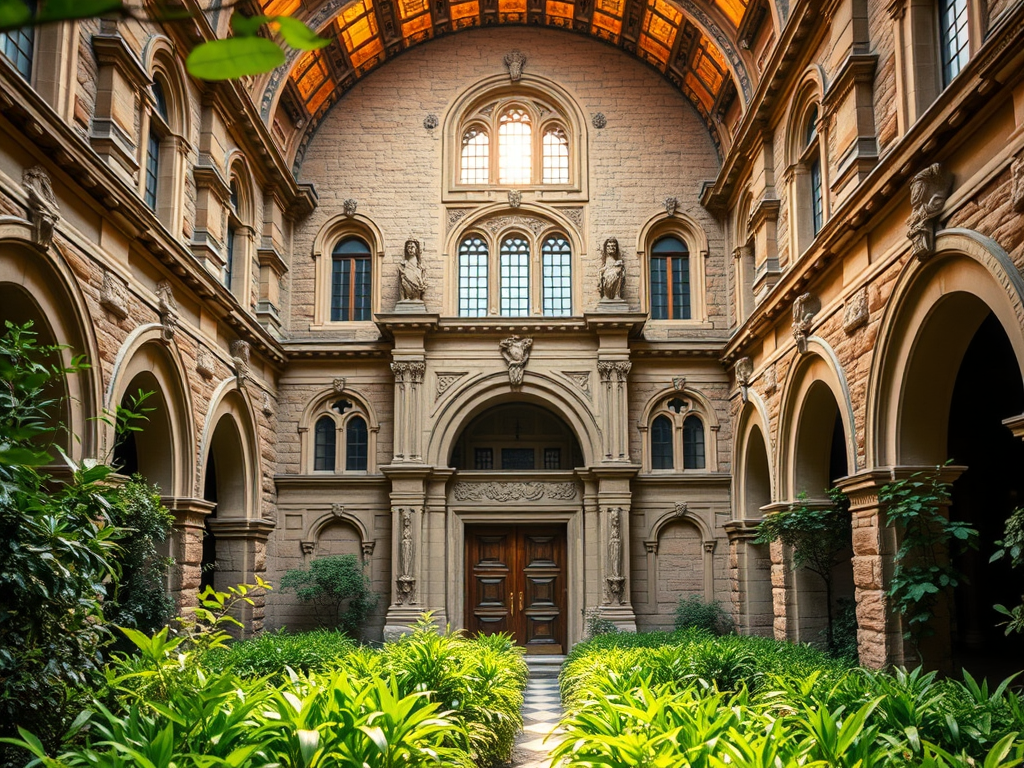
In the 4th century, a kind bishop named Basil of Caesarea started a major change by creating the first real hospital, which turned informal care for the sick and poor into organized medical help. This important institution not only changed healthcare by providing systematic support but also set the stage for future hospitals, focusing on human dignity and well-being. Originally called the Basiliad (after Basil), it introduced a structured way of healthcare, allowing a variety of medical practices and granting everyone, regardless of their status, access to quality care. As a result, the Basiliad became a lasting example for hospitals today, shaping healthcare practices and inspiring future medical professionals to support those in need while promoting a broader sense of social responsibility in the community.
In this article, we shall explore how the visionary leadership of Basil not only addressed the immediate health concerns of the afflicted but also established an enduring ethic of social responsibility and communal care that echoes through history. His innovative approaches and compassionate initiatives created a network of support, fostering a sense of unity among the community members. In this context, God’s Story of Grace progressed by reintegrating the sick individuals into the well-being of the wider community. Healing came to be seen not merely as a person’s physical restoration but also as a profound social reconnection, further establishing within society the trinitarian image (Father, Son and Holy Spirit) of mutual interdependence and self-giving love.
The Dawn of an Institution: The Basiliad
Long before Basil, medical care was often limited to private homes for the wealthy or temples that excluded the terminally ill. This changed with Basil, a well-educated man and devout Christian, who was moved by the teachings of Jesus to serve the most vulnerable in society. In 369 AD, during a time of severe regional famine, he established a massive complex just outside Caesarea in Cappadocia (modern-day Turkey). He had already established soup kitchens, but he envisioned something greater: a massive complex, a “city outside the city,” dedicated to organized, compassionate care. It was his friend and fellow theologian, Gregory Nazianzus, who would call this revolutionary institution the Basiliad, after its inventor.
This wasn’t just a clinic; it was a “new city” of mercy. The Basiliad included:
- Inpatient facilities: Wards specifically designed for the sick, the aged, and orphans, where patients receive comprehensive care and attention “around the clock.”
- Professional medical care: A dedicated staff of physicians and nurses provided systematic treatment. Basil himself, defying social norms, bandaged the wounds of lepers, a deeply marginalized group at the time.
- Holistic services: The complex also offered trade schools to teach occupants useful occupations, lodging for weary travelers, and spiritual care, aiming to heal the whole person—body, mind, and soul.
- Charitable mission: Crucially, all care was provided for free, funded by church donations and challenging the self-interest prevalent in Roman society.
A Legacy Takes Root
Basil’s efforts were a radical departure from the norm and prompted a major shift in the understanding of social responsibility. He also played a key role in convincing Christians that medical science was a gift from God, not a pagan practice, thereby encouraging the integration of medical knowledge and Christian charity. Here is an excerpt from his work, Long Rules (Question 55), that captures this sentiment:
Each of the arts is God’s gift to us, remedying the deficiencies of nature… The same is true, also, of the medical art. Inasmuch as our body is susceptible to various hurts… the medical art has been vouchsafed to us by God, who directs our whole life, as a model for the cure of the soul, to guide us in the removal of what is superfluous and in the addition of what is lacking.
Basil saw medicine as one of many God-given natural means—like agriculture and weaving—intended to comfort and care for the body in a fallen world, not an act of human pride or a rejection of divine providence.
Following his death in 379 A.D., the impact of the Basiliad was immediate and widespread.
- Rapid Expansion: Within a century, inspired by Basil’s model, similar Christian hospitals became commonplace throughout the Byzantine world and the wider Roman Empire, significantly improving healthcare access for the less fortunate.1
- Monastic Influence: Monasteries became centers of healing, with monks and nuns offering medical care and shelter, further embedding the hospital concept within the fabric of society.
- Formalization of Care: Religious orders, such as the Knights Hospitaller2, later formalized this commitment, establishing hospitals across Europe and the Holy Land.
The spirit of the Basiliad, with its revolutionary combination of professional medicine, organized charity, and inpatient facilities for all, regardless of wealth, established the fundamental principles that guide modern hospitals today.
The Lasting Influence of Compassion
The Basiliad brought together the “voluntary poor” (monastics) and the “involuntary poor” (those in need) in a new kind of community that embodied Trinitarian principles of self-giving love and interdependence. This was seen in three ways:
It fostered an inclusive community. The complex included a hospital with professional staff who were dedicated to providing exceptional care to all patients, a home for the aged that offered warmth and companionship, an orphanage where the children received not just shelter but also love and education, a trade school that equipped individuals with valuable skills for their future, and guesthouses for travelers that provided comfortable accommodations and a welcoming atmosphere. This diversity of functions and residents living in close proximity mirrored the dynamic, ordered relationship of the Persons of the Trinity, illustrating how different roles and identities can coexist harmoniously while contributing to the greater good of the whole community.
It offered dignity to all. In an era where the sick, especially lepers, were outcasts, Basil personally embraced and cared for them, seeing the image of God in every suffering person. This radical affirmation of human dignity challenged the prevailing social hierarchy and emphasized the equal value of all people, just as all persons of the Trinity are of equal divinity and power.
It demonstrated love as action: The “New City” was centered around a magnificent church and focused on “love for humanity” (philanthropia). The entire structure was a physical manifestation of Christian charity, a social revolution that sought to make societal interaction reflect the harmonious, life-giving communion of the Trinity itself.
Final Thought
In essence, Basil, who was a great proponent and defender of the Trinity, put the doctrine into a concrete social blueprint, demonstrating that the nature of God as a communion of persons demands a human society characterized by communion, mutuality, and compassionate service to all members. Basil was used by God to make the words of Jesus an expanded reality:
Truly I tell you, whatever you did for one of the least of these brothers
Matthew 25:40
and sisters of mine, you did for me.
_________________________________________________________________________
- Around a century after St. Basil’s founding (c. 469 CE), hospitals inspired by his work began to spread throughout both the Eastern and Western Roman Empires. Examples of growth: The Eastern Roman Empire, under Emperor Justinian, saw the establishment of approximately 35 hospitals in Constantinople alone. Religious orders: The founding of dedicated religious orders, such as the Knights Hospitalers of Saint John, contributed to the growth of hospitals by formalizing the care of pilgrims and the sick.
- The order was originally a monastic and charitable one, providing care for the sick and poor, especially Christian pilgrims in the Holy Land.

 Story of Grace