In the fifth century, the Church stood at a great crossroads, where the teachings of Augustine of Hippo clashed with those of the British monk Pelagius. Augustine proclaimed that mankind, wounded by Adam’s sin, could find salvation only through God’s freely given and continually grace. Pelagius taught that man, born with perfect free will, might attain righteousness by his own efforts and discipline.
In our true history, Augustine’s voice prevailed. But imagine that at the Council of Carthage the bishops—swayed by noble lords who admired Pelagius’s call to rigorous virtue—chose otherwise. They declared Adam’s fall a mere ill example, not a corruption passed to all. Man remained capable, by will alone, of sinless perfection.
This is a mirror held to history: a thought upon how Christendom might have unfolded in the year of Our Lord 1285, eight centuries after the Great Ascendancy of Pelagian doctrine.
The Age of the Great Ascendancy
By the thirteenth century, the teachings of Pelagius had borne fruit across the lands once called Christendom. Monasteries and cathedral schools thundered with the creed of human perfectibility. Grace was no longer a gift unearned, but a crown for those who proved worthy by ascetic toil.
Towns and cities rose fair and orderly, their walls strong, their markets bustling yet sober. Great cathedrals pierced the heavens, built by the sweat of those striving for merit. Yet beneath the grandeur lay a solemn hush—no riotous feasts, no wandering minstrels singing of human folly, for such things smacked of weakness.

The Church, wedded closely to princes and lords, taught that every soul must pursue Perfection as the highest virtue. By one’s thirtieth year, a man or woman was expected to demonstrate mastery: moral purity, bodily discipline, and keen intellect. Those who succeeded were hailed as the Perfecti—knights, abbots, bishops, and merchants of flawless repute—who held the reins of power and honor.
Those who faltered bore the stain of Voluntary Imperfection. They were not pitied as frail children of Adam, but judged as willful sluggards who chose vice over virtue.
The Tale of Brother Caelen the Illuminator
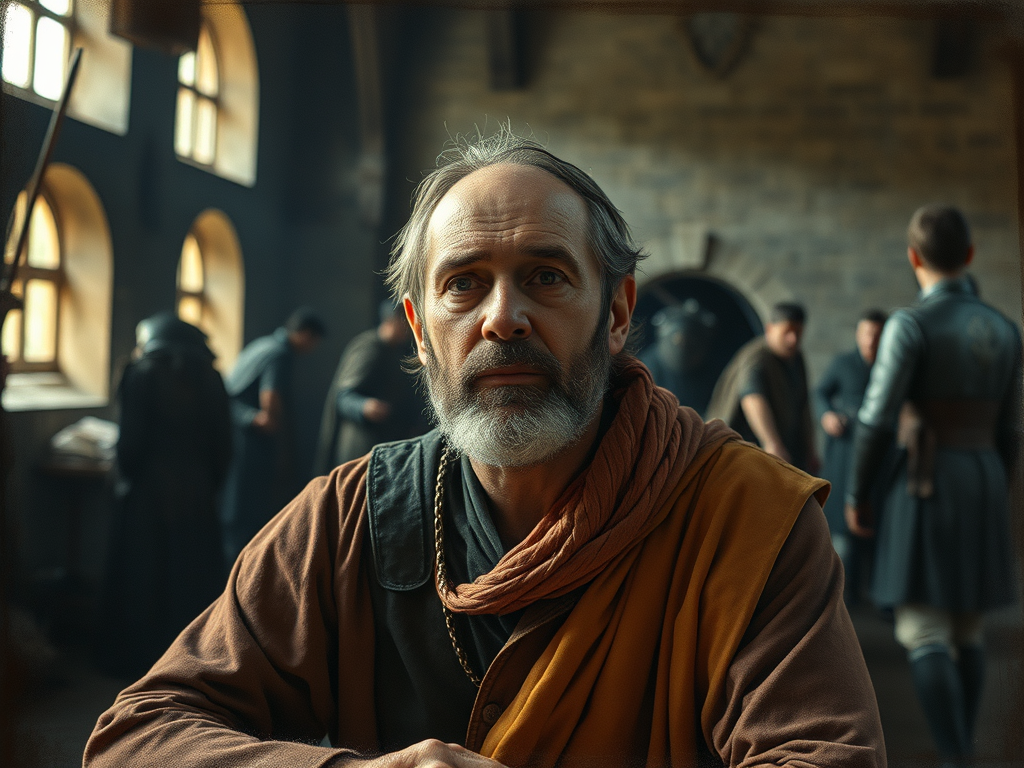
In a quiet scriptorium of a great abbey near Paris, a monk named Caelen laboured over vellum. His quill traced not the usual saints in glory, but a hidden page: a weeping figure beneath a cold moon, tears staining a face twisted in sorrow—the sorrow of a soul that knew its own breaking.
Word reached the abbot. Caelen’s work was deemed a scandal: an admission of weakness, a denial of man’s power to stand unbowed. He was brought before the chapter, accused of spreading despair.
As his precious illuminations were scraped clean and his tools cast into the fire, Caelen stood unrepentant. “Man is not born for such cold perfection,” he whispered. He was sent to a remote house of penance, there to labor in silence until his will bent—or broke. Few returned from such places with spirit intact.
In that moment, one might recall the lost voice of Augustine: that all men share Adam’s wound, that mercy flows from Christ’s Cross, that grace lifts the fallen without merit.
The Bitter Fruits: An Unholy Order
Without the balm of original sin and unmerited grace, charity grew cold. The mutual love of the Holy Trinity, mirrored in human forgiveness, gave way to a sterner trinity: merit, perfection, and rigid order.
A Merit Without Mercy
Success was proof of superior soul. The poor, the sick, the slow of wit—these were seen not as brethren in frailty, but as those who refused the path of righteousness. Alms dwindled; hospitals served only the deserving.
The Burden of Endless Striving
Perfection being declared attainable, every lapse was counted deliberate sin. Souls lived in fear of small faults, confessors harsh, penances severe. Rest was suspect; joy, if unearned by toil, a snare.
A Sharper Division of Estates
The Perfecti rose high: lords spiritual and temporal, unassailable in their virtue. Below them, the mass of imperfect common folk toiled under heavier yoke, blamed for their station. No leper was embraced, no prodigal welcomed home.

A Grace-Filled Reflection
The doctrine of original sin, though sombre, binds us in shared humanity and opens the floodgates of mercy. It reminds us we are dust, yet beloved.
In our true world—shaped by grace’s victory—we are drawn into God’s Story of Grace: wounded, yet redeemed by Christ’s unearned love; called to extend the same to every fallen soul. This breeds hospitals, orders of mercy, songs of forgiveness, and communities where the weak find strength in the Savior’s wounds.
Thanks be to God that the hinge swung toward Augustine, and toward the Cross.

_________________________________________________________
Side Bar
The Council of Carthage (418): Condemning Pelagianism
In 418 AD, a major church council met in Carthage (North Africa) and took a strong stand against Pelagianism, officially declaring it a heresy. The bishops fully supported Augustine’s teachings on sin and grace. Here’s what the council affirmed and rejected, broken down clearly:
Key Affirmations (What the Council Upheld)
- All humans inherit original sin from Adam Every person is born with the effects of Adam’s sin—it impacts the entire human race.
- Divine grace is absolutely necessary for any truly good act Without God’s inner help (grace), no one can do anything genuinely good or pleasing to God.
Key Rejections (What the Council Condemned in Pelagianism)
- People can obey God’s commands without inner transforming grace
Rejected: Humans cannot perfectly follow God on their own; they need God’s grace to transform them from within. - Grace is given according to human merit
Rejected: Grace is a free gift from God, not something earned by our efforts or goodness. - Adam’s fall harmed only himself, not the whole human race
Rejected: Adam’s sin affected all his descendants, not just him personally.
This council was a pivotal moment in early Christian theology, solidly backing Augustine’s view of human dependence on God’s grace over the more optimistic Pelagian belief in human ability.
 storyofgrace.org