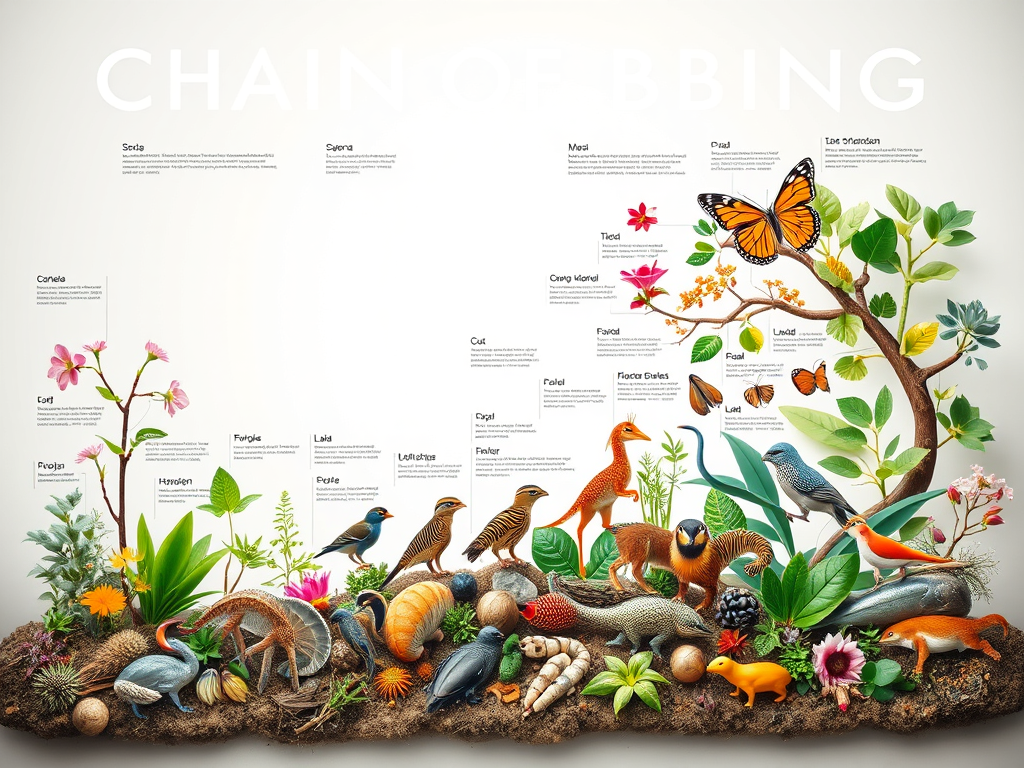
What the Story of Grace Is All About: An Excursus on Colossians 1:15–20

The Story of Grace, as a theological project, highlights how God reveals Himself through creation and redemption. The Triune God—Father, Son, and Holy Spirit—unfolds a tale of love, inviting all things into communion with Him. This story is more than just history; it shows a purpose, supporting Jonathan Edwards’s idea that “the great end of all God’s works is the glory of God,” seen in the ongoing redemption of creation. Within this narrative, divine grace and human actions connect, emphasizing the need for faith and obedience in accepting God’s call. The various stories that emerge showcase different aspects of grace, linking to our own challenges and victories. By understanding grace, we see not only the larger story of redemption but also our roles in this divine journey, deepening our understanding of our relationships with God and one another.

Started in June 2023, this project explores early religion and the idea of divine economy (oikonomia) as explained by Irenaeus of Lyons, who viewed Christ’s redemptive work as a “recapitulation” (anakephalaiosis) of all creation, reversing Adam’s fall and restoring harmony in the Trinitarian life. Central to this is the early Christian hymn from Colossians 1:15–20, which Paul uses to declare Christ’s cosmic authority, interweaving protology (origins), soteriology (salvation), and eschatology (ultimate ends) into a unified tapestry of grace that shows the unity and diversity of God.

This hymn, resonant with the Wisdom traditions of Proverbs 8 and the Logos theology of John 1, declares:

15 The Son is the image of the invisible God, the firstborn over all creation. 16 For in him all things were created: things in heaven and on earth, visible and invisible, whether thrones or powers or rulers or authorities; all things have been created through him and for him. 17 He is before all things, and in him all things hold together. 18 And he is the head of the body, the church; he is the beginning and the firstborn from among the dead, so that in everything he might have the supremacy. 19 For God was pleased to have all his fullness dwell in him, 20 and through him to reconcile to himself all things, whether things on earth or things in heaven, by making peace through his blood, shed on the cross. (Colossians 1:15-20)

In this passage, the apostle presents a Trinitarian story where the Son, as the image of the Father, conveys the Father’s creative command and the Spirit’s life-giving presence, promoting shalom—a complete flourishing that looks forward to the new creation mentioned in Isaiah 65:17–25 and Revelation 21:1–5. This story highlights the deep connection between the three divine persons: they are united without losing their individuality, as Tertullian explained in Against Praxeas, describing the Trinity as “three persons, one substance,” distinct in their roles but unified in essence.

The implications for eschatology are significant: the Story of Grace ends with the idea that “God may be all in all” (1 Corinthians 15:28), a universal healing that mends the brokenness of sin and turns conflict into a harmonious unity that reflects the nature of the Trinity.

Three Truths of Story of Grace

Truth # 1: In God’s Story Jesus is Creator and Redeemer of all creation.

The Son is the image of the invisible God, the firstborn over all creation…And he is the head of the body, the church; he is the beginning and the firstborn from among the dead, so that in everything he might have the supremacy. (Colossians 1:15, 18)

Transcendence (God Above All) and Immanence (God Within All)

The term prōtotokos (firstborn) when referring to Christ highlights His unique position, not just in time but in essence. According to Karl Barth in Church Dogmatics (IV/1), Jesus is both the Creator and Redeemer, connecting the eternal with the present world.

Being the firstborn signifies not only Christ’s authority over all creation, similar to the “thrones or dominions” noted in Colossians 1:16, but also emphasizes His intimate relationship with all creation, filling it with divine life. This idea connects to Boethius’s view of eternity as “the simultaneous and complete possession of infinite life” in The Consolation of Philosophy, where eternity meets time through Christ’s life, making the invisible God (theos aoratos) truly present in our world. This dual nature of Christ also points to future renewal, as Athanasius mentions in On the Incarnation, “He became what we are that He might make us what He is,” meaning that humanity and creation are invited to share in God’s glory.

Romans 8:19–21 describes creation’s struggle as it waits for freedom from decay, leading to the “freedom of the glory of the children of God,” with Christ referred to as the “firstborn among many brothers and sisters” (Romans 8:29). Therefore, the resurrection starts a new age, where, as Jürgen Moltmann writes in The Coming of God, Christ brings about a “new creation” that redeems both people’s souls and the material world, suggesting a renewed environment filled with grace where decay gives way to lasting life.

Truth # 2: In God’s Story everything is being renewed into the likeness of the Trinity.

For in him all things were created: things in heaven and on earth, visible and invisible, whether thrones or powers or rulers or authorities; all things have been created through him and for him. (Colossians 1:16)

Reciprocating Love From the Trinity

The prepositions “through” (dia) and “for” (eis) Christ describe a relationship based on the mutual love within the Trinity, where creation comes from the Father’s generous love for the Son, and is brought to life by the Spirit. As Charles Spurgeon said, “just as they are united in creation, they are united in salvation, working together as one God for our salvation.”

This reflects the harmonious unity and diversity of the Godhead, which Herman Bavinck refers to as the “archetype of man” and all creation, where “unity and diversity coexist without harming each other.

Philosophically, this relates to Hegel’s concept of thesis-antithesis-synthesis, but reinterpreted in Christian terms as a peaceful harmony, where diversity enhances unity without conflict. Biblically, Ephesians 1:9–10 supports this idea: God “made known to us the mystery of his will… to unite all things in him, things in heaven and things on earth,” showing a Trinitarian coming together that opposes chaos with abundant life, as seen in Genesis 1’s repeated mentions of “all” and “every,” symbolizing God’s overflowing creativity (with 87 million species estimated today). In the future, this suggests a fulfilled order in Revelation 22:1–5, where the river of life flows from God’s throne and the Lamb, nurturing a restored creation in lasting communion, free from the curse (Genesis 3:17–19).

Truth # 3: In God’s Story redemption and renewal is universal in scope.

For God was pleased to have all his fullness dwell in him, and through him to reconcile to himself all things, whether things on earth or things in heaven, by making peace through his blood, shed on the cross. (Colossians 1:19-20)

The plērōma (fullness) that lives in Christ represents the complete nature of God (Colossians 2:9). It brings about a cosmic apokatallassō (reconciliation), as Irenaeus’s theory suggests: Christ “summed up all things in Himself,” restoring the broken universe.

This wide-reaching scope—covering “all things” (ta panta)—challenges ideas that focus only on humans for salvation, extending even to the suffering creation (Romans 8:22). John Piper emphasizes that “Jesus isn’t just the means. He is the great end,” the purpose of history.

Theologically, this connects with Augustine’s City of God, where grace changes selfishness into love for others, reflecting the Trinity’s unity (John 17:21–23). Looking to the future, Hebrews 1:2–3 describes Christ as heir and supporter, whose cleansing work points to the “world to come” (Hebrews 2:5), a renewed universe where “the wolf shall dwell with the lamb” (Isaiah 11:6), suggesting the end of harmful structures and the establishment of peace.

Implications of the Scope of God’s Story of Grace

First, God’s Story unfolds through salvation history. This means that God reveals Himself slowly over time, as Edwards suggests, allowing people to understand gradually without being overwhelmed. This helps them grow spiritually towards the ultimate vision. The story of Israel—from slavery in Egypt to freedom (Exodus 19–20), judges to kings (1 Samuel 8–2 Samuel 7), and exile to recovery (Ezra 1–6)—shows God’s qualities: grace, greatness, and loyalty. It all leads to Christ, who says, “Whoever has seen me has seen the Father” (John 14:9). This history points to the end times, where people can see God’s ultimate glory (1 John 3:2).

Secondly, God’s Story unfolds through the nations. Acts 17:26–27 tells us that God sets times and places “that they should seek God,” guiding cultural strengths towards a reflection of God’s nature. For example, Athenian democracy, developed from its unique conditions, sports, and theater, encourages unity in diversity, which is further enhanced by the inclusive values of Christianity (Galatians 3:28). This idea comes together in Revelation 7:9–10, portraying a diverse group worshiping Jesus, fulfilling God’s promise to Abraham (Genesis 12:3) in a beautiful diversity.

Third, God’s Story touches all cultural expressions. Language, stories, ideas, social connections, and artifacts can all be used for divine purposes. For instance, the Phoenician alphabet and papyrus allowed the creation of the Hebrew Scriptures, with “Bible” coming from Byblos, showing God’s guiding hand in history. In the end, this hints at a renewed way of understanding in the new Jerusalem, where “the leaves of the tree are for the healing of the nations” (Revelation 22:2), turning cultural creations into tools for eternal connection.

Conclusion

This project, developed over thirty years and starting in 2023, aims to understand God’s redemptive influence, bringing joy to life within the Trinitarian story. Just as Edwards’s unfinished work inspires modern extensions like Gerald McDermott’s A New History of Redemption, the Spirit—seen in Colossians 1:8–9—enables participation in divine glory (John 17:5). In this Story of Grace, the unity and diversity of creation reflect the Trinity, moving toward a future where all is made new, continuously echoing the Father’s love through the Son in the Spirit.
Aristotle, Eudaimonia and Shalom: The Ultimate Guide to Ethics

In this third and final article on the influence of Aristotle, we will see that the great philosopher significantly contributed to God’s Story of Grace by introducing what is called virtue ethics. Virtue ethics emphasizes the development of moral character (virtues) through repeated behaviors to cultivate a life which advances human flourishing. Aristotle was not really concerned with laying down strict rules for moral choices or considering the best outcomes of actions; rather he wanted ethics to focus on how an individual’s character leads to virtue creating a life of blessedness (similar to the beatitudes of Jesus in Matthew 5:3-10). We will consider, then, the unique contribution of Aristotle’s thought on ethics and how it shaped the world’s understanding and experience of moral development. We will tie this into how virtue ethics enriches our understanding of Christian discipleship.

What Is the Ultimate Purpose of Ethics?

Eudaimonia the Goal

The ultimate aim of ethics can be summed up in the word: eudaimonia. This is a Greek term first used by Aristotle in the context of philosophy. The word carries the idea of “flourishing.” Sometimes the word is translated “happiness” or “well-being.” When translated “happiness” it does not refer to a temporary state of good feelings; it rather describes a life that is lived well that brings a growing experience of moral satisfaction–fulfillment. This is the “good life,” and in the ethical sense there is no other end or higher purpose beyond it. Thus, this eudaimonia, in Aristotle’s thinking, is the proper aim or goal of all human action. He describes this as follows in his work, Nicomachen Ethics:

Now happiness, more than anything else, seems complete without qualification. For we always choose it because of itself, never because of something else. Honor, pleasure, understanding, and every virtue we certainly choose because of themselves, since we would choose each of them even if it had no further result; but we also choose them for the sake of happiness, supposing that through them we shall be happy. Happiness, by contrast, no one ever chooses for their sake, or for the sake of anything else at all.

Virtue the Means

But how does one gain this human flourishing? Aristotle makes the case that this is by the cultivation and exercise of virtue. Again from Nichomachean Ethics: “…the human good proves to be activity of the soul in accord with virtue…” What is meant by this activity of the soul is that virtue is attained by the ongoing practice of virtuous acts. He further explains, “We become just by doing just actions, temperate by doing temperate actions, brave by doing brave actions.” After the virtues have become a habit (a normal behavior) through practice, they bring a transformation of character. This character can be defined as to who we really are and how we are really inclined to act. It has been more popularly expressed as who we are when no one is looking. For Aristotle virtue is not a rote habit but something deeper in the soul. It is a trained habit of soul which guides our moral compass where our choices will shape the outcome of our life. A modern expression of Aristotelian thinking goes as follows:

Thoughts Become Words, 
Words Become Actions, 
Actions Become Habits, 
Habits Become Character, 
Character Becomes Your Destiny.

The Golden Means

A central concept in Aristotle’s thinking is the golden means. Virtue is not only right action flowing from habits that develop into character; it also entails a wisdom of deciding the right action from situation to situation. This means that virtue, as Aristotle explains, “is a mean between two vices [golden means], one of excess and one of deficiency.”  Author and teacher, Brett Kunkle, provides the following elaboration and helpful chart:

The mean balances virtue between two extremes. For instance, when we examine the virtue of courage we come to see that it is balanced between the appropriate feelings of fear and confidence. Too much confidence leads to rash action, yet too much fear leads to cowardice. The individual who has attained the virtue of courage avoids both vices when he experiences the appropriate amount of fear or confidence in a particular situation.

ActivityVice—DeficiencyVirtue—MeanVice—Excess
Facing loss or deathCowardiceCourageRashness
Bodily appetites or pleasuresInsensibilityTemperanceIntemperance
Giving moneyStinginessGenerosityExtravagance
Retribution for wrongInjusticeJusticeRevenge
Examples of virtues and their corresponding vices in excess and deficiency.

By using the golden means Aristotle is not prescribing general rules, but rather a guiding principle. The guide is grounded in a wisdom which has developed the ability to choose the right action in specific cases.

Humanities teacher, Brett Saunders, provides this illustration:

Suppose I am shopping with my daughter and she is affronted by some fellow. The “right” intervention, according to Aristotle, falls between cowardice and recklessness, perhaps as a mix of cautious de-escalation and definitive show of strength. What the mean looks like for a specific act depends on the circumstances—why, how, with whom, and how much the agent acts, as well as who the agent is. Considering these variables and hitting the mean with regard to, for instance, the time of day, absence of other shoppers, appearance and manner of my daughter’s accoster, proximity or absence of security personnel— this belongs to the virtue of prudence. As a sort of keystone virtue, prudence stands out from others (self-control, justice, friendship, etc) because it is the capacity for considering the variables and determining the “mean” act (not too late or soon, not too bold and timid, not too abrasive or deferential) in the proper amount of time. Prudence is the knack of taking the right amount of time to decide on the right action.

The Lasting Legacy of Aristotle’s Ethics

A lasting influence on education.

Aristotle grounded ethics in the ideas of human flourishing and virtue. This was quite substantial for the influence of Western Civilization which emphasized the formation of character development in education. If virtue is not emphasized at the youngest age, then it is impossible to have a virtuous society. To bring about virtue in youth, Aristotle emphasized (what is another Greek term) paideia. This word means “child” but it became the shorthand for the training and education of children which cultivates virtue. Paidea had four emphases:

  • Stories. There was a focus on the action of heroes to deeply impress the imaginations of the young. Literature was a key facet of paideia because it forms the heart with its deepest desires, values, and loyalties.
  • Music. This was an influence carried over to Aristotle from Aristotle’s teacher, Plato. Plato focused attention on music “because rhythm and harmony most of all insinuate themselves in to the inmost part of the soul and most vigorously lay hold of it in bringing grace with them.”
  • Gymnastics. Gymnastics largely meant physical training to the Greeks. The physical training refined the whole person: intellect, imagination, sensibilities and the body.
  • Imitation. The Greek term used for this is mimesis (where we get our word mimic). Aristotle saw this as the soul’s imitation of the pattern from another human being. More simply put is was about having proper role models.

A lasting influence on ethics.

After Aristotle, society could begin to think in richer ways about the goals of being a community or to live together as a human family. From Persia, the world saw the spread of the empire, which did allow for the protection of certain religious and cultural freedoms. From the earlier Greeks (e.g. Cleisthenes), the world saw the introduction of democracy and ways for it to be practiced. But the deeper question for Aristotle was what are these different forms of government for? He would answer eudaimonia or human flourishing. The idea is not to have any ideal form of government (democracy, empire, etc.), but to understand that the role of government is to promote human flourishing or moral happiness. In the Old Testament a somewhat equivalent term for eudaimonia is shalom. Shalom in Hebrew means “wholeness” or “well-being.” These are both concepts that describe a life of flourishing or a life lived as it is meant to be. Theologian Cornelius Plantinga beautifully captures the meaning of shalom:

The webbing together of God, humans, and all creation in justice, fulfillment, and delight is what the Hebrew prophets call shalom. We call it peace, but it means far more than mere peace of mind or a cease-fire between enemies. In the Bible, shalom means universal flourishing, wholeness, and delight…. Shalom, in other words, is the way things ought to be.

So, in Aristotelian and biblical thinking the political form of government we adopt is a mean toward an ends: eudaimonia or shalom. The Declaration of Independence reflects this thinking in the phrase “the pursuit of happiness.” The goal of politics is to develop societies where virtue is taught and practiced and the interest of the whole can be balanced with personal freedom for increased flourishing. (This is the trinitarian model which sees flourishing as a balance of the one and the many.)

A lasting influence on Christianity

The biblical call to discipleship is centered around developing the character of our lives to become like Christ. Paul expresses it very simply: “…train yourself to be godly.” (1 Timothy 4:7) Though Christianity did not derive its understanding of discipleship from the Greeks, the ways of Jesus reflect some of what Aristotle taught. For after all, Aristotle did not invent the pursuit of virtue but discovered its reality. Repeatedly the Bible refers to how our circumstances are training us to walk in Christ-like maturity (virtue):

Consider it pure joy, my brothers and sisters, whenever you face trials of many kinds, because you know that the testing of your faith produces perseverance. Let perseverance finish its work so that you may be mature and complete, not lacking anything.  (James 1:2-4)

Again…

28 And we know that in all things God works for the good of those who love him, who have been called according to his purpose. 29 For those God foreknew he also predestined to be conformed to the image of his Son… (Romans 8:28-29)

Summary

There are many more scriptures which could be listed. But let’s close with a statement from C.S. Lewis, in his essay “The Weight of Glory” as he explains that biblical ethics is not simply about obeying raw commands, but they are geared toward the formation of positive blessing or eudaimonia:

If you asked twenty good men today what they thought the highest of the virtues, nineteen of them would reply, Unselfishness. But if you had asked almost any of the great Christians of old, he would have replied, Love. You see what has happened? A negative term has been substituted for a positive…. The negative idea of Unselfishness carries with it the suggestion not primarily of securing good things for others, but of going without them ourselves, as if our abstinence and not their happiness was the important point. I do not think this is the Christian virtue of Love. The New Testament has lots to say about self-denial, but not about self-denial as an end in itself. We are told to deny ourselves and to take up our crosses in order that we may follow Christ; and nearly every description of what we shall ultimately find if we do so contains an appeal to desire.

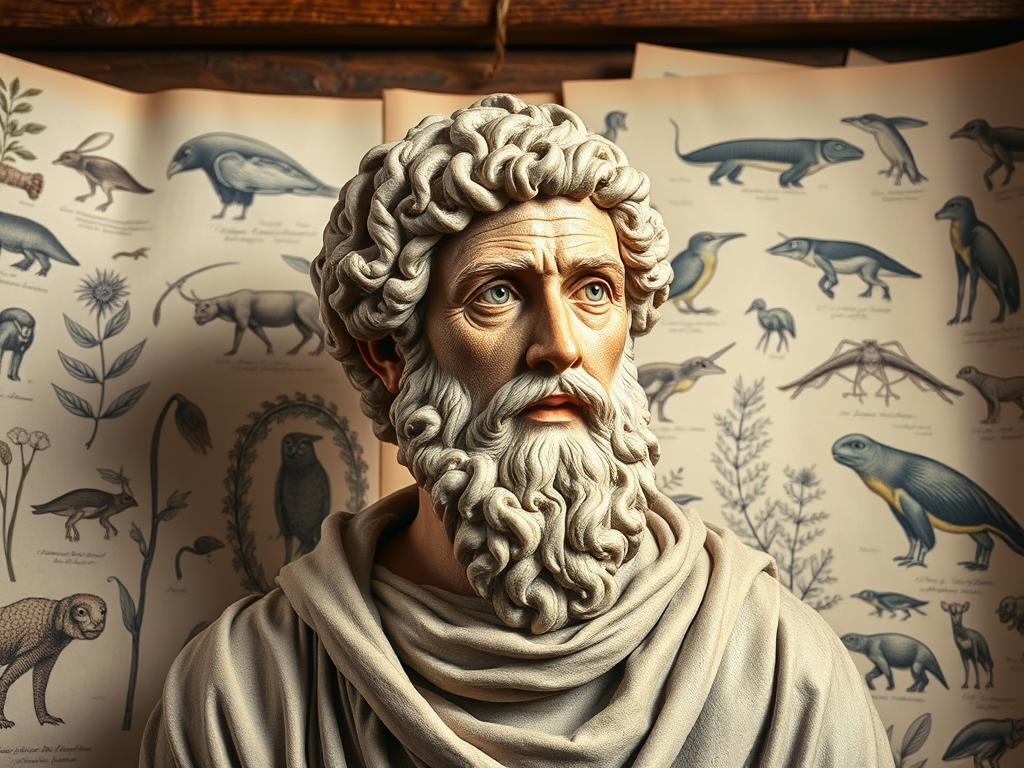
Aristotle’s Chain of Being and the “Kinds” of Genesis

God has built the desire in humans to understand and classify nature. This was one of original man’s first tasks in the Garden of Eden according to Genesis:

Now the Lord God had formed out of the ground all the wild animals and all the birds in the sky. He brought them to the man to see what he would name them; and whatever the man called each living creature, that was its name. So the man gave names to all the livestock, the birds in the sky and all the wild animals. (Genesis 2:19-20)

Yet, since the rebuilding of the earth after the Flood, this task of the classification of nature was not systematically taken up until Aristotle. Though Aristotle’s work in zoology was not without errors; in God’s Story of Grace, the great philosopher provided the grandest biological system of the time which forwarded humanity’s understanding of the great order and variety of the created world. His observations were so wide ranging to include the anatomy of marine invertebrates; the minute details the embryological development of a chick, and even the internal anatomy of snails. He went into such variety to describe the chambered stomachs of cows to the social organization of bees. Some of his observations were not confirmed until many centuries later.

As a philosopher, Aristotle is largely known for his instruction in logic, ethics and virtue. Yet, his work on the biological order of life left an enduring mark on the advancement of scientific understanding. Before Aristotle, philosophers like Heraclitus, Empedocles and Democritus focused on offering quasi-scientific explanations of the physical universe based on philosophical ideas. Aristotle largely discarded that and sought to base his views of the world on painstaking observation. What drove him to do this extremely detailed and complex work was his belief that all of nature has a logical purpose and order which could be studied and understood. This belief in a logical order and purpose of the world was grounded in his theology (belief about God). Theology, for Aristotle, was an invitation to biology. Studying living things was a way to understand the divine nature. In even in the most most humble of animals, Aristotle reasoned, there is order and beauty that reflected a divine reality.

In this article, the second on Aristotle, we will uncover the order of Aristotle’s discoveries and how his theology drove those discoveries. We will then conclude how he advanced God’s Story of Grace in the area of science.

Aristotle’s Science

Aristotle was the first to conceive of a great chain of being among all living things. He took his observations of living things and ranked them based on complexity. The greater the complexity the higher its place of the great scale of being. For example, he distinguished animals from plants, because animals have a consciousness and can move in their surroundings. Among animals he created a hierarchy based on their complexity. He separated vertebrates from invertebrates. Of the vertebrates he included five genera (a classification of common characteristics bearing similarities to the biblical “kind”). These include:

  1. mammals
  2. birds
  3. reptiles and amphibians,
  4. fish
  5. whales (which Aristotle did not realize were mammals).

The invertebrates were classified as:

  1. cephalopods (such as squid and octopus)
  2. crustaceans
  3. insects
  4. shelled animals

In total, he classified about 500 animals, vertebrae and invertebrate, into the genera listed above. As already mentioned he classified plants, as well.

What Motivated Aristotle?

Aristotle saw organisms as having an inherent structure and purpose which leads to the overall function of the organism. This structure and purpose he called “soul.” By this he did not mean an immaterial identity separate from the physical/biological structure. The soul for Aristotle is the function of the physical organism inseparable from the body. By this definition even plants have souls. Because of this he believed all living things could be classified because all living things have a purposeful function (soul). So, where did this inherent purpose come from? The answer for this monumental thinker is God.

His understanding of God was not the same as the God of Abraham, Isaac and Jacob or the Jews. There are some similarities, but the differences are significant.

Similarities:

  • God is the highest being over all other beings.  
  • God is pure purpose, existing without matter. 
  • God is the unmoved mover, the first cause of motion in the universe. 
  • God is the source of order and purpose in the world. 
  • God is eternal.  

Differences:

  • God is not personal.
  • God does not have a plan for us.
  • God is not affected by us.

What does all of this mean?

The advancement of science is driven by faith.

Aristotle did not come to believe that the world has purpose and order because of science; rather, he believed that the world had purposeful order, so he pursued a scientific understanding. His theology drove his science. Without the prior belief, he would have had no basis or motivation to do the meticulous research he did. It was clear to him that all of nature did not function by random chance, and that there is an order to be discovered. Everything which is purposeful necessarily is based on purposeful (intelligent) action. For example, imagine two men surprisingly meeting in a clothing store who happen to know each other, and in the process of meeting they strike up a conversation leading toward a business deal. The chance occurrence was based upon their prior and purposeful choices to go to the clothing store to buy a shirt (or whatever item). Chance occurrences, as we observe them, all occur from goal oriented or purposeful action not the other way around. Spontaneity and chance come after thoughtful purpose.

Aristotle sums it up well in his work, Physics:

Spontaneity and chance, therefore, are posterior (follow) to intelligence and nature. Hence, however true it may be that the heavens are due to spontaneity, it will still be true that intelligence and nature will be prior causes of this All and of many things in it besides.

Purposeful design and unguided evolution have an ancient contrast.

It is important to realize that Aristotle’s view of the purposeful order of nature was not at all taken for granted in the intellectual climate of the Greek world he inhabited. Aristotle references, in his work, Empedocles (495–435 BC), who proposed that nature consists of a primordial state where different organs and parts of animals were accidentally and randomly combined in different configurations. Empedocles thought that these early creatures were monstrous and unfit for life, and that most died out.  He believed that the remaining creatures who survived were the result of natural selection, which removed the freakish creatures and left the ones that were best adapted to the environment. This is an early version of survival of the fittest. Those configurations which were most fitting survived, while others perished. Empedocles wrote as follows:

From it [the earth] blossomed many faces without necks,
Naked arms wandered about, bereft of shoulders,
And eyes roamed about alone, deprived of brows.
Many grew double of face and double of chest,
Races of man-prowed cattle, while others sprang up inversely,
Creatures of cattle-headed men, mixed here from men,
There creatures of women fitted with shadowy genitals.


Philosopher and theologian, Joe Carini, comments on how modern science confirms the viewpoint of Aristotle over Empedocles.

…our world is not at all like the world Empedocles imagined. Instead, we encounter a world replete with bodies that have a highly complex but ordered and functional arrangement of their parts. What is more, each of these bodies is self-reproducing, by a system that itself is highly complex but ordered and functional. Even more, these bodies exhibit engineering down to the molecular level, with parts so exquisitely ordered to a purpose that they easily surpass the best of engineering done by humans.

The advance of science confirmed revelation in scripture.

In Genesis 1 it describes a biological categorization similar to what Aristotle discovered by using the word kind. We see the designation kind used three times relation to vegetation and plant life:

11 Then God said, “Let the land produce vegetation: seed-bearing plants and trees on the land that bear fruit with seed in it, according to their various kinds.” And it was so. 12 The land produced vegetation: plants bearing seed according to their kinds and trees bearing fruit with seed in it according to their kinds. And God saw that it was good.  (Genesis 1:11-12)

Then we see the designation of kind used six times in reference to animal life:

 20And God said, “Let the water teem with living creatures, and let birds fly above the earth across the vault of the sky.” 21 So God created the great creatures of the sea and every living thing with which the water teems and that moves about in it, according to their kinds, and every winged bird according to its kind. And God saw that it was good. 22 God blessed them and said, “Be fruitful and increase in number and fill the water in the seas, and let the birds increase on the earth.” 23 And there was evening, and there was morning—the fifth day. 24And God said, “Let the land produce living creatures according to their kinds: the livestock, the creatures that move along the ground, and the wild animals, each according to its kind.” And it was so.  25God made the wild animals according to their kinds, the livestock according to their kinds, and all the creatures that move along the ground according to their kinds. And God saw that it was good. (Genesis 1:20-25)

The term “kind” refers to broad categories of genetically related organisms which can breed and reproduce.  This “kind” in Genesis has a nonchanging “fixity” within the design of the biological order. Kinds do not change. This means, for example, that the canine “kind” which includes the dog or dingo or wolf or jackal can reproduce together because they are members of the same canine kind. The canine kind can adapt into different species within their kind through breeding and environmental influences (e.g., chihuahua), but they do not change into another kind like a feline (cat).

Paul writes:  

For since the creation of the world God’s invisible qualities—his eternal power and divine nature—have been clearly seen, being understood from what has been made… 

Romans 1:20

Aristotle wisely helped us to understand this.

Aristotle and the Discovery of God’s Laws of Logic

No other thinker has been so influential in laying the foundations of Western thought as Aristotle. Aristotle was born in 384 B.C. in Stargis, a city in Northern Greece. Aristotle’s father, Nicomachus, was a court physician to King Amyntas II of Macedon.  He was raised in an environment which was rich with opportunities to learn and think scientifically. Both his mother and father died when he was young. Around the age of 13, Aristotle was raised by his guardian, Proxenus, who may have been an uncle. By age 17, he travelled to Plato’s Academy. The young thinker was driven by an insatiable desire for knowledge. At the Academy, Plato became a major influence on Aristotle. He spent 20 years there. He explored the fundamental questions of meaning and existence. Overtime, though, Aristotle began to see the world differently from his revered mentor. Plato saw the ideal world of the unseen as primary basis of knowledge, Aristotle argued from the primacy of the visible world. This presented a great departure between the two philosophers.

Plato died in 347 B.C. and Aristotle left Athens. By 345 B.C. he married Pythias. In 343 B.C. he received an invitation by Philip of Macedon to tutor his 13 year old son, Alexander. This adolescent would grow into Alexander the Great. Even from Alexander’s young age, Aristotle was to train him to rule a vast empire. Aristotle did this for approximately three years until Alexander turned 16, and it was determined he would take on more responsibilities for the throne. In 335 B.C. Aristotle established the Lyceum, just outside of Athens. The Lyceum was an academy to train men in philosophy (love of wisdom) for a virtuous life. It was well funded due to the patronage of Alexander. After Alexander’s death (323 B.C.), Aristotle fell out of favor with the Athenians. Rather than being executed, to be spared the fate of Socrates, he was exiled from Athens to Chalcis, a town about 40 miles north of Athens and died in 322 B.C.

Aristotle established the foundations of Western culture in three areas: logic, science and ethics. In this article and the following two, we will look at how Aristotle advanced God’s Story of Grace in each of these areas. As his thinking matured, it is largely thought that he first developed his teaching in the areas of logic (the way we discern truth), then science (the way we understand the world) and finally ethics (the way we live). We will begin by exploring his ideas on logic.

What is Logic? 

Immanuel Kant (1724-1804) famously claimed that Aristotle had discovered all that there was to discover about logic. This was historically short sighted as later insights would be realized, yet it calls attention to the immense importance of Aristotle on this point. What drove Aristotle in this regard was his belief that every person has a desire to understand the world; in order to aid that understanding, he focused on laws of reason which helped people to better work out the truth or falsehood of an argument. These laws reflected general patterns of truth that are valid no matter what. Aristotle defined these rules in his work titled  the Organon (Greek for organ, tool, instrument). To simplify his thinking we will focus on the the three laws of logic and the key tool in which these laws could be utilized–the syllogism.

The Three Laws of Logic

When looking at Aristotle’s laws, they sound almost like a math equation. In some sense they are in so far as they represent absolute and changeless laws. These are laid out as follows:

  • The law of identity: P is P.
  • The law of noncontradiction: P is not non-P.
  • The law of the excluded middle: either P or non-P.

The law of identity says P is P. This means that everything is itself and not something else. For example, we can look at a tree and observe that it is 20 feet tall and has a lightning burn. (P) In this case, the fact that this tree is 20 feet tall and has a lightning scar is not relevant to this law. It may have a lightning scar as well as letters carved (“Eileen love Al forever”) 5 feet from the base on its east side. What is important is that this particular tree is its own being and not something else. Though this seems obvious, we should not take for granted that without this law reasoning would be impossible because there would be no clear distinctions.

The law of noncontradiction says that P is not non-P. To illustrate, if we observe this same 20 foot tall tree as referred to above, it cannot both have a lightning scar and not have a lightning scar at the same time. That would violate the law of contradiction. Now It can have a lightning scar today whereas a year ago it did not because it was hit with lightning only 2 weeks ago. But it cannot have both a lightning scar and not have a lightning scar at the same time.

The law of the excluded middle says that either P or non-P. Using the idea of the same 20 foot tree, it either has a lightning scar or is does not. There is no other alternative. It cannot both have and not have a lightning scar at the same time. Though this seems way too obvious, it is a fact that many cultures, as we will see, have not viewed reality through these laws.

The Syllogism

A syllogism is a form of reasoning based on logical deduction. Deduction is where you start with known facts (called premises) and use them to reach a certain conclusion. If the premises are true then the conclusion must also be true. For example:

  • Premise 1: All pine trees are conifers.
  • Premise 2: Conifers have needle-like leaves.
  • Conclusion: Therefore, all pine trees have needle-like leaves.

Or…

  • Premise 1: God loves and has a purpose for all humans.
  • Premise 2: Bernardo is a human.
  • Conclusion: Therefore, God loves and has a purpose for Bernardo.

The key points about logical deduction are as follows:

  • Start with established facts or statements.
  • Follow a logical path of deduction for the statements. 
  • The conclusion from this path has a certain accuracy. 

The accuracy of a syllogism is based on the premises being true. If the premises are false, then the conclusion will be false, as well. Here is an example of a wrong conclusion due to false premises.

  • Premise 1: God can do everything.
  • Premise 2: Sin is a part of everything.
  • Conclusion: Therefore, God can sin.

The problem with this syllogism is with premise 1: God can do everything. That statement is incorrect. It should be greatly modified to read: God can do everything he wants to do. With that modification the statement should read as follows:

  • Premise 1: God can do everything he wants to do.
  • Premise 2: God does not want to sin.
  • Conclusion: Therefore, God cannot sin.

Logic and God’s Story of Grace

Understanding the LOGOS. Aristotle’s discovery of logic was important for a greater understanding of the LOGOS–Jesus as the Word (logic) of God (John 1:1). The laws of logic are neither inventions of God nor rules that exist outside God’s being. From the perspective of God’s Story of Grace, Aristotle didn’t invent the laws of logic; he discovered them. These laws are embedded in the very eternal being of God, himself. Because these laws are based in the very being of God they are more enduring than the physical laws (e.g. thermodynamics, gravity) which are created. God can alter the laws of nature (e.g., suspend gravity, override entropy), but he cannot in any way alter or override the laws of logic. To do so would require God altering, at an essential level, himself. In Malachi 3:6, God declares: “I the Lord do not change.”  

  • God reflects the law of identity. God cannot exist and not exist at the same time. God says, “I am who I am” (Exodus 3:14). 
  • God reflects the law of non-contradiction. All truth is in God (Colossians 2:3) and God cannot deny himself (2 Timothy 2:13). Because of this law, truth will never contradict truth. 
  • God reflects the law of the excluded middle. Because God exists and does not contradict himself, this means there are no other alternatives to truth.

Quite often God acts in ways we do not understand, but that in no way means that God behaves illogically. So, these laws exist in God’s very being. Had Aristotle nor anyone else never articulated them, they would still exists. Nonetheless, in God’s Story of Grace, Aristotle methodically expressed them.

Understanding Western Civilization. Aristotle’s laws of logic reinforced an irreconcilable difference between the Western (based in Christianity) and the Eastern civilizations. Christianity holds that God (as a distinct identity) created the universe (as a distinct identity) with the earth (as a distinct identity) and all that is in the earth (as distinct identities). This reflects the law of identity: P is P, and the law of non-contradiction: p is not non-p. There is no alternative to this understanding which is the law of the excluded middle: either P or non-P. This is in sharp distinction from the Eastern religions such as Buddhism and Hinduism which are pantheistic. Pantheism holds that everything is ONE. They deny any distinctions which are communicated in Aristotle’s laws of logic. This has created very different outcomes with the Western and Eastern worlds. More about this in forthcoming articles.

Socrates: Bringing Heaven to Earth

depiction of Socrates

Even among world historical figures, Socrates would be uncommon. His life was marked by an irony which brought together opposing qualities. He rarely travelled beyond Athens, yet his influence has been felt throughout the world. Though he was often invited to lavish dinner parties, he lived on a very simple diet. Possessing a towering intellectual capacity, he was more at home with everyday people. Though he wrote down none of his teachings, we possess about 35 of his dialogs. Some aspects of his life remain unclear, but what doesn’t is that his influence is impossible to overestimate. His crowning achievement in advancing God’s Story of Grace is that he took philosophy (the pursuit of wisdom) and brought it into reach for everyday people and everyday life to improve the quality of how they–even we–live. He did this because it was, as he believed, his calling from God. In so doing, he made the well-lived life something which was more possible for everyone to attain.

In this article, we will look at Socrates impact at the time he lived and how his influence moved the world further in God’s plan.

Who Was Socrates?

His Life

He lived from 469–399 B.C. He lived his whole life in Athens, other than when he travelled in the military. At its height his native city had a population of around 180,000 is 430 B.C. By his death it was reduced to about 100,000 due, in part, to ongoing war with Sparta. As a man of Athens he fought bravely in the wars with the Spartans. His friend Alcibiades said that Socrates saved his life when he was wounded by standing over him and warding off enemy attack. He was reported to be fierce in battle. There is, also, some evidence he may have been a stone mason since his father was. But his primary calling and life’s work was that he became a prophet to the Athenian people. He founded no academy like his pupil Plato. He never sought out a public platform, but instead he chose to live very simply with few clothes, meager food and basic shelter–even rejecting the gift of land which was offered to him. He felt the call of God (as he understood God) to call men to examine the meaning and purpose of their lives. Historian Paul Johnson states that he “compared himself to a gadfly, stinging the Athenian horse of state…out of its complacency and comatose inertia.” He engaged in discussions with all kinds of people concerning topics like friendship, justice, courage, citizenship, etc. He believed his most important contribution to Athenian society was to call people to virtue for only with virtuous people can a society flourish.

His Death

Overtime he became a well-known public figure. This increasing attention was not always positive. The playwright Aristophanes made a satirical and mocking drama titled The Clouds which portrayed Socrates as a money greedy corruptor of youth. This play had a negative impact on his reputation with some of the Athenian public. He remained unangered, responding: “If the criticism is just, I must try to reform myself. If it is untrue, it doesn’t matter.” Eventually jealous political forces had him arrested and convicted of presenting “different gods” and “corrupting the youth.” After being tried in a kangaroo court he was sentenced to be executed. He is famously remembered for his calm and magnanimous embrace of death, speaking to his friends about the virtuous and good life until his very last day.

What Set Socrates Apart?

He was led by God. He rejected the myth centered polytheism (belief in many gods) of his day. Like Heraclitus, he did not really criticize or show contempt for the traditional gods of the Greek world, but he did not reverence or follow them; further he called people to think beyond them. He appears to have been a monotheist who believed there is only one God. For this Athenian teacher, belief in God was not an abstract idea but a strongly felt reality. He once said, “Athenians, I cherish and you. But I shall obey God rather than you.” On another occasion he professed, “To practice philosophy has been indicated to me by God…” He felt this through such means as dreams, prophecies and other means.

His belief in divinity was also in sharp distinction to one of his sharpest debating partners, Protagoras, who gave the famous adage: “Man is the measure of all things.” As a materialist, Protagoras taught materialism which is the belief that there is nothing more than physical reality. Socrates rejected this because of his own experience as well as his belief that our deeper moral commitments require a deeper resource or basis than merely ourselves.

He believed all humans possessed an immaterial soul. He taught that the body needed to be guided by the soul. The idea of the soul was not new, but after Socrates’ the concept of the soul would be forever changed. Before the great thinker, the soul had been viewed as a ghostlike and shadowy substance which eventually gets banished to a murky existence of hades after the death of the body. After Socrates the soul was seen as the core of human intelligence, meaning and morality. With a proper philosophical understanding and training in wisdom the soul can guide one’s life to virtue and a well-lived existence. With his examination of the soul and the inner life of man, he would open the way eventually to the study of psychology.

He held to and promoted moral absolutes. For example, it was exceptional that he advocated that retaliation or revenge is always wrong. He instructed an early version of “turn the other cheek.” In Greece it was largely thought that a just man is one who does good to his friends and harm to his enemies. Socrates would have none of this. In Plato’s Republic, Socrates is quoted saying: “A just man is one who does good to his friends, certainly, but also does good to those who have harmed him, thereby seeking to convert an enemy into friend.”

He lived among the common men. At this time, Athenian Greece was singular in the world because a craftsman might become a general, a wrestler a philosopher, a poet could found a colony. Though there was an aristocracy, the man of common means could still excel. Paul Johnson asserted that just as Winston Churchill perfectly reflected the spirit of Great Britain, Socrates perfectly reflected the democratic spirit of ancient Athens. He got along with all kinds of people from different classes and backgrounds, highest to lowest. He had a genuine curiosity in people. This interest he showed made people feel important, and it helped to strengthen the democratic character of the city.

Socrates Advance of God’s Story

depiction of Paul at the Aereogapus

Socrates brought the LOGOS (WORD) closer to men. In Acts 17, some 450 years after Socrates, Paul stood at the Areogapus (meeting place for political councils in Athens), the very place Socrates often deliberated. It was there that Greek philosophers wanted Paul to make a public case for his “strange ideas” (Acts 17:20) for which he was advocating. Paul, then, gives a masterclass in building a missional communication bridge with a different culture. In his introduction, one can see hints of his drawing upon Socrates’ influence as he references “an unknown god.”

22 Paul then stood up in the meeting of the Areopagus and said: “People of Athens! I see that in every way you are very religious. 23 For as I walked around and looked carefully at your objects of worship, I even found an altar with this inscription: to an unknown god. So you are ignorant of the very thing you worship—and this is what I am going to proclaim to you.

Acts 17:22-23

Athens worshiped many gods, but Socrates did not. Athenians accepted their religious traditions, often without question. Socrates did not. He advocated a god that was not known. Perhaps it was this “unknown god” of Acts 17 Paul proclaims. Perhaps this is the LOGOS which was first proclaimed by Heraclitus, nearly 100 years before Socrates, and would eventually be declared by the apostle John, when he declared Jesus to be the Word (LOGOS) in John 1:1. As I wrote in a previous article:

LOGOS, which means Word or Speech, communicates the idea that we see indirectly an intelligible rationality behind the universe. It does so in the fact that words, whether heard through the ear (speech) or seen through the eye (writing), shows the evidence of an intentional and intelligible presence, even when we do not see a person present. This evidence of intentionality and intelligence, logically, points to a personal being behind all of this–God. Though this creative and personal being is not directly seen, his speech is. In the midst of the chaos of the world, there is behind all of it an ordered logic (e.g., math and science) and appearance of a creative purpose (e.g., love and justice). The Bible affirms this in both the Old and New Testaments.

This is seen in the Old Testament.

The heavens declare the glory of God;
    the skies proclaim the work of his hands.
Day after day they pour forth speech;
    night after night they reveal knowledge.
They have no speech, they use no words;
    no sound is heard from them. (Psalm 19:1-3)

Of those outside the Hebrew world, Socrates appeared to grasp this better than anyone before him and made this reality more accessible to the Greek and gentile world.

Socrates made a life of purposeful moral living more accessible to the common man. He is famous for saying, “The unexamined life is not worth living.” The ancient philosopher modeled how everyday men could think through moral questions and issues to live a more wise and virtuous life. Perhaps the Roman statemen Cicero best summed up the great sage’s contribution to the world historical development best:

“Socrates was the first to call philosophy down from the heavens and to place it in cities, and even to introduce it into homes and compel it to inquire about
life and standards and goods and evils.”

Cicero

For this, we can have much gratitude to Socrates for bringing the truths given by heaven more closely to us on the earth.

The Birth of the World’s Most Important Idea: LOGOS

The emergence of philosophy comes from an obscure philosopher from Ephesus named Heraclitus (540-480 B.C.). As the first philosopher of the West, he gave society, its most foundational and important concept: LOGOS (Word). Little is known about his life, and what we have of his writings exists in 129 fragments (brief proverbs, teachings and statements). He was an alone and solitary figure who did not have much use for the masses. As such, he was not a fan of popular democracy which made decisions based off of the will of the majority. Yet, this solitary figure was the first to coin and inspire a concept which would grow to become the most important idea in Western Civilization and more importantly Christian revelation and theology: the Greek term LOGOS which means WORD.

It was this concept of the LOGOS which would become a central organizing idea for understanding and developing science, mathematics, and psychology. Yet, of even greater importance, the concept of LOGOS became a key basis to formulate the understanding of a unified and transcendent God for the gentiles and later an organizing basis for understanding Jesus Christ and the Trinity. Of the 129 fragments of Heraclitus, 3 of them reference the LOGOS directly (Fragments 1, 2 & 50). In addition, other parts of the fragments provide clues as to the philosopher’s thinking. We will look at the three fragments where the LOGOS is directly mentioned; then we will look at other statements of the fragments which provide additional meaning to LOGOS. Finally, we will examine how, in God’s Story of Grace, the LOGOS concept provided a framework to advance human understanding of science, psychology, mathematics and theology.

Heraclitus and the LOGOS

For Heraclitus, the LOGOS was the underlying reality which brings order through all of the changes to the cosmos.

Fragment # 1

Though this Word is true evermore, yet men are as unable to understand it when they hear it for the first time as before they have heard it at all. For, though all things come to pass in accordance with this Word, men seem as if they had no experience of them, when they make trial of words and deeds such as I set forth, dividing each thing according to its kind and showing how it is what it is. But other men know not what they are doing when awake, even as they forget what they do in sleep. (Fragment 1)

Depiction of Heraclitus

Though a somewhat obscure statement, Heraclitus communicates three principles about the LOGOS:

  1. The Word (LOGOS) is always true (true evermore).
  2. The Word (LOGOS) brings all thing to pass, and is before all things (all things come to pass in accordance).
  3. Men barely comprehend and are largely blind to the Word (LOGOS) even though it is the basis of all existence.

Fragment # 2

Though the logos is common, the many live as if they had a wisdom of their own. (Fragment 2)

In this fragment there are two principles which stand in support of what is already observed in Fragment # 1.

  1. The Word (LOGOS) is not only “ever true” (Fragment 1), but it appears to be ever present (logos is common).
  2. Most do not comprehend it or are willfully blind to it because they live as if “they had a wisdom of their own.”

Though the term LOGOS is not used in Fragment 72, Heraclitus gives additional meaning to what we see in Fragment 2.

Most are at odds with that with which they most constantly associate — the account which governs the universe — and … what they meet with every day seems foreign to them. (Fragment 72)

Fragment # 50

 It is wise to hearken, not to me, but to my Word, and to confess that all things are one. (Fragment 50)

Heraclitus, in Fragment 50, appears to see himself as one who expressed the Word (LOGOS). He sees his task as expressing the truth and wisdom of the LOGOS. There are at least two supporting principles that can be seen in this fragment.

  1. The Word (LOGOS) is accessible to people (hearken…to my Word).
  2. The Word (LOGOS) is the unifying reality in and under everything which exists (all things are one).

Summary

A summary of his thinking on the LOGOS would be as follows:

  • Truth # 1: LOGOS is the creative reality by which everything exists and which everything is sustained.
  • Truth # 2: Men do not perceive its reality and often remain in a foolish blindness.
  • Truth # 3: The task of the philosopher is to lead men to live by the LOGOS.

Additional Concepts of LOGOS

Fire

Depiction of Artemis

These shreds of statements may not seem significant. Keep in mind, however, that this is the very first effort for anyone to systematically express that there is a larger unifying reality behind all that is seen. As Heraclitus is relating to his audience, he references common realities as symbols of LOGOS. One of those is fire. German philosopher Martin Heidegger sees that the ancient teacher of wisdom connects LOGOS to fire because the prominent goddess in Ephesus was Artemis–THE LIGHT-BEARER. Artemis was sometimes depicted as one who carries a torch of light in both hands. Five hundred years later it is seen that Artemis was still the chief deity of the city because when Paul was in Ephesus (the very same city of Heraclitus), he caused an uproar as his preaching of Christ posed a threat. This is reported for us in Acts as Demetrius the silversmith, who made silver shrines of Artemis, leads the city in a revolt against Paul (see Acts 19:26-27).

Martin Heidegger interprets Heraclitus’ use of fire as symbolic of how the LOGOS brings light and clarity, revealing what is concealed. In Fragment 30, the sage uses this symbol of Artemis’ fire as a way of showing that the light Artemis is bearing is the LOGOS. This relativizes Artemis with the goal of pointing people to focus on the LOGOS.

This world, which is the same for all, no one of gods or men has made. But it always was, is, and will be: an ever-living Fire… (Fragment 30)

In Fragment 66, the philosopher indicates that the fire (LOGOS) brings judgement to everything. All that is not in alignment with its order experiences a type of correction.

Fire in its advance will judge and convict all things. (Fragment 66)

Soul

In addition, the Greek thinker advances the idea of the soul. He sees the immaterial soul as greater than what anything in this world can fill. The implication is that the soul is closer to its purpose and meaning in the LOGOS than in the physical world.

You will not find the boundaries of soul by travelling in any direction, so deep is the measure of it. (Fragment 45)

The idea that the soul is not meant primarily for this world, and even finds this world to be destructive to it, is expressed in Fragment 85. We see the soul will fight with desire and pay a cost for it.

It is hard to fight with one’s heart’s desire. Whatever it wishes to get, it purchases at the cost of soul. (Fragment 85)

To this is added the idea that the soul increases the influence of the LOGOS in the world in Fragment 115.

To the soul, belongs the self-multiplying Logos. (Fragment 115)

There is much more we can share in regard to Heraclitus and his understanding of the LOGOS. Another idea to explore, but goes beyond the scope of this article is the idea of the reality of LOGOS realized through the tension of opposites. That can be discussed another time.

Let’s end this article by posing several question and providing answers.

Questions and Answers

Question # 1: What difference did this understanding of the LOGOS make in Western Civilization? In the Greek influenced world (like Ephesus), there was no ordered religion which provided a unified way of thinking. There was simply chaos of the gods. It was often the case that different cities had different understandings of the same gods. This was a significant cause which kept the city-states independent from each other. With the introduction of LOGOS, the idea was now advanced that there was a reality beyond what is seen that holds everything together. The LOGOS would become the source of a more unified and systematic understanding of reality beyond the appearance of disorder and chaos. This would eventually provide a framework for advancing science (an ordered understanding of nature), psychology (an ordered understanding of the soul), mathematics (an ordered understanding of structure) and most importantly theology (an ordered and unified understanding of God).

Question # 2: Why was the term LOGOS used to express this reality? LOGOS, which means Word or Speech, communicates the idea that we see indirectly an intelligible rationality behind the universe. It does so in the fact that words, whether heard through the ear (speech) or seen through the eye (writing), shows the evidence of an intentional and intelligible presence, even when we do not see a person present. This evidence of intentionality and intelligence, logically, points to a personal being behind all of this–God. Though this creative and personal being is not directly seen, his speech is. In the midst of the chaos of the world, there is behind all of it an ordered logic (e.g., math and science) and appearance of a creative purpose (e.g., love and justice). The Bible affirms this in both the Old and New Testaments.

Old Testament

The heavens declare the glory of God;
    the skies proclaim the work of his hands.
Day after day they pour forth speech;
    night after night they reveal knowledge.
They have no speech, they use no words;
    no sound is heard from them. (Psalm 19:1-3)

New Testament

20 For since the creation of the world God’s invisible qualities—his eternal power and divine nature—have been clearly seen, being understood from what has been made… (Romans 8:20)

Question # 3: How does the LOGOS relate to Christ? The gospel of John begins with describing Jesus as the LOGOS.

In the beginning was the Word (LOGOS), and the Word (LOGOS) was with God, and the Word (LOGOS) was God. (John 1:1)

John’s equating of Jesus with the LOGOS was extremely important for the development of how Jesus was revealed and came to be understood in relation to the Father and the Holy Spirit as Trinity. Because Jesus is the LOGOS (The Word of God the Father), that means that the Father and the Son are inseparable. As the LOGOS, Jesus is like the speech of God the Father who created the whole universe. Bruce Hillman adds insight, “When God spoke the universe into creation, it was the Logos that proceeded from his ‘mouth,’ a Word.” This means that the Word was God. There was no time that the Word (the speech/thought) of God did not exist. Hillman goes on to explain:

And when the Logos took on flesh and lived among us, he did not cease being God’s Logos and, therefore, still eternally God. Before the incarnation, the Logos did not have a body, ;but for our sake became man.’ Thus, in his incarnation, the Logos became Jesus, the God-Man. The Logos makes salvation possible because it merges God and Man in the incarnation of Jesus Christ.

“When God spoke the universe into creation, it was the Logos that proceeded from
his ‘mouth,’ a Word.”

Bruce Hillman

Summary

Nearly 500 years before Christ, God had been working through the Greeks to birth a fundamental concept that would clarify not only our understanding of the world, but it would provide the framework and language for the depth of our understanding of Jesus Christ and the Trinity. This was through an obscure philosopher known by the name of Heraclitus.

Cleisthenes And Democracy From the Athens

Photo by Element5 Digital on Pexels.com

In 508 B.C. the city state of Athens was in an uproar. The common people turned on their ruling elite because of the oppression and tyranny they had been experiencing. What sets this time apart from all that had gone before is that this was the very first uprising where the common people successfully overthrew their rulers. This action was unprecedented and would pave the way for the governmental democracy–“a government of the people and for the people.” But this was not accomplished through mob action. It would require a highly skilled and wise design to make this work. As this overthrow was taking place, the skill and leadership of Athenian nobleman, Cleisthenes, would be called upon. He would become a central figure in the development of democratic ideas and practices.

In this article, we will see how in God’s Story of Grace, divine providence continues to shape humanity toward increased freedom and dignity after the image of God in the Trinity (the balance of unity and diversity-the three in one). In another current of divine movement, God’s sovereignly works to introduce democracy from the West.        

Why Democracy in Greece?  

Geography

What were the conditions which allowed democracy to develop in Greece and Athens (which became the dominant city) in particular? One major factor was the geography of Greece. As a country it is comparable in size to Alabama in the U.S. or England in Europe. Yet, the landscape is riveted with approximately 300 mountains which separated the many city-states such as Athens, Sparta, Corinth, Thebes and Delphi. This made it very difficult for one king or monarch (like Cyrus of Persia) to rule the entire territory. This landscape naturally fostered a greater degree of local independence and fierce identity among each urban territory. This setting uniquely provided fertile ground for people to adopt and be governed by self-rule.

Olympic Games

Another important factor which allowed for democracy to germinate and grow in Greece was the Olympic games. Once every four years men gathered to compete in athletic skills. The competitions had been founded 200 years prior to the founding of democracy. What made these games stand a part was that they were open to all so that anyone could compete and win. These were also very popular with as many as 40,000 Greeks gathered to watch the sporting events. This environment created the idea of meritocracy where all could participate and be involved.  

Economic Growth 

Farming of olives prospered in Athens because of the amount of olive trees there. Economically olives provided oil, soap, and lubricants which became in increasing demand. The ancient Mediterranean had the greatest market place around the world providing an economy for Athens to flourish in the sale of olives and olive-based products. This caused Athens to economically prosper. In addition, Athens produced exceptional pottery. Though potters were the lowest of the low in society, pottery became of staple of the kitchen and transportation. The potters were very competitive wanting to outdo each other. This led to the capacity for extraordinary achievement among those considered to be in the lower class. It was for this reason that Athens was ripe to discover democracy among the city-states of Greece.

The Historical Cycle of Tyranny

In this background of a rising meritocracy and wealth of the Athenian population, the common people experienced increased discontent with their rulers. The common people were no longer content to be subjugated at the hands of their rulers. They demanded more of a voice in their civic affairs and were no longer content to be subjected to the ups and downs caused by the good and bad rulers of their city-states. Good rulers provided relief by way of tax reform, fair trials, debt relief during times of poor harvests, etc. Others provided hardship by increased taxation, harsher laws, land confiscation, abuse of rights, etc. People experienced the cycle of ups and downs that came from good and bad rulers, though mainly bad. During the year 508 B.C. the people of Athens were ready for the cycle to come to an end. They revolted, overthrowing their rulers. To guide them in constructing a government which gave agency to the people, they turned to Cleisthenes.

Cleisthenes and Democracy

Cleisthenes

Cleisthenes was born around 570 B.C. He was from his earliest days an aristocrat, an elite person separated from the common people.  Aristocrats controlled everything and held power against everyone else. For example, the center of Athens was the Council of the Areopagus, which consisted of rulers called Archons. Nine archons were chosen each year by lot among the elite and wealthy classes. This ensured that the office of Archon perpetuated aristocratic rule. Sometimes good men would become an Archon and exercise positive reforms. One such ruler was a man named Solon who influenced the adoption of many laws which helped the poor: expanded citizenship, reforming weights and measures, forgiving debts of slaves, etc. The challenge which always occurred was that there were eventual problems of tyranny wiping out the reforms of the good rulers. So, whether the rulers were good or bad, the people were powerless in the cycles of ups and downs.

This brings us to 508 B.C. After the end of another tyranny, two factions competed for power to reshape the government of Athens. One was led by Isagoras, whom Aristotle calls a “friend of the tyrants.” The other was led by Cleisthenes who sought to befriend the lower classes. Isagoras won a victory by getting himself chosen as Archon in 508 B.C. In their rivalry, Isagoras called on the Spartan king Cleomenes to help him evict Cleisthenes from the city. When the Spartans occupied the city and tried to disband the government and expel all opposition, the Athenians rose up against them and those allied with Isagoras and drove them out. This was the very first time in history where the people stood against their leaders and overthrew them. With the overthrow of Isagoras and those allied with him, Cleisthenes was free to impose his reforms. This marks the beginning of classical Athenian democracy which fundamentally redefined how the people of Athens saw themselves in relation to each other and to the state.

For Cleisthenes the task was given to create a government which could escape from the pointless cycle of violence and tyranny. He must now give people a say in their future. He could not put in a tyrant or Aristocrats. He had people meet at the Acropolis. Rich and poor alike could address their fellow citizens. Government was not decided by the sword or class but by persuasion and voting. To accomplish this, it required several innovations:

  • Cleisthenes help to foster a common political identity. He managed to convince the Athenians to adopt their city-name into their own. So, where formerly an Athenian man would have identified himself as “Demochares, son of Demosthenes;” after Cleisthenes’ reforms he would have been more likely to identify himself as “Demochares from Athens.” Using identification with the city name de-emphasized any connection (or lack thereof) to the old aristocratic families and emphasized his place in the new political community.
  • Each city had a “demarch,” like a mayor, who was in charge of its most important functions: keeping track of new citizens. As young men came of age, the demarch kept track of all citizens from the city eligible to participate in the Assembly, and selecting citizens from the city each year to serve on the Council.
  • He arranged the central and most populous part of Greece into regions where representatives would meet as a council. This helped citizens to take an interest and be concerned beyond regional issues. This caused people to work together beyond their own families and tribes.

All of these reforms constituted a remarkable re-shaping of Athenian society along new lines. Old associations, by region or according to families, were broken. Citizenship and the ability to enjoy the rights of citizens were in the hands of immediate neighbors, but the governing of Athens was in the hands of the Athenian people as a whole, organized across boundaries of territory and clan. The new order was sealed as citizens adopted their city-names into their own names.

Through the work of Cleisthenes, God’s Story of Grace makes a remarkable step forward in bringing the ordered unity of the whole with the greater personal dignity of the many.